Australian Clothing Waste By The Numbers - What Happens To The Clothes in Our Wardrobes?
We live in a world where some problems would have sounded strange a generation ago. Too many clothes sitting untouched in our wardrobes is one of them.
For fashion lovers and regular shoppers, that may feel uncomfortable to hear. Clothing is personal. It can reflect your work, lifestyle, confidence, culture, mood and changing seasons. At the same time, Australia’s growing clothing waste problem shows that many garments are being bought faster than they are being worn, reused or responsibly recycled.
The issue does not end when clothes leave your bedroom. According to Seamless Australia’s 2024 national clothing benchmark, 1.51 billion items of clothing were sold in Australia in 2024, which works out to 55 items for every Australian. Another report found that 220,000 tonnes of clothing textiles were sent to Australian landfill.
This has an environmental impact, but it also creates a very familiar home problem. Wardrobes become full, drawers become harder to manage, and people often forget what they already own. In many Sydney homes, especially around areas such as Parramatta, the Inner West and the Hills District, better storage is becoming part of the conversation around buying less, using more and living with greater intention.
In this post, we will look at what is happening to Australia’s clothing waste, where old clothes can go, and how thoughtful wardrobe organisation can help you make better use of the clothing you already have.
Australia’s Clothing Waste Problem in Numbers
Clothing waste is part of a much larger global fashion problem. A BBC feature on fast fashion and climate change explains how modern clothing habits are linked with emissions, water use and landfill waste.
The issue has grown because buying clothes has become easier, faster and more frequent than it was for previous generations. Online shopping, regular sales, fast fashion drops and social media trends all encourage people to refresh their wardrobes more often. The United Nations Environment Programme has also reported that people are buying 60% more clothes and wearing each item for only half as long as before. That pattern is visible inside Australian homes too.
As per reports, two-thirds of Australians had not worn at least one quarter of their wardrobe in the previous year. That means many garments are sitting unused long before they are donated, recycled or thrown away.
To better understand the issue, Seamless Australia analysed seven pilot programs across metropolitan and regional Australia to test how unwanted clothing could be collected, sorted, reused and recycled instead of being sent straight to landfill.
Around 31 tonnes of clothing were collected through the pilot recycling programs in less than three months. More than 53% of the collected clothing was still wearable, while 44% was classified as unwearable and suitable for recycling. More than 15,800 kg of clothing collected through the programs was reused and worn again. Only 380 kg of the collected material ultimately went to landfill.
These findings show that unwanted clothing often still has value. Some garments can be worn by someone else. Some can be transformed into useful materials. The challenge is making sure clothing moves into the right stream while it still has that value.
What Happens To Old Clothes?
Many people assume old clothes only have two possible endings - they are either donated or thrown away. However, the Seamless pilot report shows that the reality is broader than that.
A Possible Reuse
The best outcome for clothing is usually to keep it in use for as long as possible. If a garment is clean, wearable and in good condition, it may be suitable for charity donation, resale, clothing swaps, community programs or sharing with family and friends.
Reuse matters because it extends the life of clothing that has already been made. It also reduces the need for someone else to buy something new.
Explore Recycling Potential
When clothing is no longer suitable to wear, recycling becomes more important. Seamless found that open-loop recycling can already process clothing textiles at scale by turning garments into different products, such as insulation, rags or stuffing for furniture.
The report found that old clothing could be transformed into products such as thermal insulation, acoustic insulation panels, carpet underlay, industrial cleaning rags, cushion filling, pet bed filling and textile biochar for revegetation projects.
This is a much better outcome than sending valuable textile material to landfill, especially when the clothing still has a possible second use.
How Wardrobe Organisation Can Help Reduce Clothing Waste
Clothing waste often starts before anything is thrown away. It starts when wardrobes become too full to manage, and perfectly good clothes disappear behind newer purchases, seasonal items or piles that never quite get sorted. Here’s how a well-planned wardrobe can help:
You Can See What You Already Own
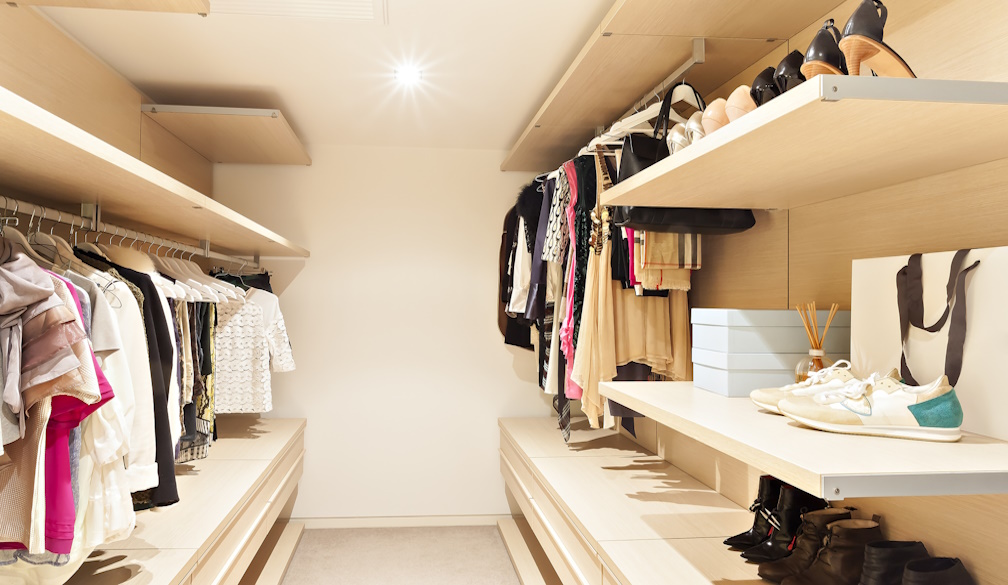
A well-organised wardrobe gives every item a proper place. Shirts are easier to find, shoes are not scattered around the house, and everyday clothing does not get buried under occasion wear or winter layers.
That visibility matters. If you can easily see what you own, you are more likely to wear a greater portion of your wardrobe. You are also less likely to buy another pair of pants, another jacket or another black shirt simply because the one you already had was hidden at the back of a shelf.
You Can Store Clothes According To How You Use Them
Different clothing needs different storage. Everyday clothes, workwear, activewear, formal outfits, shoes and accessories all become easier to manage when they have separate zones.
This is where custom closets and Sydney built-in wardrobes can make a difference. Hanging space, drawers, shelves, shoe sections and overhead storage can be planned around your actual routine, rather than forcing every item into the same crowded space.
For larger bedrooms, walk-in robes can create separate zones for different clothing types. For smaller Sydney homes and apartments, a well-designed built-in wardrobe can make better use of wall space, height and corners without making the room feel crowded.
You Can Review, Repair and Donate More Easily
When your wardrobe is organised, it becomes easier to check what you actually wear. You can notice what still fits, what needs repair, what can be donated and what has reached the end of its usable life.
That small habit can reduce the chance of clothing sitting untouched for years. It also makes it easier to send wearable garments to reuse channels while they are still in good condition, instead of letting them lose value at the back of the wardrobe.
Looking Ahead - Smarter Wardrobes and More Sustainable Habits
A better wardrobe design cannot solve Australia’s clothing waste problem on its own, but it can help you use more of what you already own.
Wardrobe organisation helps you slow down, take stock of your worn and unworn clothing, and make better choices before buying more. When your clothes are easier to see, reach and care for, you are less likely to forget them or replace them unnecessarily, helping you take a small but meaningful step towards reducing textile waste.