Choosing a Trusted Daycare in Buderim: A Parent's Guide
- Written by: Times Media
Finding early learning for your child in Buderim can feel like a lot to manage at once. You may be weighing quality, cost, hours, location, and whether a centre has a place available. National childcare changes also make 2026 a useful time to plan ahead: from 5 January 2026, eligible families get more subsidised hours, and new hourly subsidy caps apply from 6 July 2026. Many rated services already meet or exceed the National Quality Standard, so the task is finding the right fit for your child, routine, and budget.
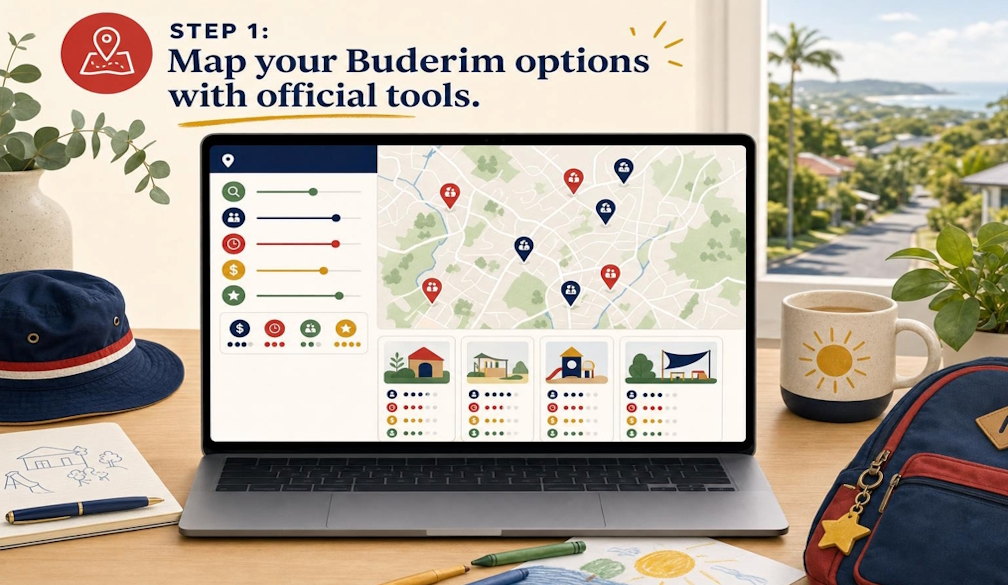
Step 1: Map your Buderim options with official tools
Start with StartingBlocks.gov.au, the Australian Government's free website for families to find and compare early learning services. You can search by postcode, including 4556 for Buderim, and compare services by national quality rating, fees, vacancies, and what each place includes, such as meals or nappies.
It also helps to know what a useful centre website should show before you visit. A strong page lists opening hours, ages served, the learning approach, food and inclusions, and a way to book a tour. If you want to see how that information can be laid out, review a detailed centre page as one illustrative example. A sample page should be used only as a guide to what to look for on any centre website, not as a Buderim listing or availability claim.
Rise & Shine is one example of a provider page that sets out ages served, opening hours, and fee notes in one place. Compare those details with what StartingBlocks shows for services near you.
Step 2: Understand the quality signals
Australian early learning services operate under the National Quality Framework and are assessed against the National Quality Standard. As at 1 January 2026, Australia had 18,027 approved services, and 92% of rated services were Meeting the standard or above. That is helpful context, but ratings still differ from centre to centre, so check each service individually.
Services also work from national learning frameworks that guide play-based learning, relationships, and daily routines.
On a tour, quality becomes easier to see in everyday moments. Are health and safety routines clear? Do educators speak warmly with children and respond to their needs? Does the service feel organised, with stable staffing and clear family communication? Those signals often tell you more than a brochure.
Step 3: Check Queensland ratios and safety basics
In Queensland centre-based services, the required ratios are one educator to four children under 24 months, one to five for children aged 24 to 36 months, and one to eleven for children from 36 months to preschool age. Ratios are calculated across the service, so ask how staff are rostered through the full day.
Safety checks matter too. In Queensland, anyone working at an education and care service while children are present needs a Blue Card, the state's Working with Children Check. National reforms also require approved providers to enter workforce information into a new National Early Childhood Worker Register by late March 2026.
Step 4: Budget your true out-of-pocket cost in 2026
The Child Care Subsidy reduces your fees, but it does not remove them. It is worked out on the lower of the centre's hourly fee or the government's hourly rate cap, multiplied by your approved hours. You pay the remaining gap fee
Two dates matter in 2026. From 5 January, all subsidy-eligible families receive at least 72 subsidised hours of care per fortnight under the 3 Day Guarantee. From 6 July, new hourly rate caps apply. For centre-based day care below school age, the cap is $15.19 per hour. If a centre charges more, the subsidy applies only up to the cap. For layout context rather than Buderim availability, you can explore trusted daycare in Buderim. It opens a Blacktown, NSW centre page used only as an illustrative example; it is not a Buderim service, endorsement, or claim about fees or places.
Always confirm current fees directly with the centre and run your own subsidy estimate.
Step 5: Understand Free Kindy and Buderim routine
Queensland's Free Kindy remains available in 2026 and beyond for eligible children in approved programs. It funds 15 hours per week for 40 weeks of the year, usually in the year before Prep, with eligibility tied to your child's age by the relevant cut-off date.
A funded kindy program can be delivered in a sessional community kindergarten or inside long day care. For working families, a long day care service with a funded kindy room may combine the program with the longer hours you need. Ask whether sessions line up with your work week.
Step 6: Book and tour with a 45-minute plan
A short, focused visit can tell you more than a long brochure. Watch how educators interact with children, how settled the room feels, and how routines like toileting, sleep, and allergy management are handled. Look at the outdoor space, the daily program on display, and how the centre keeps families updated.
A few questions to bring:
- How do you roster educators to meet ratios across the full day, including breaks?
- How do you settle a new child and manage transitions between rooms?
- How do you communicate with families day to day?
- What does your kindy or pre-Prep program look like?
- How are allergies and medical needs recorded and managed?
Local starting points and enrolment timing
Buderim and nearby suburbs offer long day care, community kindergartens, and larger not-for-profit providers. Rather than relying on word of mouth alone, compare services on StartingBlocks and confirm details on each centre's own website. Join waitlists early, keep some flexibility on days, and ask about orientation and settling-in support. For broader context, compare child care options before shortlisting a service.
Pulling it together
Official tools and a structured tour can narrow your choices quickly. Keep three takeaways close: from 5 January 2026, eligible families receive at least 72 subsidised hours per fortnight; new hourly caps apply from 6 July 2026; and Queensland ratios run at 1:4, 1:5, and 1:11 by age. Compare quality, confirm fees, and ask practical questions before joining a waitlist.
FAQ
How do I check a centre's quality rating?
Search the service on StartingBlocks.gov.au to see its National Quality Standard rating, fees, vacancies, and inclusions.
What are the Queensland ratios for my child's age?
The required centre-based ratios are 1:4 under 24 months, 1:5 for 24 to 36 months, and 1:11 from 36 months to preschool age.
How does the 3 Day Guarantee work?
From 5 January 2026, subsidy-eligible families receive at least 72 subsidised hours of care per fortnight. You still pay any gap fee.
Is kindy free in Queensland, and where can I access it?
Queensland's Free Kindy funds 15 hours per week for 40 weeks per year in approved programs, including some long day care centres.
Finding early learning for your child in Buderim can feel like a lot to manage at once. You may be weighing quality, cost, hours, location, and whether a centre has a place available. National childcare changes also make 2026 a useful time to plan ahead: from 5 January 2026, eligible families get more subsidised hours, and new hourly subsidy caps apply from 6 July 2026. Many rated services already meet or exceed the National Quality Standard, so the task is finding the right fit for your child, routine, and budget.
Step 1: Map your Buderim options with official tools
Start with StartingBlocks.gov.au, the Australian Government's free website for families to find and compare early learning services. You can search by postcode, including 4556 for Buderim, and compare services by national quality rating, fees, vacancies, and what each place includes, such as meals or nappies.
It also helps to know what a useful centre website should show before you visit. A strong page lists opening hours, ages served, the learning approach, food and inclusions, and a way to book a tour. If you want to see how that information can be laid out, review a detailed centre page as one illustrative example. A sample page should be used only as a guide to what to look for on any centre website, not as a Buderim listing or availability claim.
Rise & Shine is one example of a provider page that sets out ages served, opening hours, and fee notes in one place. Compare those details with what StartingBlocks shows for services near you.
Step 2: Understand the quality signals
Australian early learning services operate under the National Quality Framework and are assessed against the National Quality Standard. As at 1 January 2026, Australia had 18,027 approved services, and 92% of rated services were Meeting the standard or above. That is helpful context, but ratings still differ from centre to centre, so check each service individually.
Services also work from national learning frameworks that guide play-based learning, relationships, and daily routines.
On a tour, quality becomes easier to see in everyday moments. Are health and safety routines clear? Do educators speak warmly with children and respond to their needs? Does the service feel organised, with stable staffing and clear family communication? Those signals often tell you more than a brochure.
Step 3: Check Queensland ratios and safety basics
In Queensland centre-based services, the required ratios are one educator to four children under 24 months, one to five for children aged 24 to 36 months, and one to eleven for children from 36 months to preschool age. Ratios are calculated across the service, so ask how staff are rostered through the full day.
Safety checks matter too. In Queensland, anyone working at an education and care service while children are present needs a Blue Card, the state's Working with Children Check. National reforms also require approved providers to enter workforce information into a new National Early Childhood Worker Register by late March 2026.
Step 4: Budget your true out-of-pocket cost in 2026
The Child Care Subsidy reduces your fees, but it does not remove them. It is worked out on the lower of the centre's hourly fee or the government's hourly rate cap, multiplied by your approved hours. You pay the remaining gap fee.
Two dates matter in 2026. From 5 January, all subsidy-eligible families receive at least 72 subsidised hours of care per fortnight under the 3 Day Guarantee. From 6 July, new hourly rate caps apply. For centre-based day care below school age, the cap is $15.19 per hour. If a centre charges more, the subsidy applies only up to the cap. For layout context rather than Buderim availability, you can explore trusted daycare in Buderim. It opens a Blacktown, NSW centre page used only as an illustrative example; it is not a Buderim service, endorsement, or claim about fees or places.
Always confirm current fees directly with the centre and run your own subsidy estimate.
Step 5: Understand Free Kindy and Buderim routines
Queensland's Free Kindy remains available in 2026 and beyond for eligible children in approved programs. It funds 15 hours per week for 40 weeks of the year, usually in the year before Prep, with eligibility tied to your child's age by the relevant cut-off date.
A funded kindy program can be delivered in a sessional community kindergarten or inside long day care. For working families, a long day care service with a funded kindy room may combine the program with the longer hours you need. Ask whether sessions line up with your work week.
Step 6: Book and tour with a 45-minute plan
A short, focused visit can tell you more than a long brochure. Watch how educators interact with children, how settled the room feels, and how routines like toileting, sleep, and allergy management are handled. Look at the outdoor space, the daily program on display, and how the centre keeps families updated.
A few questions to bring:
- How do you roster educators to meet ratios across the full day, including breaks?
- How do you settle a new child and manage transitions between rooms?
- How do you communicate with families day to day?
- What does your kindy or pre-Prep program look like?
- How are allergies and medical needs recorded and managed?
Local starting points and enrolment timing
Buderim and nearby suburbs offer long day care, community kindergartens, and larger not-for-profit providers. Rather than relying on word of mouth alone, compare services on StartingBlocks and confirm details on each centre's own website. Join waitlists early, keep some flexibility on days, and ask about orientation and settling-in support. For broader context, compare child care options before shortlisting a service.
Pulling it together
Official tools and a structured tour can narrow your choices quickly. Keep three takeaways close: from 5 January 2026, eligible families receive at least 72 subsidised hours per fortnight; new hourly caps apply from 6 July 2026; and Queensland ratios run at 1:4, 1:5, and 1:11 by age. Compare quality, confirm fees, and ask practical questions before joining a waitlist.
FAQ
How do I check a centre's quality rating?
Search the service on StartingBlocks.gov.au to see its National Quality Standard rating, fees, vacancies, and inclusions.
What are the Queensland ratios for my child's age?
The required centre-based ratios are 1:4 under 24 months, 1:5 for 24 to 36 months, and 1:11 from 36 months to preschool age.
How does the 3 Day Guarantee work?
From 5 January 2026, subsidy-eligible families receive at least 72 subsidised hours of care per fortnight. You still pay any gap fee.
Is kindy free in Queensland, and where can I access it?
Queensland's Free Kindy funds 15 hours per week for 40 weeks per year in approved programs, including some long day care centres.
What should I do if fees change mid-year?
Recheck your StartingBlocks estimate and confirm current fees with the centre, especially from 6 July 2026 or when your child chan
What should I do if fees change mid-year?
Recheck your StartingBlocks estimate and confirm current fees with the centre, especially from 6 July 2026 or when your child chan