The new World Ocean Review: Explaining life in the ocean
WOR 9 summarizes the current state of knowledge about marine biodiversity. Available free of charge, it is the ideal starting point for anyone keen to understand marine life.
Life on Earth is linked inseparably with the ocean. It covers around 71 per cent of the surface and is the largest habitat on our planet. Much of its species diversity is still unknown – and yet it is vital for human well-being. The greater the health and diversity of marine life, the greater the benefits for people and nature. But which species live in the ocean, and which environmental factors influence their distribution or habitat size? What are the reasons for the decline in marine species abundance – and how can it be preserved successfully? The new edition of World Ocean Review, published today, provides answers to these and many other questions about ocean life. Available free of charge, it can be ordered as a printed copy or downloaded as a pdf from https://worldoceanreview.com/en/wor-9/.HAMBURG/BERLIN, GERMANY - Newsaktuell - 29 January 2026 - The release of WOR 9 could not be more timely: the publication of this new edition of the marine science series World Ocean Review (WOR) in English comes just after the UN High Seas Treaty officially entered into force in January 2026. Titled "Marine Biodiversity – Vital Essence of Our Oceans" and available free of charge, WOR 9 includes eight chapters of key facts, background information and stories around marine biodiversity – from genetic differences between individual species, the distribution of marine life and its benefits to human society, and the effectiveness of marine conservation policy, to the diverse values that we assign to the ocean and its biological communities.
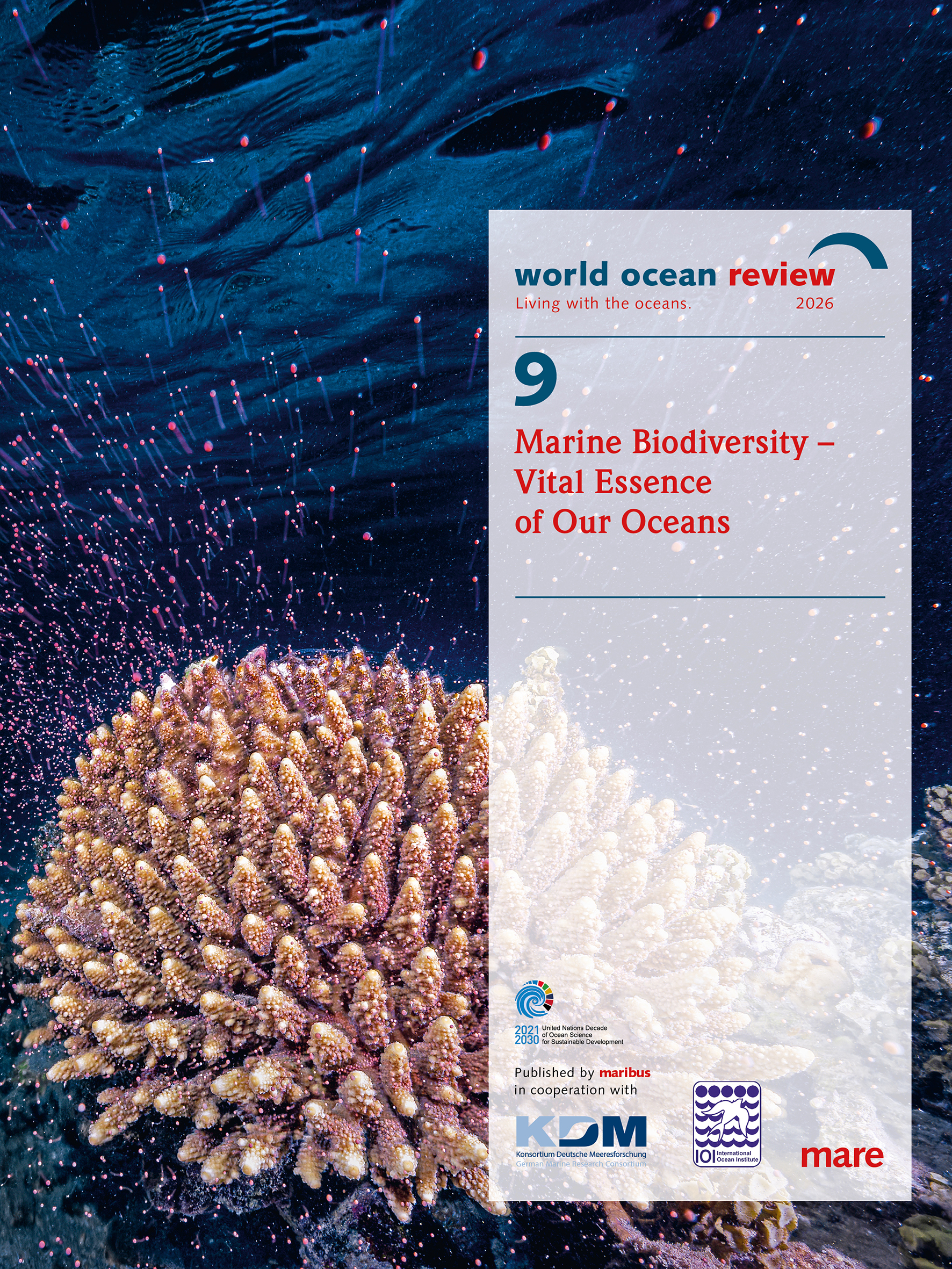
World Ocean Review 9: "Marine Biodiversity - Vital Essence of Our Oceans" / Cover Copyright © Tom Shlesinger/maribus gGmbH / More information via ots and www.presseportal.de/en/nr/82183 / The use of this image for editorial purposes is permitted and free of charge provided that all conditions of use are complied with. Publication must include image credits.
"The ninth edition of WOR emphasizes that the conservation of marine biodiversity requires not only accurate analyses by natural scientists, but also farsightedness on the part of society and commitment from policymakers. The coming decades will determine whether we strike a new balance between use and protection – and thus succeed in preserving the ocean as the source of our vital natural resources," says Nikolaus Gelpke, initiator of the WOR project and Managing Director of maribus gGmbH. World Ocean Review is published by maribus gGmbH in partnership with the German Marine Research Consortium (KDM), the International Ocean Institute and the ocean magazine mare.
Biodiversity is complex – WOR makes it accessible
"Biodiversity is complex. However, key figures in politics and the economy generally only consider a small number of mostly market-based values of nature. This is reflected in the decisions they take, which lead, among other things, to overfishing, pollution and ocean warming, at the expense of future generations. The knowledge we produce, which is summarized in the new edition of World Ocean Review, is therefore intended to generate more respect for the largest habitat on Earth," says Prof. Dr. Ulrich Bathmann, a marine biologist and Chair of the German Marine Research Consortium (KDM).
The new edition of WOR gently guides its readers through the abstract concept of marine biodiversity and shares statistics, key definitions and examples, along with a wealth of up-to-date research data on the patterns and mechanisms of ocean life. It provides clear and concise explanations of the role of new scientific tools such as metabarcoding and artificial intelligence and sheds light on the mutually reinforcing effects of the multiple drivers of species decline.
WOR 9 also offers hope. As a society, we have long possessed the knowledge we need for effective conservation and sustainable management of marine life and its multiple functions. Indeed, we still have the capability to achieve the broad-scale recovery of degraded marine habitats within just 25 years. How can we bring about this vital turnaround in our management of the oceans? In several chapters, the new World Ocean Review describes how this can be done.
The ocean is considered healthy and resilient when its biological communities support a large number of species that differ in their genetic make-up, appearance, characteristics and functions. Understanding the significance of this diversity for human society is the first step towards its conservation. The new World Ocean Review shows the way.
World Ocean Review is published every two years in German and English and has a worldwide readership of policymakers, business players and civil society stakeholders with an interest in the topics covered. It provides up-to-date background information on relevant ocean-related issues and is aimed at anyone wishing to have a say on marine conservation and use.
The English edition of the new WOR, titled "Marine Biodiversity – Vital Essence of Our Oceans", will be published on 29 January 2026. It can be ordered as a printed copy or downloaded as a pdf free of charge from https://worldoceanreview.com/en/wor-9/.
Information for editorial teams
Preview copies of World Ocean Review 9, visual materials and social media cards are available here: https://worldoceanreview.com/en/press.
The issuer is solely responsible for the content of this announcement.