Rethinking Urban Development: Vietnamese Developers Shaping Future Cities
HO CHI MINH CITY, VIETNAM - Media OutReach Newswire - 11 July 2026 - As global urban challenges evolve, Vietnamese Developers offer valuable insights into alternative development models.
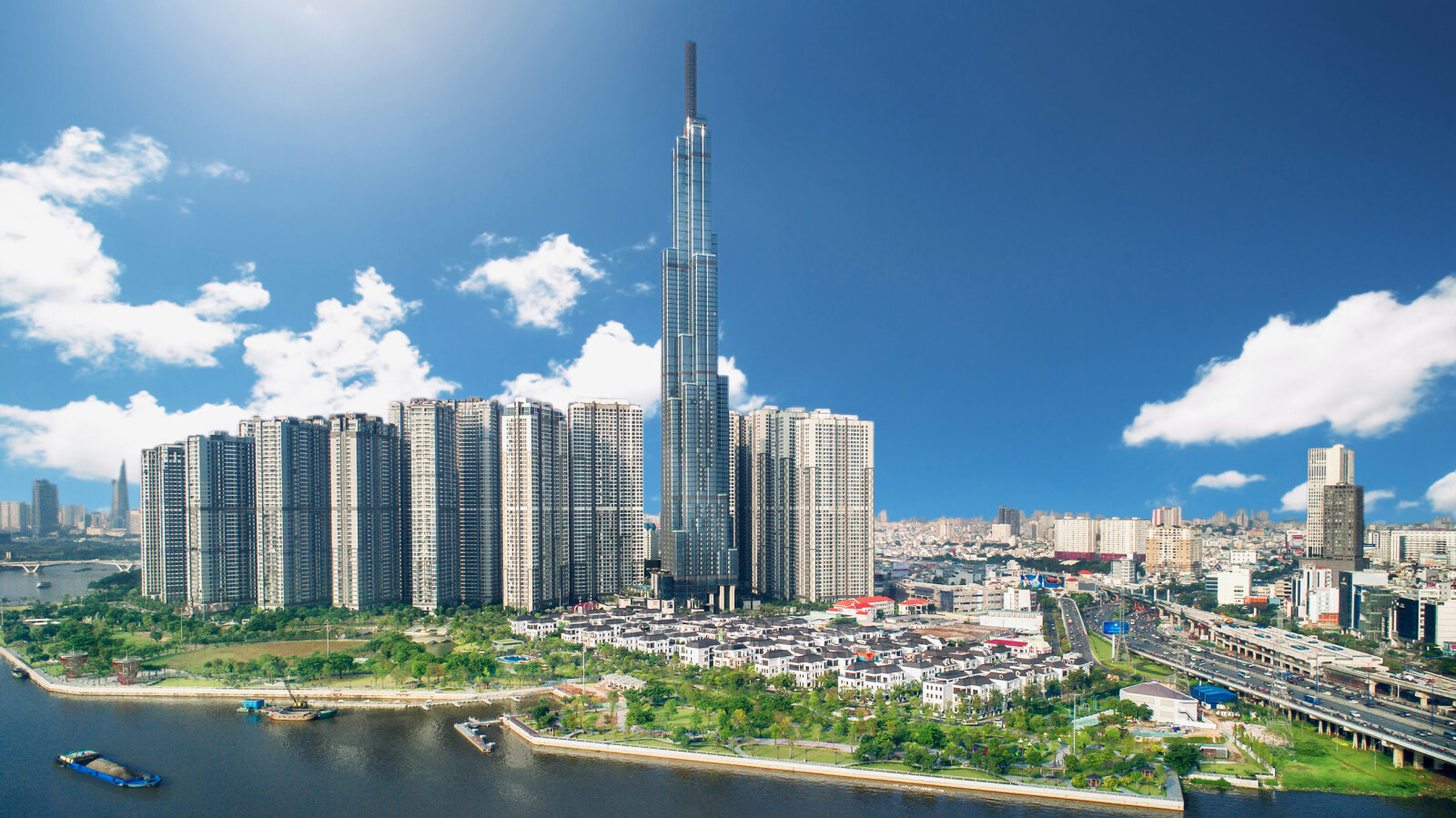
For much of the past century, urban development followed a relatively straightforward equation: build housing, expand infrastructure and accommodate population growth.
This formula is now showing its limitations. As climate risk intensifies, biodiversity declines and cities compete not only for investment but also for talent, developers around the world are now forced to redefine the very nature and purpose of what they build.
From the Gulf to Singapore, and from Scandinavia to Southeast Asia, large-scale urban projects are evolving into integrated ecosystems where mobility, green infrastructure, education, healthcare, digital services and environmental restoration are planned together. The industry paradigm has shifted from constructing buildings to designing places capable of sustaining both economic growth and quality of life over generations.
Vinhomes has initiated a comprehensive repositioning to navigate this global transition.
Known as Vietnam's largest residential developer, the company is increasingly recognized not merely as a builder of housing projects, but as a creator of large-scale lifestyle ecosystems, communities where urban planning, technology, ecology and public services are conceived as parts of the same system.
When Nature Becomes Urban Infrastructure
For decades, environmental considerations were often introduced after a city's masterplan had already been completed.
The emerging model reverses that sequence. Across many of its recent developments, Vinhomes operates on the principle that natural systems should become the starting point of planning. Hydrology, coastal conditions, biodiversity and existing vegetation are treated as design inputs that shape the urban layout from the earliest stages.
This philosophy marks a notable departure from conventional large-scale development, particularly in rapidly urbanising markets where natural landscapes have frequently given way to intensive construction.
With more than 30 developments across Vietnam and a land bank equivalent to roughly two-thirds the size of Singapore, Vinhomes has the unusual opportunity to test this planning approach at a metropolitan scale.
Rather than replicating identical urban formulas, each project is designed around the ecological characteristics of its location.
The company maintains that the long-term success of a city should ultimately be measured not by how much has been built, but by whether natural ecosystems continue to thrive decades after residents have moved in. That perspective aligns with an increasingly influential school of urban planning in which green infrastructure is viewed as essential public infrastructure.
Factors Compelling Cities Toward Regeneration
Environmental, Social and Governance (ESG) frameworks have become standard across global investment. Urban planners, however, are beginning to question whether sustainability alone is sufficient.
Maintaining today's environmental conditions may no longer be enough if tomorrow's cities must also respond to rising temperatures, sea-level change and growing demographic pressures.
Vinhomes' strategic response is crystallized in its ESG++, a framework that extends beyond conventional ESG principles by introducing two additional objectives: Regeneration and resilience.
The distinction is subtle but important.
Regeneration implies restoring ecological systems rather than simply reducing environmental impact. Resilience focuses on designing cities capable of adapting to changing climatic, technological and social conditions over many decades.
Projects such as Vinhomes Green Paradise Can Gio and Vinhomes Global Gates Ha Long are intended to demonstrate how these concepts can be incorporated into large-scale urban planning, combining renewable energy, smart infrastructure and ecological restoration within a single development model.
This shift highlights a growing global consensus: the success of next-generation cities will ultimately be measured by their ability to adapt to increasingly complex environmental challenges.
Vietnam's Urban Story Is Becoming Part of a Global Conversation
For many international audiences, Vietnam remains associated primarily with its cultural heritage and natural landscapes. Urban development may become an equally important part of that story.
Rapid urbanisation, expanding infrastructure investment and a national commitment to achieve net-zero emissions by 2050 have created conditions in which entirely new urban models can be planned without many of the legacy constraints facing older cities.
This developmental opportunity is capturing increasing global interest.
Commenting on Vinhomes Green Paradise's participation in the global 7 Wonders of Future Cities initiative, Jean-Paul de la Fuente, Director of the New7Wonders Organisation, described Vietnam as undergoing a "transformative step change" in its national identity and global positioning. He pointed to the country's progress in reducing the carbon footprint of urban mobility as an example of coordinated action between government and the private sector that offers valuable insights extending beyond Southeast Asia.
For Vinhomes, participation in international platforms such as 7 Wonders of Future Cities is therefore less about showcasing a single project than about contributing to a broader discussion on how rapidly developing economies might approach urban growth differently. The company's evolution mirrors a wider shift taking place across the global property sector.
Increasingly, the core value proposition for developers is no longer anchored in how many buildings they can deliver. Instead, it centers on whether they can create cities that remain economically competitive, environmentally resilient and socially relevant long after construction has ended.
Hashtag: #Vinhomes
https://vinhomes.vn/en
The issuer is solely responsible for the content of this announcement.