AI Is Quietly Reshaping Retail and Consumers May Not Even Realise It
- Written by: Times Media
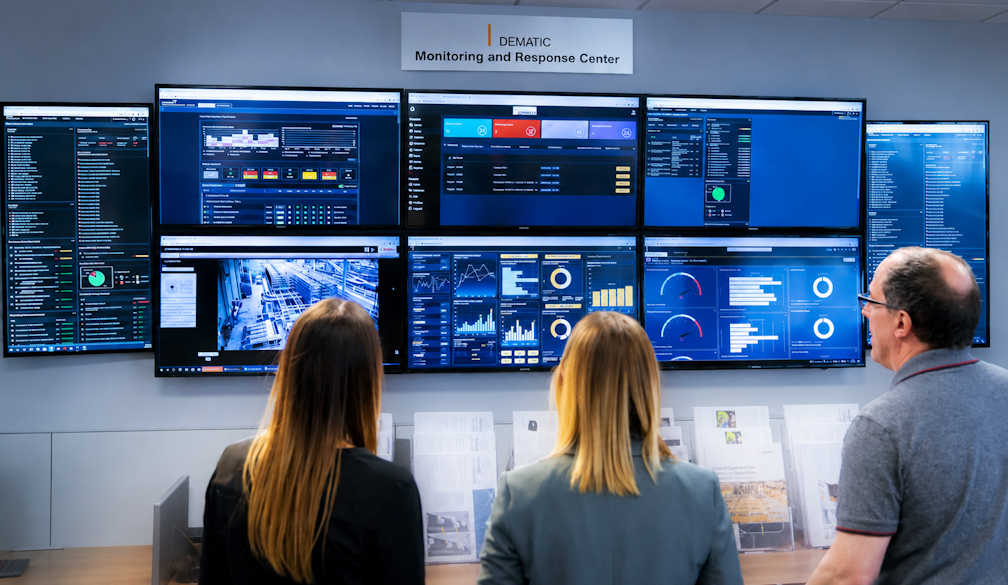
Dematic says AI and automation are transforming how products are stocked, moved and delivered as customer expectations reach new heights
The days of retailers simply reacting to customer orders are rapidly disappearing. As Australian consumers increasingly expect same-day delivery, real-time stock availability and seamless online shopping experiences, artificial intelligence is quietly transforming the way warehouses and distribution centres are designed, tested and operated long before an order is ever dispatched.
According to supply chain automation specialist Dematic, AI is moving beyond chatbots and predictive analytics to become an engineering tool that is helping retailers and logistics businesses build smarter supply chains, optimise store and online distribution operations and respond faster to changing customer demand.
"Consumers have become accustomed to instant access. Whether they're shopping online or in-store, they expect products to be available, easy to find and delivered quickly," said Alina Wolsztyniak, Senior Director Software Engineering, Dematic Asia Pacific.
"The challenge for retailers isn't simply fulfilling orders anymore. It's anticipating demand, designing operations that can adapt quickly and ensuring products move through increasingly complex supply chains as efficiently as possible.”
Working with major retailers, grocery chains, manufacturers and logistics providers around the world, Dematic is seeing growing demand for technologies that provide greater visibility and intelligence across increasingly complex supply chains.
Engineers are now using AI to generate warehouse layouts, rapidly develop software, build customer interfaces and even simulate entire warehouse environments before construction begins.
Instead of manually designing warehouse systems from scratch, AI can generate layouts based on storage capacity, throughput requirements and operational constraints, allowing engineers to model different scenarios, optimise infrastructure and reduce unnecessary capital investment before a facility is built.
"We're seeing AI become an engineering assistant rather than simply another software tool," Ms Wolsztyniak said. "It allows our teams to prototype solutions faster, generate technical documentation, analyse software performance and build more robust warehouse systems while engineers remain responsible for validating every outcome."
Dematic's software teams are now using AI to simulate warehouse operators during testing, allowing artificial intelligence to perform tasks such as order picking, interact with warehouse management systems and even make mistakes that replicate real-world operating conditions.
The company is also expanding its use of AI-powered digital twins, which are virtual replicas of warehouse operations that allow retailers to test changes before implementing them in live environments.
Businesses will be able to model how introducing thousands of new products, increasing order volumes or reconfiguring warehouse layouts will affect storage capacity, throughput and fulfilment performance without disrupting day-to-day operations.
"Digital twins will allow customers to understand how operational decisions will perform before they make them. Whether they're expanding product ranges, preparing for peak retail periods or redesigning storage layouts, they can test those scenarios virtually and make much more informed decisions," Ms Wolsztyniak said.
The technology comes as Australia's e-commerce logistics market is projected to exceed $18 billion in 2026, driven by continued growth in online shopping and rising customer expectations around fulfilment speed and convenience.
Australian consumers spent more than $63 billion online in 2023, according to Australia Post, while PwC research found 41 per cent of Australian shoppers would abandon a retailer after just one poor delivery experience, placing greater pressure on businesses’ supply chains to deliver quickly and accurately.
"In many highly automated facilities we're already processing orders from storage to dispatch in minutes, giving retailers the ability to meet increasingly demanding omnichannel delivery expectations," Ms Wolsztyniak said.
"The warehouse is no longer simply a place to store products. It's becoming an intelligent operation that constantly analyses data, predicts demand and optimises how products move from supplier to customer."
Dematic is also seeing growing interest in more flexible forms of warehouse automation. Fleets of autonomous robots can scale alongside business growth, while AI continuously optimises routing, storage locations, traffic flow and equipment utilisation to maximise productivity.
"We often hear concerns that AI will replace people, but that's not what we're seeing.” Ms Wolsztyniak said.
"The greatest value comes from giving people better information, helping engineers build smarter systems and allowing operators to make faster, more informed decisions."
"AI isn't replacing human expertise, it's augmenting it. The businesses that combine AI with automation, robotics and operational knowledge will be the ones best positioned to keep pace with rising customer expectations and increasingly complex supply chains."