Intense heatwaves directly threaten crops and native species. Here’s what we can do
- Written by: Owen Atkin, Director of the ANU Agrifood Innovation Institute, Australian National University
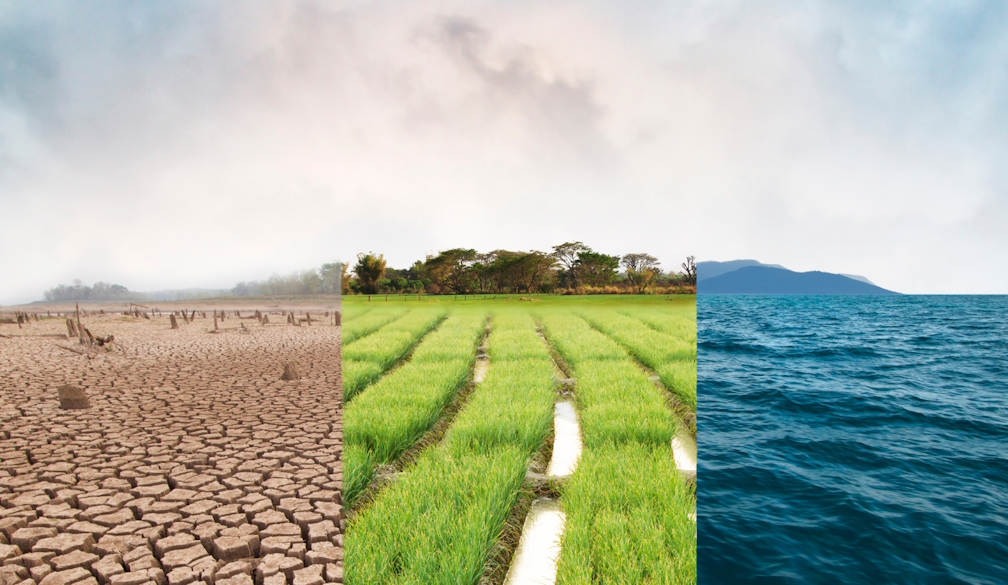
During Australia’s unprecedented heatwave in late January, air temperatures reached 50°C[1] in inland South Australia.
Days of sustained heat and hot nights did real damage. A flying fox colony was all but wiped out[2] in South Australia, while Western Australian mango growers suffered major crop losses[3] as fruit literally boiled.
These increasingly extreme[4] heatwaves are now posing a real threat to the crops and livestock on which we rely, as well as Australia’s wildlife and ecosystems.
But in coming decades[5], intensifying climate change will push summer temperatures beyond the records set[6] this summer. Even after the world reaches net zero, unprecedented heatwaves will persist for centuries[7].
Most living things are strongly affected by heat. Sustained intense heat can degrade proteins[8] inside plant and animal cells, cause cell membranes to rupture[9] and disrupt metabolic processes essential to survival[10]. That is, sustained heat can weaken and kill living things in many ways.
Everything in Australia has to cope with heat. But the continent’s wildlife and peoples are not prepared for the heat to come, or the changes this will force on natural ecosystems and food production.
We are not powerless. We could introduce more heat-tolerant plant species and engineer landscapes to create heat refuges. But we must plan for it.
Farms under threat
Australian farmers are already feeling the consequences. Wheat yields have stopped steadily increasing and have plateaued[12], due in part to more frequent heatwaves. Heat causes wheat to photosynthesise less[13] and damages pollen[14] in cereal crops, leading to less fertile seed and big falls in yields.
Heatwaves burn grape leaves[15], cutting grape yields and worsening wine quality. Almond growers are battling[16] falls in photosynthesis, pollination and nut quality.
These threats are not hypothetical. Farmers are already[17] grappling[18] with the damage, while authorities see heat as a major threat to adapt to[19] across the Riverland, Sunraysia and Mallee agricultural regions.
Heatwaves are driving ecosystems into decline
Extreme heatwaves can trigger mass die-offs[20] of plants and animals.
Satellite and field evidence show extreme heat can scorch the leaves[21] of many plants and trigger widespread leaf death across tree canopies. Without their protective canopy and with less ability to photosynthesise, trees are at higher risk of dying. This is one reason more trees are dying[22] across Australia.
Extreme heat can push[23] entire ecosystems past their physiological limits, causing sudden death across many species.
When several days of extreme heat hit, some organisms will be unable to repair[24] the damage to their cells. As our new research[25] shows, sustained heat is most damaging when the heat stays overnight.
Heat stress builds up progressively over years, weakening ecosystems[26] and leaving them more vulnerable to fire, drought, pests and disease. A ecosystem which may seem OK can be hit by this “ecological debt[27]” months or years later.
What can we do?
As extreme heat becomes a regular feature of Australia’s summer, we face unavoidable decisions over whether to intervene.[28]
The question is what trade-offs we will be willing to accept.
1. Should we introduce more heat-tolerant plant species?
Some native plants[29], crops[30], insects[31] and microbes[32] can tolerate extreme heat far better, while others succumb.
If we introduce naturally heat-tolerant plant species[33] or varieties into vulnerable landscapes, we could help ecosystems to keep functioning. But this boost to resilience would alter the character of existing ecosystems.
For farms, advances in molecular biology[34] and crop genetics[35] have made it possible to create crops with better heat tolerance faster than traditional breeding methods.
Precision gene editing and genetic modification approaches[36] can improve heat tolerance by protecting a plant’s most vulnerable reproductive tissues and strengthening cells during extreme heat events. Success will depend on whether governments and communities are willing to adopt them.

2. Should we engineer landscapes to create thermal refuges?
Heat isn’t experienced uniformly[38]. That’s because organisms live in microclimates with varying shade, soil depth, types of plants and moisture.
While leaves and soils are often much hotter than the surrounding air, microclimates can offer cooler refuges[39]. We could scale up these thermal refuges through careful revegetation, canopy restructuring, water placement and better fire and grazing strategies. These could build resilience into landscapes, if authorities were willing to plan, invest and manage these programs at scale. We’re already seeing small-scale examples such as keeping flying foxes cool with water[40].
That’s not to say thermal refuges are a silver bullet. Feasibility will vary[41] across ecosystems and scales.
In cities and towns, planting canopy trees, restoring wetlands and redesigning built surfaces is proven to reduce surface temperatures[42] and could help species survive.
In farming regions, planting shelter belts of large trees, diversifying crops and working to keep moisture in the soil can protect crop yields and native species.
In more remote or wilder landscapes, going down this path would raise harder questions about what constitutes natural resilience. Would this kind of assisted adaptation favour some species? As heat intensifies, the debate will likely shift from whether we intervene to how deliberately and equitably we do so.
These questions aren’t purely scientific or technical. They pose societal choices around which values we prioritise when trade-offs are unavoidable.
We have to start planning now
We believe it will soon be necessary to intervene in ecosystems to boost heat resilience. We urgently need more research to understand how heat damage accumulates in different organisms and how we can support recovery.
We will also have to identify traits for heat-tolerance in as many native species as possible and learn how to cool landscapes and protect ecosystems at scale.
The stakes are extremely high. We can either act now in a deliberate, evidence-based way – or we can wait until accumulated heat forces change on us, after much has been irreversibly lost.
References
- ^ reached 50°C (www.theguardian.com)
- ^ but wiped out (www.theguardian.com)
- ^ major crop losses (www.abc.net.au)
- ^ increasingly extreme (www.csiro.au)
- ^ coming decades (doi.org)
- ^ records set (www.abc.net.au)
- ^ persist for centuries (doi.org)
- ^ degrade proteins (doi.org)
- ^ rupture (doi.org)
- ^ essential to survival (doi.org)
- ^ Marc McCormack/AAP (photos.aap.com.au)
- ^ have plateaued (doi.org)
- ^ photosynthesise less (doi.org)
- ^ damages pollen (doi.org)
- ^ burn grape leaves (doi.org)
- ^ battling (www.dpi.nsw.gov.au)
- ^ already (www.abc.net.au)
- ^ grappling (www.awri.com.au)
- ^ adapt to (rdamr.com.au)
- ^ mass die-offs (www.nature.com)
- ^ scorch the leaves (doi.org)
- ^ are dying (theconversation.com)
- ^ can push (soe.dcceew.gov.au)
- ^ unable to repair (doi.org)
- ^ new research (doi.org)
- ^ weakening ecosystems (doi.org)
- ^ ecological debt (doi.org)
- ^ whether to intervene. (doi.org)
- ^ plants (doi.org)
- ^ crops (doi.org)
- ^ insects (doi.org)
- ^ microbes (doi.org)
- ^ plant species (doi.org)
- ^ molecular biology (doi.org)
- ^ crop genetics (groundcover.grdc.com.au)
- ^ approaches (doi.org)
- ^ Samantha Terrell/Shutterstock (www.shutterstock.com)
- ^ experienced uniformly (doi.org)
- ^ refuges (doi.org)
- ^ with water (www.abc.net.au)
- ^ will vary (doi.org)
- ^ reduce surface temperatures (doi.org)