


Bambu Lab P2S 3D Printer Review: High-End Performance Meets Everyday Usability
- Written by: Greg Rogers
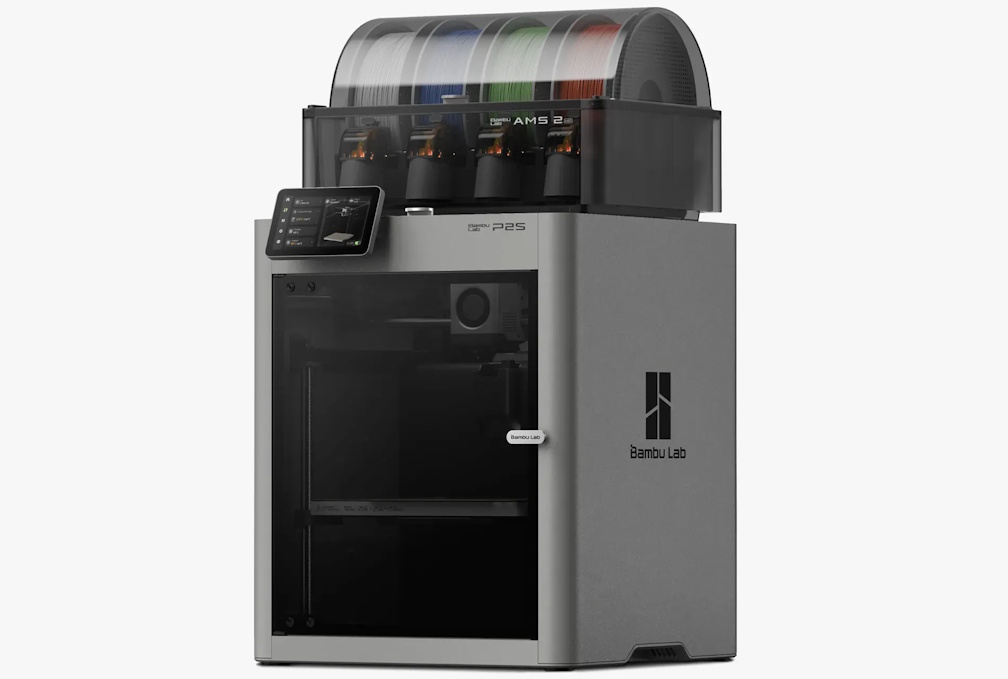
After a full month of hands-on testing, the Bambu Lab P2S 3D printer has proven itself to be one of the most compelling machines currently available for both home enthusiasts and small business operators. What initially presents as a sophisticated, high-performance device quickly reveals itself to be something far more valuable — a genuinely user-friendly system capable of delivering professional-grade results without the traditional complexity associated with 3D printing.
First Impressions: Premium Design with Purpose
Straight out of the box, the P2S feels like a product built with intent. The design is clean, modern, and highly functional, reflecting Bambu Lab’s focus on engineering rather than gimmicks. Setup is relatively straightforward, though like most advanced 3D printers, there is a short learning curve during the initial stages.
Once that early familiarisation phase is complete, however, the experience changes dramatically.
Learning Curve: Short-Term Effort, Long-Term Ease
It would be unrealistic to expect any high-performance 3D printer to be entirely plug-and-play. The P2S does require some time to understand its workflow, software ecosystem, and material handling.
But here’s the key point: once you’ve worked through those fundamentals, the printer becomes exceptionally easy to operate.
After a few initial projects, the process of slicing, loading materials, and executing prints becomes intuitive. Tasks that once felt technical quickly become routine, allowing users to focus on what really matters — creating.
Performance: Reliable, Fast, and Precise
Over the course of a month, the P2S was used to produce a wide range of items — from functional components and prototypes to decorative pieces. Across all categories, the results were consistently impressive.
-
Print quality is sharp and highly detailed
-
Layer adhesion is strong and reliable
-
Print speeds are fast without sacrificing accuracy
-
Failures are minimal when proper setup is followed
The consistency is what stands out most. Whether running short prints or longer production-style jobs, the P2S delivers repeatable results — a critical factor for business users.
User Experience: Designed for Real People
One of the biggest strengths of the P2S is how approachable it becomes after the initial setup phase. The interface, software integration, and overall workflow are clearly designed with usability in mind.
For home users, this means less frustration and more creativity.
For business users, it means efficiency, predictability, and reduced downtime.
In practical terms, the printer shifts from being a “technical tool” to a reliable part of your daily workflow.
Consumables: Sensibly Priced and Accessible
A common concern with 3D printing is the ongoing cost of materials. Here, the P2S performs well.
Consumables are fairly priced, especially when considering the quality of output achieved. The balance between material cost and finished product quality makes the printer economically viable not only for hobby use but also for small-scale commercial production.
This is a key differentiator — the ability to produce high-quality items without excessive operating costs.
Versatility: From Hobby Projects to Business Applications
Throughout testing, the P2S proved adaptable across a wide range of use cases:
-
Custom household items
-
Replacement parts
-
Prototyping and product development
-
Small-batch production runs
-
Creative and decorative designs
This versatility is what broadens its appeal. It is equally at home on a hobbyist’s desk as it is in a small workshop or business environment.
Value Proposition: A Strong Investment
When assessing the P2S, value becomes a central theme.
Considering its:
-
High-quality construction
-
Professional-grade output
-
Ease of use after onboarding
-
Reasonable consumable costs
…it represents excellent value for money.
Rather than being a niche or experimental purchase, the P2S positions itself as a practical investment — one that can deliver both personal enjoyment and commercial utility.
Final Verdict
After a month of real-world use, the conclusion is clear:
The Bambu Lab P2S is a highly capable, well-designed 3D printer that successfully bridges the gap between advanced performance and everyday usability.
It rewards users who are willing to invest a small amount of time upfront with a smooth, reliable, and genuinely enjoyable printing experience.
TheTimes.com.au recommends the Bambu Lab P2S for both home enthusiasts looking to expand their creative capabilities and business owners seeking a dependable, cost-effective production tool.
In a market often divided between beginner-friendly limitations and professional complexity, the P2S strikes a rare and valuable balance — delivering high-end results in a format that real users can confidently adopt.









