The Nationals call for a discussion on the benefits of nuclear energy
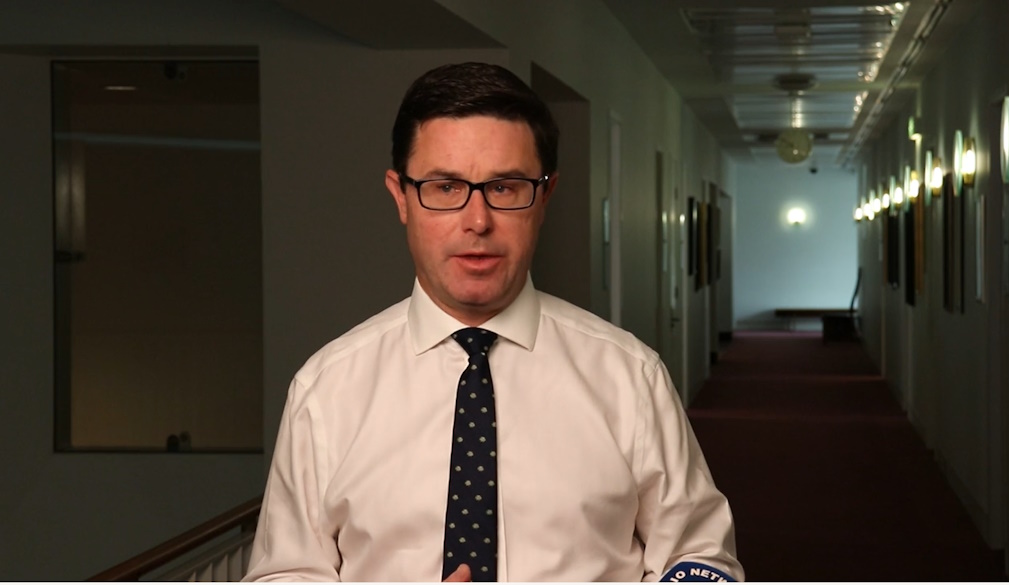
Canberra. August 9, 2023. The leader of the Nationals, David Littleproud, has called for a multi party discussion on the potential for nuclear energy to help Australia meet its emission targets.
During a door stop interview, David Littleproud said that he had asked the Prime Minister to engage in discussions about how nuclear power plants installed on existing coal fired power station sites, could save billions of Dollars by using existing transmission lines.
JOURNALIST
About nuclear energy. Will this be able to work in Australia and seeing as we've had so much issue figuring out where we will store our waste, is that a viable solution?
DAVID LITTLEPROUD
Yes it is, but we need to have that conversation in a mature way with the Australian people and bring them on that journey around the technology that's available that is evolving, particularly in Northern America. This is where we don't have to spend a cent. We can peek over the Pacific, not spend a cent and see if we can adopt it. We have sovereignty of all our resources here, and this is zero emissions technology. In fact, the, generation forward technologies is looking to reprocess the waste. So we should embrace this technology that gives us, reliable energy source with zero emissions.
And the conversation is about where we put them. And that's where regional communities need to have those conversations. And that's because, it makes sense to put them where coal fired power stations already are because you don't need new transmission lines.
This government with their reckless race to 82 per cent renewables by 2030 will also mean you need 28,000 kilometres of new transmission lines. And so that comes at a cost. So why wouldn't we look at alternatives that gives us zero emissions, but gives us reliable, affordable energy that firms up our energy sources. So this is just common sense. And so this is a conversation we want to start with the Australian people in making sure they understand the technology and they don't have Chris Bowen, who is the beholder apparently of all wisdom and knowledge on energy yet is relying on a CSIRO report that says renewables are the cheapest but fails to actually add in the 28,000 kilometres of transmission lines.
That's close to another $80 billion, probably $100 billion dollars in transmission lines. That is not the way to conduct yourself as a Minister.
When I became leader, I wrote to the Prime Minister. One of the first actions I took was to say, let's have a National Energy Summit. Let's have a national conversation. Why don't the Australian people become informed about the technological advancements that are happening around the world and the opportunities that are there? That's political leadership. The Prime Minister rebuffed me. I'm simply saying there is an opportunity for political leadership here to put aside all that and simply say to the Australian people, let's look at our options, our alternatives to make sure we use common sense to get a reliable, affordable energy system that reduces emissions. And nuclear should play a part of that.
JOURNALIST
How soon could we be getting energy from these modular systems you're talking about?
DAVID LITTLEPROUD
I think we have to be realistic. They're over a decade away. But let's be honest. We don't need to race to net zero by 2030. This government is racing to net zero by 2030. Our only international commitment is to get to net zero by 2050. So let's pause, let's plan, let's get this right. And that's the opportunity of having a National Energy Summit that The Nationals have said to the Prime Minister, let's have political leadership, take my hand. Let's work together. Let's get unions. Let's get all the energy sector together. Let's get industry to understand the opportunities that are there.
And then let's create the environment by simply taking away this moratorium that's been put in place and allow the market to decide. That's common sense.
JOURNALIST
At the joint party room yesterday, there was lots of concerns regarding the cheaper medicines policy that Labor has pushed. Is it now time to take action into that?
DAVID LITTLEPROUD
We will be taking action. The Nationals already made that very clear and obviously our Coalition partners have concerns with that as well. We fear that there will be over 600 pharmacies that will be shut. 432 are in towns where they are the only primary care we have. And there potentially could be 20,000 jobs lost in what is a feminized market. This is something that really concerns us. And so we just want this government to go back to the table and talk to the Pharmacy Guild. There are ways through this, but instead what will happen is there'll be a perverse outcome where pharmacists, mum and dad businesses, they have to pay their mortgages. And what they'll have to do is they'll have to find income from other streams. And that's around Webster packs, to not just elderly Australians in aged care facilities, but to Indigenous Australians.
And so what that means is that, someone's going to pay and those elderly will pay over $800 a year extra to have their Webster packs put together. So this is where the government just needs to put aside the bravado to come to the table and sit down with the Pharmacy Guild to work through this so that the outcomes they're looking for, which is cheaper medicines, which we all want, is achieved without perverse outcomes. And I think the Pharmacy Guild is up for that conversation. I don't think Mark Butler and Anthony Albanese are because they're refusing to continue to see that and meet with the Guild.
JOURNALIST
The Greens have put out data today saying that if a rent cap came into place last year, people would've saved $3 billion. Is a rent cap the answer?
DAVID LITTLEPROUD
I'm always a little sceptical to take any data that the Greens actually undertake or find themselves. I think we need to be sensible about this. You can have perverse outcomes by having rent caps. I think this is where state governments have obviously looked at different measures around how we actually address the housing crisis. But the housing crisis is the result of state and local government and it's about supply. And you need to lift supply quickly. And the only way to increase supply quickly is to go up rather than out and get developers in where there is commercial tension to invest their capital to actually increase housing density.
And unfortunately, the Greens go missing when you start talking about housing density. The housing spokesman is one of the first ones in Brisbane to, to jump up and down when there is a development for housing density increase in one of his suburbs. I mean, the bloke is a hypocrite, let's be honest. This is a crisis, the way to actually address it is to increase supply. Increase supply quickly.