Yes, Australia needs new homes – but they must be built to withstand disasters in a warmer world
- Written by: Francesca Perugia, Senior Lecturer, School of Design and the Built Environment, Curtin University
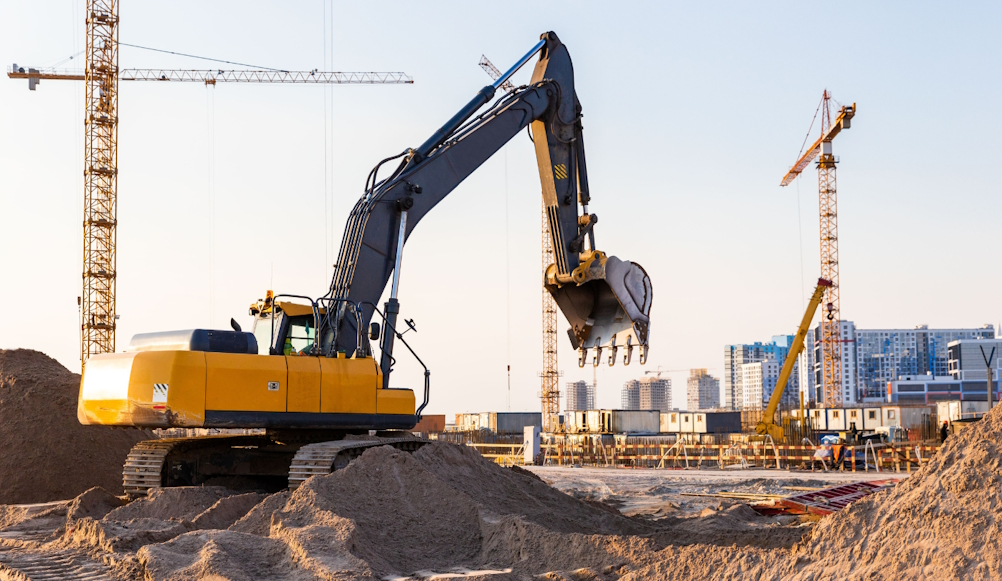
Australia’s housing crisis has created a push for fast-tracked construction. Federal, state and territory governments have set a target of 1.2 million new homes[1] over five years.
Increasing housing supply is essential. However, the homes must be thoughtfully located and designed, to avoid or withstand natural disasters such as bushfires, floods and cyclones.
Recent severe weather, including floods in Queensland[2] and severe storms in north-east Victoria[3], underscore the growing vulnerability of Australian homes. As climate change worsens, the risk becomes ever-greater.
Our new research[4] examined how disaster risk informs housing location and design in New South Wales, Victoria and Western Australia. We spoke to planners, developers, insurers and housing providers, and found crucial problems that leave communities exposed.
Getting to grips with disaster data
Australia’s towns and cities are increasingly affected by natural disasters. The consequences extend beyond physical destruction to social, psychological[5] and health effects[6]. Disasters also harm the economy[7].
Despite this, government housing policies and strategies often fail to adequately focus[8] on natural disasters.
Accurate, up-to-date information is crucial when seeking to protect new homes from natural disasters. Informed decisions typically require three types of data:
-
foundational: relating to vegetation, landscape features, weather, climate change and building characteristics such as height and materials
-
hazards: the risks of different disaster types such as historical flood data, maps of bushfire-prone areas and the recurrence of cyclones
-
vulnerability: the potential and actual impacts of natural disasters such as building damage, fatalities and injuries, displacement, psychological and health impacts and insurance losses.
Our research, for the Australian Housing and Urban Research Institute, examined how data could be better used and shared to plan and deliver new housing and protect Australians from disasters.
What we did
We started by identifying what data was available in Australia for bushfire, flood and cyclone risk. Then we examined who owned and managed the data and how it was, or wasn’t, shared.
The next step was to explore how decision-makers use the data to assess disaster risks for new housing. This involves interviews, workshops and questionnaires with:
-
government planning agencies (both state and local government)
-
housing providers (public and not-for-profit/community housing)
-
housing and land developers (private and public)
-
banks and insurers.
What we found
Overall, we found data on disaster risk was fragmented and inconsistent across multiple agencies, and not regularly updated.
Decision-makers in state and local planning agencies often cannot access accurate information about disaster risk. This means they lack the power to restrict housing in areas prone to bushfires, floods or other extreme events.
Flood hazard data is particularly problematic. One planner from Queensland described it as “patchy, of variable quality and currency and not always open source” – the latter meaning it was hard to access.
Many households only learn about their disaster risk when discovering their homes are uninsurable or premiums are prohibitively high. Others become aware of the problem when premiums rise with an existing insurer.
A community housing provider told us:
I think the way people are finding out about risk now is by their insurance policies going up. That’s the market reality. When they get an increase in their insurance policy next year, that will wake them up that they are actually in a high-risk area.
Data held by emergency service agencies and insurers is mostly inaccessible to planners, developers and households due to privacy and commercial sensitivities.
However, this information is crucial. Government agencies should establish protocols to enable data-sharing while protecting privacy and commercial interests.
Lack of transparency for homebuyers
A recent report[9] suggested only 29% of Australian home buyers know the disaster risks associated with the homes they live in.
Disclosure statements are required by the vendor (seller) when marketing their house or land for sale. These vary between states and territories and, in most cases, do not compel the owner to reveal all known risks.
For example, in Victoria, a vendor is required to disclose whether the land is in a designated bushfire-prone area, but not whether it is exposed to flooding.
What’s more, a vendor motivated to sell a house is probably not the best source to provide accurate, impartial information about its exposure to disaster. This is better left to an independent entity such as a local council.
Thorough investigations into a home’s disaster risk is usually at the discretion of the buyer[10].
Making this information readily available to prospective homebuyers prior to purchase would allow more informed consumer decisions. It would also pressure governments and housing suppliers to address disaster risks.
Where to next?
Australia urgently needs a national framework to ensure data on housing and disaster risk is comprehensive, current and embedded in housing development decisions.
The federal government’s Digital Transformation Agency could establish and implement this system, with input from state and local governments.
Technology known as “spatial digital twins” could also vastly improve how disaster risk is assessed and communicated. These tools enable users[11] to pull together and arrange large amounts of data, to visualise it in the form of models.
For example, a spatial digital twin could combine real time flood sensor data with historical flooding patterns to predict and visualise flood risks before they occur. Federal[12] and state[13] governments are already investing in such technology.
Australia’s push to increase housing supply must be matched with a commitment from governments to ensure the homes are safe, resilient and sustainable in the face of our changing climate.
Addressing the housing crisis isn’t just about numbers – it’s about making sure homes are built in the right places, with the right protections, for the long-term safety of communities.
References
- ^ target of 1.2 million new homes (www.pm.gov.au)
- ^ floods in Queensland (www.abc.net.au)
- ^ severe storms in north-east Victoria (www.abc.net.au)
- ^ Our new research (www.ahuri.edu.au)
- ^ psychological (pubmed.ncbi.nlm.nih.gov)
- ^ health effects (www.tandfonline.com)
- ^ harm the economy (www.abs.gov.au)
- ^ often fail to adequately focus (www.ahuri.edu.au)
- ^ A recent report (www.domain.com.au)
- ^ usually at the discretion of the buyer (www.emerald.com)
- ^ enable users (www.spatial.nsw.gov.au)
- ^ Federal (www.dfat.gov.au)
- ^ state (www.wa.gov.au)