Young Academics Early Learning Centre partners with The Wiggles
- Written by: The Times
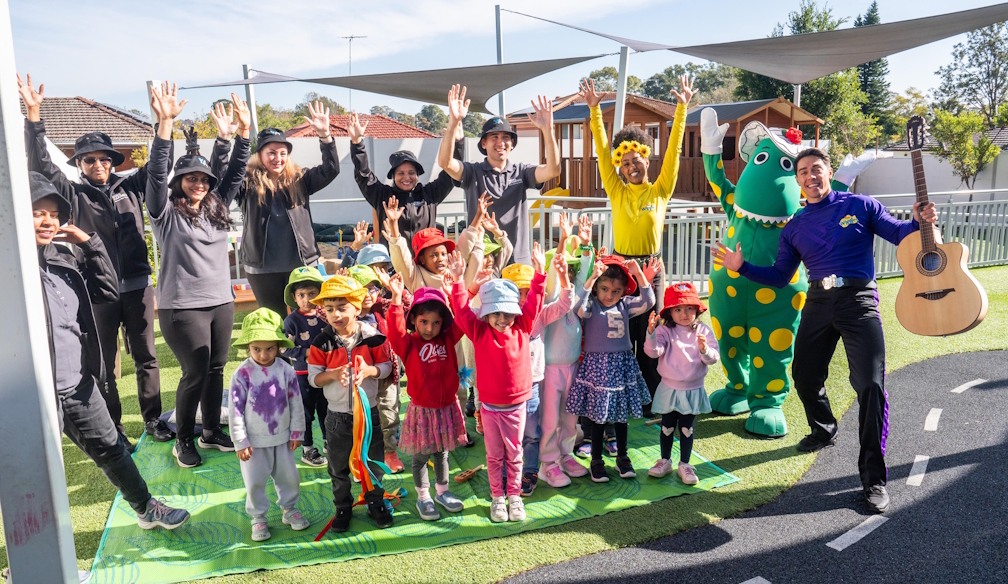
With Hot Potato, Fruit Salad and Dippy Do Dinosaur Dance, The Wiggles have topped the charts. Parents know, love and trust their content to uplift young minds in the early developmental years, which is why Young Academics Early Learning Centre has enlisted their help to amplify the daily childcare curriculum with more music. Across 38 centres and a community of 5000+ children, educational entertainment will be a top priority, especially when it comes to ensuring neurodivergent children remain engaged and supported.
As part of the three-year partnership, The Wiggles will be custom creating four new video resources each year, exclusively available to Young Academics families and learners. It’s a chance to help children improve their vocabulary, gross and fine motor skills, and social and emotional development. All particularly relevant tasks for the growing number of children with additional learning needs.
Plus, there’s something for the parents too, as Young Academics become the official presenting partner for Wiggle Talk: A Podcast For Parents with the adults underneath the colourful skivvy’s sharing their personal learnings. With decades of experience and deep understanding of early childhood development, Wiggle Talk’s weekly episodes welcomes experts to offer practical tips from managing sleep, establishing routines and understanding the importance of play and music in development.
“I have such fond memories of taking my own children to The Wiggles concerts, and I am delighted to be able to incorporate their music into our educational programs, and hopefully watch the next generation fall in love with learning. Music is such a powerful way to build connection between our children, their families, their educators, and bring a lot of joy while doing so,” explains Young Academics Director of Operations, Jenni Gaffney.
“After 33 years in the early education and entertainment sector, we have learned what works to inspire and engage toddlers and preschoolers, and what doesn’t. We know without question that music enhances mood, encourages self-expression and unlocks different ways of learning. We are excited to partner with the team at Young Academics, who share our commitment to learning through music and movement and having a great time while doing it!” states (The Original) Blue Wiggle, qualified early educator, and father-of-three, Anthony Field.
Across their seven key program areas - core, scholar, creative, wellness, wellbeing, our world, and discovery - Young Academics will incorporate music from The Wiggles. Why? Because science says so. We watch babies bop along to beats well before they can walk. We sing to young children to soothe them into sleep. And we know the body produces oxytocin (a hormone linked to relationship building and trust) when listening to music. Further benefits of adding a soundtrack to everyday tasks include:
-
- Strengthening the connection between hearing and the brain’s ability to process sounds, building more neural pathways from an early age which helps retain new information
-
- Being one of the few activities using both the logical and creative sides of the brain, helping children regulate emotions, think creatively and make connections
-
- Fostering young children’s social-emotional development by enhancing key skills such as turn-taking and sharing during group play
-
- Improving listening skills, enhances attention and boosts memory, laying a strong foundation for future learning
-
- Introducing children to rhyming text and patterns – important early literacy skills – especially for children learning English as a second language
-
- Research shows children who undergo regular musical stimulation before the age of five have greater attention spans and superior language skills, including vocabulary
-
- Music helping develop hand-eye coordination, spatial awareness and motor skills through clapping, dancing, twirling and playing instruments
According to Anthony Field, “The secret to our [The Wiggles] success lies in writing songs for specific developmental ages and stages. We talk to children in a language they understand and enjoy. We draw upon our practical understanding of early childhood learning practices to create music that inspires children to want to participate, to instinctively clap, sing along or jump up and dance.”
These musically inspired habits and behaviours are particularly important in helping unlock creativity and communication in children with additional learning needs. The number of young children diagnosed with neurodiversity disorders (including ADHD and Autism Spectrum Disorder) is increasing, and Young Academics is committed to adapting its activities to cater to all. For children with limited language skills, difficulty concentrating, or challenges with regulating or expressing their emotions, music can be a vital learning tool.
“Music can help children understand their emotions, especially in a non-verbal way, whether that’s playing a drum as an outlet for big feelings or listening to calming music to self-soothe. Educators can ask children how a song makes them feel or invite them to draw what they’re listening to as a different way to draw an emotional response,” continues Jenni Gaffney.
ADHD is now the most common mental health condition in Australian children1. For preschool aged children with ADHD, the rhythm and activity of dance helps capture their attention, helps them focus, and offers a positive outlet for their energy and self-expression2. Anxiety and behavioural issues are also increasingly prevalent amongst young children3, with studies showing children participating in music exhibit more joy and adapt better to social situations4.
The Wiggles and Young Academics Early Learning Centre will be doubling the fun of daycare. To get in on the action (you and your little one) head to www.youngacademics.com.au to browse the curriculum in full, and find your nearest centre.
1 https://www.rch.org.au/kidsinfo/fact_sheets/Attention_deficit_hyperactivity_disorder_ADHD