Aged care staff urgently need training to report and prevent sexual assault
- Written by: Joseph Ibrahim, Professor, Health Law and Ageing Research Unit, Department of Forensic Medicine, Monash University
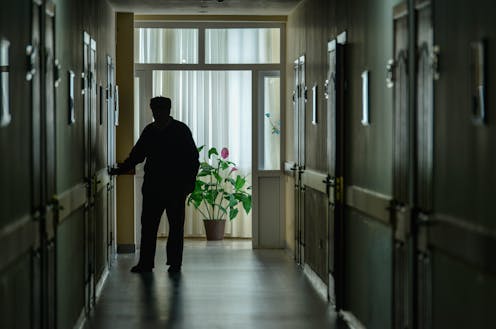
An estimated 50 sexual assaults[1] occur nationally every week in Australian residential aged care facilities. Despite this shocking figure, none of the Aged Care Royal Commission’s 148 recommendations[2] released earlier this year specifically address the prevention of sexual violence.
Our recent study[3], published in the International Journal of Older Persons Nursing, found two-thirds of aged care staff had not received any training in prevention of sexual violence in the previous 12 months. Staff confirmed aged care approved providers often do not have dedicated or specific procedures to prevent or manage incidents.
Failing to combat sexual violence in aged care homes demonstrates an apathy towards older survivors and reinforces the existing difficulties faced by older people to achieve a basic human right: to live free from sexual violence.
Read more: 4 key takeaways from the aged care royal commission's final report[4]
Reacting, not preventing
Australia’s approach to preventing sexual violence in aged care focuses on mandatory reporting obligations set down by the Aged Care Quality and Safety Commission[5]. The rules require staff to define “victim impact” and “incident seriousness”. This approach lacks a scientific basis and deprives the older person of their autonomy – a right included prominently in the Royal Commission recommendations. It also shifts responsibility of complex social, legal and health issues unfairly onto care staff.
In response to the concerns from the aged care sector about how to apply the new rule, this month the regulator released the unlawful sexual contact decision support tool[6]. This tool seeks to define incidents as “Priority 1” or “Priority 2” according to how staff, not the survivor, have the perceived seriousness.
Criminal acts of sexual violence, including those perpetrated by staff members, may fall under the tool’s less urgent category – if the resident doesn’t require medical or psychological treatment as judged by the person using the tool. This means reporting to the regulator only needs to occur within a 30-day period. The longer reporting period could put others in danger and cause distress to residents and co-workers.
The regulator has argued[7] there’s an expectation aged care providers will report any “serious” incident immediately to police and to the regulator. In a statement, the Aged Care Quality and Safety Commission told the ABC this was covered by the question: “Are there reasonable grounds to report the incident to the police?”
However, an earlier report commissioned from KPMG[8] into the prevalence of abuse between aged care residents found aged staff reported no (58.1%) or minor (35%) physical or psychological impact afterwards for those raped or otherwise sexually assaulted survivors.
This report also revealed only 3 of the 1,259 incidents deemed Priority 1 or “very serious” were reported to the police. Although this was before the advent of the decision tool, it highlights the dangers of placing responsibility on individual staff members with inadequate training.
Read more: Only 3.8% of Australian aged care homes would meet new mandatory minimum staffing standards: new research[9]
Expecting aged care staff to do forensic work
A fundamental flaw in this tool is that it assumes certain capabilities of aged care staff.
What constitutes reasonable grounds to report to police is a complicated forensic concept. In the aged care setting, incidents of sexual violence may involve both a survivor and a perpetrator with cognitive impairment[10]. This adds to the already difficult task of “proving” an act of sexual violence has occurred. When the crime involves staff assaulting a resident, bystander stress[11] and the daunting task of reporting a co-worker add further complexity.
Asking aged care staff to take on decisions that require policing expertise is dangerous.

Read more: It's hard to think about, but frail older women in nursing homes get sexually abused too[14]
Tailored training could help
At the Health, Law and Ageing Research Unit we have developed an e-training intervention[15] to improve sexual violence incident detection, management and prevention. It aims to promote collaboration with expert dementia and sexual violence support services.
The e-training intervention covers key definitions and characteristics, detection, management and ways to support resident victim-survivors, as well as tools to teach staff how to manage residents and prevent incidents.
Participants in our study[16] who did the training reported better awareness, enhanced reflection on their current practice and improvement in sexual violence workplace management. The majority said they found the training relevant, practical and useful.
Only part of the solution
This training provides a first step to identify the learning needs of this population. It provides a model curriculum to guide development of training initiatives nationally and internationally.
Advocate’s for reform have repeatedly detailed what else should be addressed[17]. This includes engaging government, insurers, boards of management and executives to resource and develop an organisational culture that eliminates sexual violence.
Preventing sexual violence should be of critical concern to Australia. We must move past reactive measures and unsubstantiated approaches such as asking staff to assess the impact of sexual violence. Instead we should be developing solutions to protect residents from incidents ever occurring.
References
- ^ 50 sexual assaults (www.abc.net.au)
- ^ 148 recommendations (agedcare.royalcommission.gov.au)
- ^ study (pubmed.ncbi.nlm.nih.gov)
- ^ 4 key takeaways from the aged care royal commission's final report (theconversation.com)
- ^ Aged Care Quality and Safety Commission (www.agedcarequality.gov.au)
- ^ unlawful sexual contact decision support tool (www.agedcarequality.gov.au)
- ^ has argued (www.abc.net.au)
- ^ report commissioned from KPMG (www.health.gov.au)
- ^ Only 3.8% of Australian aged care homes would meet new mandatory minimum staffing standards: new research (theconversation.com)
- ^ cognitive impairment (pubmed.ncbi.nlm.nih.gov)
- ^ bystander stress (humanrights.gov.au)
- ^ Unsplash/Danie Franco (images.unsplash.com)
- ^ CC BY (creativecommons.org)
- ^ It's hard to think about, but frail older women in nursing homes get sexually abused too (theconversation.com)
- ^ e-training intervention (www.monash.edu)
- ^ study (pubmed.ncbi.nlm.nih.gov)
- ^ what else should be addressed (www.lawreform.vic.gov.au)