Why voters rejected plans to replace the Minneapolis Police Department – and what's next for policing reform
- Written by: Michelle S. Phelps, Assistant Professor of Sociology and Law, University of Minnesota
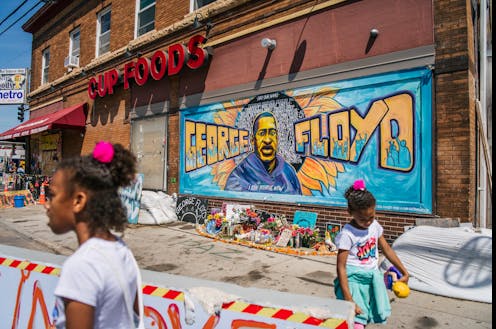
Voters in Minneapolis rejected a measure[1] that would have transformed the city’s policing 18 months after the killing of George Floyd[2] thrust the city into the forefront of the police reform debate.
By a 56% to 44% margin[3], voters said “no” to a charter amendment[4] that would have replaced the Minneapolis Police Department with a new Department of Public Safety focused on public health solutions.
Michelle Phelps[5] at the University of Minnesota leads a project looking at attitudes toward policing[6] in the city. The Conversation asked her to explain what happened in the Nov. 2, 2021, vote and where it leaves both Minneapolis’ beleaguered police department and police reform movements nationwide. An edited version of her responses are below.
What have voters in Minneapolis rejected?
The wording of the amendment[7] was quite complicated.
In essence, the amendment would have eliminated the existing police department in the city charter and replaced it with a Department of Public Safety charged with delivering “a comprehensive public health approach” to public safety, with the details of the new department to be determined by the mayor and city council.
So this was a ‘defund the police’ bill?
The proposed amendment itself didn’t require police numbers be reduced, but it removed a barrier to defunding. It was a chance for a new approach to policing.
The amendment would have eliminated a city charter requirement that Minneapolis maintain a minimum number of officers[8] based on population size. And it would have shifted some of the power for policing matters from the mayor to the city council, which could have required the new department to focus resources on alternatives to uniformed police, such as unarmed community officers or mental health specialists.
Why did the amendment fail?
The vote should not be seen as evidence that Minneapolis residents are content with city policing. Polls have shown that the Minneapolis Police Department is viewed broadly unfavorably[9], especially among Black residents. And 44% of voters did vote in favor of the amendment, so it is very much a mixed signal.
The reasons people voted against the amendment were complex. Yes, there was an element of resentment among white, more conservative Minneapolis residents who saw this as a radical attack on law and order. But it failed to get enough support among precincts with majority Black residents too.
One possible reason: As well as being more likely to face police brutality[10], Black Americans are also more likely to ask for the assistance of officers due to neighborhood violence. This bled into concerns over the impact that the amendment would have on police officer numbers.
As a result, the Black community was divided[11] over the amendment. At the same time that some Black activists and city leaders were calling for dismantling or abolishing the Minneapolis Police Department, other Black residents in North Minneapolis were suing the city to hire more officers[12].
Who voted against the amendment?
We don’t have a full breakdown of the vote yet, but we have precinct heat maps[13] that give a rough indication of who voted “yes” and who “no.”
Support for the amendment was high in some parts of South Minneapolis, especially the multiracial communities around George Floyd Square. There was also strong support in some gentrifying neighborhoods where there are a lot of young white voters.
In the southwest precincts – where there are clusters of wealthy, white residents – there was very strong opposition to the amendment. But most precincts in North Minneapolis, which has the highest proportion of Black voters, also voted “no” on average. When looked at through the lens of race, the story of the amendment is complicated.
Initial poll results also suggest age was an important a divide, if not more so than race.
In sum, both support for, and opposition against, question 2 in Minneapolis highlights the complex racial politics around both fear of police violence and fear of crime.
Are those fears supported?
Certainly opponents of the amendment have tried to argue that efforts to reimagine policing has left Minneapolis less safe. It is true that a lot of officers have left the force[14] since the summer of 2020 – many have left to go to departments outside the city, while others are on medical leave for PTSD (post-traumatic stress disorder).
And there is a perception among the public that fewer officers results in greater community violence. But the truth of the matter is trickier. The city has not defunded the police – the budget for 2021[15] was roughly in line with 2020. So the drop in officer numbers is not a result of the city defunding the department. Instead, officers are leaving the force. And there’s some evidence too that the officers that remain have at times shirked their duties to the public or “pulled back[16]” in proactive activities.
It is too simple to say that the reduction in police numbers has resulted in the increase in violent crime. We also have to factor in[17] the economic and social impacts of the pandemic, along with the fact that the courts were also shut down during that period.
At the same time, there has been an intense scrutiny on police violence in Minneapolis since George Floyd’s murder, and this has changed how officers and citizens interact – 911 calls have declined, relative to the rate of shootings, and trust is at a low. Meanwhile the uptick in gun sales[18] likely contributed to the increase as well. So there are a lot of factors beyond the number of police, or what they do, that can fuel violence or promote safety.
What is next for police reform in Minneapolis?
I’m not convinced this is the end of the amendment – it could return in some form. Yes, it failed this time, but there is a core of residents, organizers and activists who want to move away from the status quo when it comes to law enforcement.
The immediate concern for the city will be hiring officers to comply with a court order to comply with the minimum officers standard in the city charter[19], in addition to continuing to work to reform the department. So we will likely see more officers, not less, in the immediate future.
But there is real momentum for transformations in policing beyond reform. It is still possible that Minneapolis gets a Department of Public Safety, but through city ordinances rather than amendment and without disbanding the Minneapolis Police Department. And the city is continuing to onboard new mental health professionals to respond to some 911 calls.
Meanwhile, we have an ongoing federal Department of Justice investigation[20]. That could well end with a consent decree or memorandum of understanding that would mandate some of the changes that activists and community members are looking for.
How will this vote affect the wider police reform movement?
After George Floyd, what happens with policing in Minneapolis is no longer just about Minneapolis.
For advocates of the type of transformative changes envisioned by the amendment, it is a mixed result. While some may argue that the failure of the amendment to pass confirms that police defunding or abolition is politically toxic, close to half of the electorate voted for it – momentum has never been higher, despite the loss.
And had it been followed by continued increases in shootings[21], the danger would have been that the amendment would have been held responsible. The silver lining for those pushing for a “yes” vote is that perhaps the city now has the chance to develop alternative public health models without as much national scrutiny.
One thing is sure: This is not the end of the conversation.
[Over 115,000 readers rely on The Conversation’s newsletter to understand the world. Sign up today[22].]
References
- ^ rejected a measure (www.npr.org)
- ^ killing of George Floyd (www.nytimes.com)
- ^ 56% to 44% margin (www.startribune.com)
- ^ charter amendment (www.startribune.com)
- ^ Michelle Phelps (cla.umn.edu)
- ^ project looking at attitudes toward policing (www.michellesphelps.com)
- ^ wording of the amendment (ballotpedia.org)
- ^ minimum number of officers (www.startribune.com)
- ^ viewed broadly unfavorably (www.startribune.com)
- ^ more likely to face police brutality (www.hsph.harvard.edu)
- ^ was divided (www.startribune.com)
- ^ suing the city to hire more officers (www.yahoo.com)
- ^ precinct heat maps (www.startribune.com)
- ^ lot of officers have left the force (minnesota.cbslocal.com)
- ^ budget for 2021 (www.police1.com)
- ^ pulled back (www.reuters.com)
- ^ have to factor in (theconversation.com)
- ^ uptick in gun sales (www.theguardian.com)
- ^ hiring officers to comply with a court order to comply with the minimum officers standard in the city charter (www.yahoo.com)
- ^ ongoing federal Department of Justice investigation (www.npr.org)
- ^ continued increases in shootings (www.pbs.org)
- ^ Sign up today (theconversation.com)