3 reasons the announcement to dump radioactive waste in South Australia is extremely premature
- Written by: Ian Lowe, Emeritus Professor, School of Science, Griffith University
Radioactive waste from nuclear medicine facilities around Australia will be trucked to and buried near the South Australian town of Kimba, the federal government announced this week[1].
The site, Napandee, comprises 211 hectares of government-acquired land, with radioactive waste set to be stored for over 100 years in deep trenches.
The announcement comes after six years of consultation with the local community – but, as federal Resources Minister Keith Pitt noted, the problem of managing radioactive waste has been on the national agenda for 40 years.
There is a good reason it has taken so long: storing radioactive waste is a complex issue.
Radioactive waste is extremely hazardous to people and the environment. It emits radiation, which can pollute water, kill wildlife and cause a number of deadly human health issues such as cancer. Even waste with low potency levels needs to be stored away for centuries, so the community should be assured the repository is well designed and properly managed.
Read more: Japan plans to dump a million tonnes of radioactive water into the Pacific. But Australia has nuclear waste problems, too[2]
Currently, radioactive waste – which results from the radiation needed to perform diagnostic imaging and cancer treatment – is scattered in dedicated storage facilities in hospitals across the country, but the majority is secured safely at Lucas Heights in Sydney.
While Pitt is celebrating what he regards as a resolution, there are three reasons this announcement is premature.
1. Legislative and regulatory hurdles
Twenty years ago, The Olsen government of SA passed legislation[3] to prevent radioactive waste being brought into the state. When the Howard government proposed storing radioactive waste in the state soon after, the subsequent Rann government strengthened that legislation.
This means the new proposal[4] will require the current SA government to repeal or amend the current law. This will be difficult, as Premier Steven Marshall runs a minority government and, with an MP defecting in October[5], he’s likely to struggle to get the support he needs.
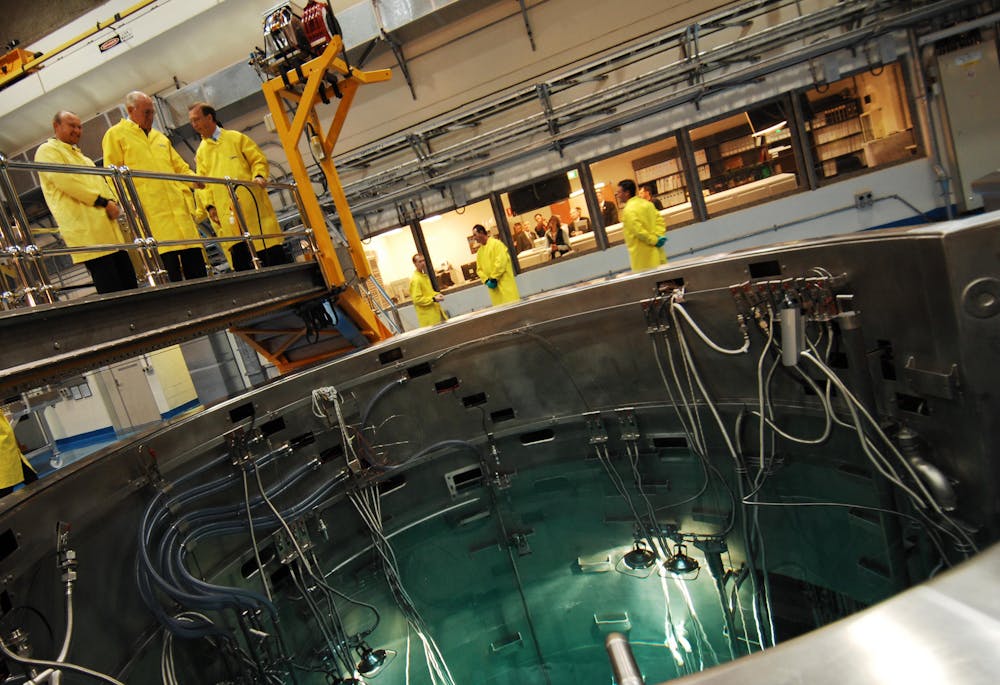
There is also a regulatory hurdle. A proposal such as this needs the approval of the regulator, the Australian Radiation Protection And Nuclear Safety Authority (ARPANSA[6]), which will assess the proposal to determine whether it ensures the safety of people and the natural environment.
ARPANSA took the previous proposal by the Howard government very seriously. The process included public hearings at which the Director of ARPANSA was assisted by two scientists – I was one and the other was a Canadian expert in radioactive waste management.
It became clear in the assessment process that the federal government had made no attempt to calculate the risk of transporting radioactive waste from the various sites where it’s now stored to the more secure centralised facility. It simply asserted that the risk was minimal.
ARPANSA was not impressed by this data-free approach. Faced with opposition by the state government and questions raised by the regulator, the federal government withdrew the proposal[7].
Read more: Curious Kids: why does the world store nuclear waste and not just shoot it into the Sun or deep space?[8]
2. The waste is more dangerous
The second serious hurdle is that “intermediate level” waste from a nuclear reactor temporarily stored at Lucas Heights will be sent there[9].
The new Napandee facility will mostly store the comparatively benign “low-level waste”. This includes residues from nuclear medicine, scientific research and industrial applications. Once buried in deep trenches, this poses relatively little risk to humans or wildlife.
Intermediate level waste is much nastier and demands much greater levels of security. It contains long-lived radioactive isotopes that need to be isolated and contained for periods of thousands of years – effectively permanent disposal. This is generally seen as requiring engineered underground containment facilities, rather than the near-surface repositories used for low-level waste.
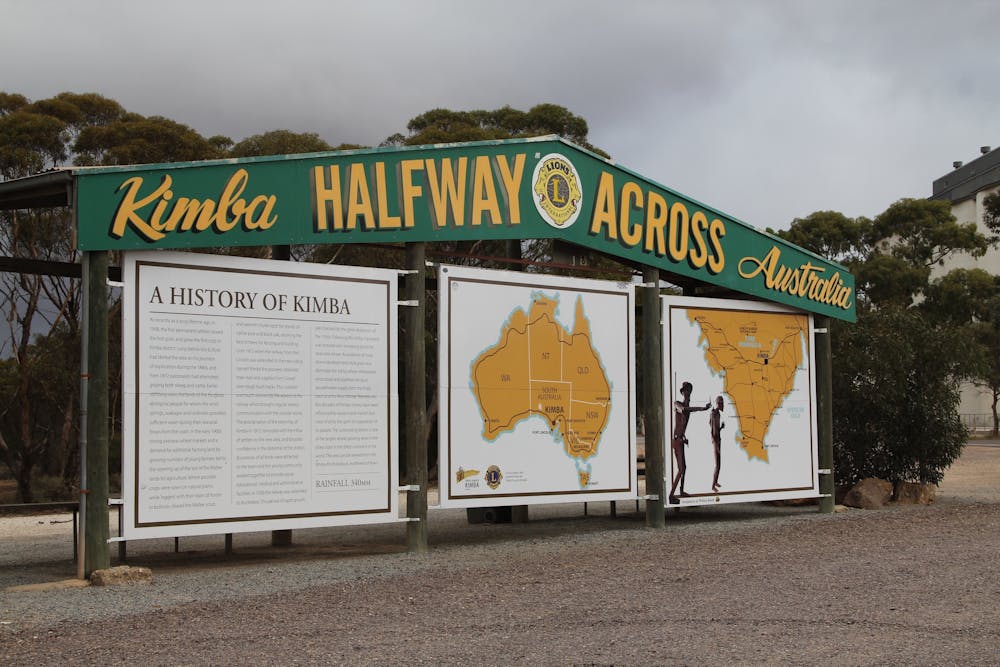 The waste site is about 24 kilometres away from Kimba.
Kyodo via AP Images
The waste site is about 24 kilometres away from Kimba.
Kyodo via AP Images
No such facility to safely, and permanently, house this waste has been built in Australia, and the regulator will undoubtedly require assurances it could be safely constructed and managed.
It will also be much more difficult to justify transporting this waste along the roads of three states, given it’s now securely held at Lucas Heights. Transporting nuclear waste comes with risks[10] of accidents or possible theft by terrorists of the dangerous material.
There seems to be no point moving intermediate waste from its temporary storage in Lucas Heights, to temporary storage in Napandee.
3. No consent from Traditional Owners
The third hurdle for the proposal is the opposition of the Barngarla Traditional Owners, who have made clear they do not support[11] the proposal for radioactive waste to be stored on their land.
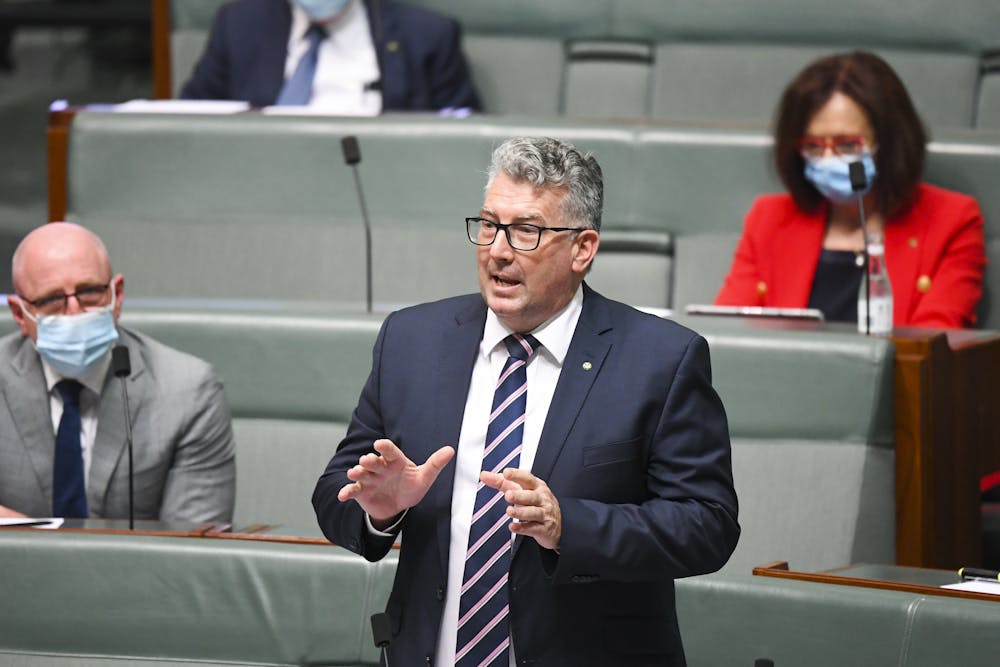 Resources minister Keith Pitt made the announcement on Monday.
AAP Image/Mick Tsikas
Resources minister Keith Pitt made the announcement on Monday.
AAP Image/Mick Tsikas
After the consultation process in SA, a ballot showed 60% of the local residents supported the proposal. But the the Barngarla people say they have not been included[12] in consultations.
In previous decades, our governments have ridden roughshod over the wishes of Traditional Owners and imposed developments they did not want. Today, the Australian public is generally more respectful of the wishes of Traditional Owners.
There will certainly be legal challenges[13] to the government’s scheme. But even if the Barngarla people don’t have the law on their side, they have the moral authority. It will be politically difficult for any government to justify going ahead with a scheme that is totally opposed by the relevant Indigenous group.
Read more: Uranium mines harm Indigenous people – so why have we approved a new one?[14]
The storage of radioactive waste is the extreme example of an issue that demands long-term thinking. Finding a site must involve serious discussion with Traditional Owners as well as current landholders. There is no need to rush[15], as the intermediate-level waste is securely held in temporary storage at Lucas Heights.
References
- ^ announced this week (www.minister.industry.gov.au)
- ^ Japan plans to dump a million tonnes of radioactive water into the Pacific. But Australia has nuclear waste problems, too (theconversation.com)
- ^ passed legislation (www.legislation.sa.gov.au)
- ^ new proposal (www.industry.gov.au)
- ^ defecting in October (www.minister.industry.gov.au)
- ^ ARPANSA (www.arpansa.gov.au)
- ^ withdrew the proposal (www.aph.gov.au)
- ^ Curious Kids: why does the world store nuclear waste and not just shoot it into the Sun or deep space? (theconversation.com)
- ^ will be sent there (www.industry.gov.au)
- ^ comes with risks (media.nti.org)
- ^ do not support (www.sbs.com.au)
- ^ not been included (www.sbs.com.au)
- ^ legal challenges (www.theguardian.com)
- ^ Uranium mines harm Indigenous people – so why have we approved a new one? (theconversation.com)
- ^ no need to rush (theconversation.com)