Sold-out supplies, serving a public need and other adventures of doing science during a pandemic – 4 researchers share their experiences
- Written by: Christian L'Orange, Assistant Research Professor of Mechanical Engineering, Colorado State University
Closures, remote work, supply chain issues and changing priorities have affected almost everyone’s lives at some point during the nearly two years of the coronavirus pandemic. The process of science itself was no exception. The many people who do the lab work, experiments and human studies that further scientific knowledge all faced challenges – many of which were unexpected.
To understand how the pandemic changed the process of science, we asked four researchers about their experiences over the past two years.
Balancing public needs with science and mentorship
Christian L'Orange, Assistant Research Professor of Mechanical Engineering, Colorado State University
I am an engineer and aerosol scientist[2]. People used to return a look of confusion when I said that, and prospective engineering students rarely had any idea that aerosol science was even an area of research. That all changed with COVID-19.
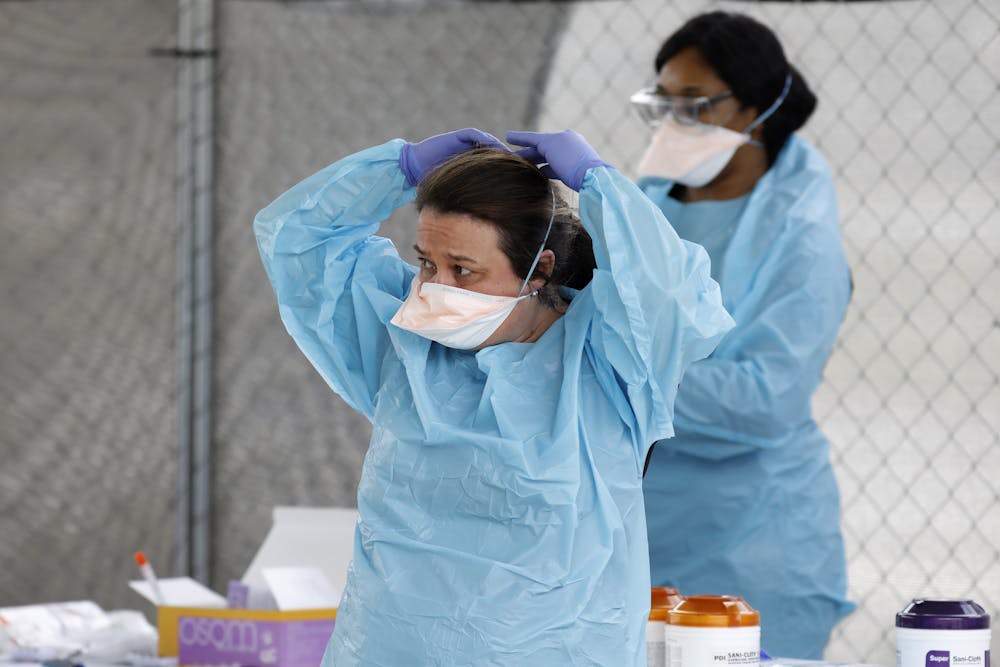
In March 2020, as the world was being told to stay home in the first weeks of the lockdown, the university and my lab were asked by the Colorado governer’s office to test masks being purchased for front-line workers.
In a matter of days, we pivoted all of our time to testing masks. This came at the cost of our research: Everything was put on hold. Nevertheless, we were proud to do it. I have had few experiences more gratifying than knowing I was making a difference in a time of need – however bittersweet.
A big reason I do the job I do is my love for research and the opportunity to mentor students. COVID-19 took both of those away for nearly two years. Research has begun again, and students are returning to the lab, but we won’t get that time back.
My colleagues and I were able to respond to the governor’s request for mask testing only because of the skills and experience that come from years of being in the lab – but what could those skills have led to if we hadn’t lost the past two years? What more could my students have achieved if they hadn’t lost that time?
Despite the good we have done, those questions still bother me.
However, I am optimistic that the pandemic might end up being good for aerosol research. I no longer get blank stares when I mention airborne particles, and maybe this pandemic will attract new bright students to a field about which I am so passionate.
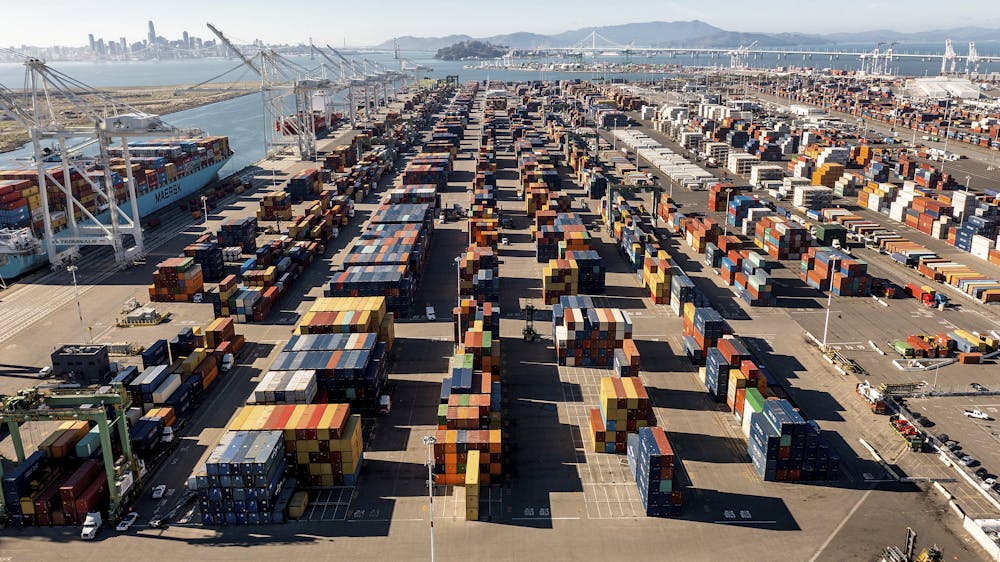 Scientific supplies – from chemicals to plastic containers – were all affected by supply chain issues.
AP Photo/Noah Berger[3]
Scientific supplies – from chemicals to plastic containers – were all affected by supply chain issues.
AP Photo/Noah Berger[3]
Resource sharing to overcome supply chain issues
Erin Lavik, Professor of Chemical, Biochemical and Environmental Engineering, University of Maryland, Baltimore County
My lab – where my colleagues and I study biomaterials to control bleeding, deliver drugs and build tissues[4] – was shut down in March 2020 because of the coronavirus. When labs on campus began to reopen that June, we worked with a skeleton crew to restart our projects.
We expected there to be challenges getting certain supplies and chemicals[5] that were necessary for vaccine production, but I was utterly surprised by how hard it was to get everything[6]. Plasticware that we use in experiments became impossible to find. Many chemicals were back-ordered for months, if not years[7].
To keep scientific projects moving forward, my lab and many others on campus have banded together and have been sharing supplies and looking after one another’s projects. Because of unexpected sudden quarantines, we cannot afford to just do our work – we need to know what others are doing and be willing and able to step in at a moment’s notice to complete a chemical reaction, take care of some cells in a petri dish or record important data.
The challenges of limited supplies and quarantines are not over and may even be getting worse. But through the collaborative systems my colleagues and I have built, we have been able to keep research moving forward, albeit at a slower pace. And like everyone, we have all gotten better at the process of collaborating remotely, too.
Teaching the public directly
Tony Schmitz, Professor of Mechanical, Aerospace and Biomedical Engineering, University of Tennessee, Knoxville
The challenges of the pandemic are significant and continuing, but my personal experience at the intersection of COVID-19 and science has been unexpectedly positive.
I run the Machine Tool Research Center and study ways to improve and speed up the process of manufacturing parts[8]. Machining is important because it remains a critical process for manufactured products, but the U.S. workforce is in sharp decline[9]. When the University of Tennessee transitioned from in-person to online instruction, this new time away from the office gave me the opportunity to produce video and written content that explains the science and modern skills of machining to a lay audience.
The online training[10] I developed is like a flight simulator for machining. No prior experience is necessary, and it provides step-by-step instructions for computer-aided manufacturing skills. It explains the geometry and physics of machining and simulates the real-world vibrations and sounds of making parts.
I was not alone in having time on my hands though. Disruptions to education and the supply chain provided time for both students and manufacturing professionals to explore the online training I made. In one sense, the two factors created the perfect storm for nontraditional learning in machining, and the response has been fantastic. Since its launch in December 2021, 1,756 people have registered for the class, and 676 people completed it. These participants comprised 36% industry workers and 64% students and represented 47 states.
It has been fantastic to have an opportunity to teach machining in a unique way to a broader audience, and I will continue to do so. The Department of Defense is funding the effort, and in the future I plan to grow the network and add in-person training locations that complement the online instruction. Despite the many hardships the shutdowns caused, this would not have been possible in a normal year.
 Virtual reality can mimic many in-person experiences.
Westend61 via Getty Images[11]
Virtual reality can mimic many in-person experiences.
Westend61 via Getty Images[11]
Using tech when you can’t meet in person
Nilanjan Banerjee, Professor of Computer Science and Electrical Engineering, University of Maryland, Baltimore County
At the Mobile Pervasive and Sensor Systems Lab, my colleagues and I seek to understand how people’s physical states – like stress, for example – affect the performance of a group[12]. To study this, we need to collect physiological data like heart rate and heart rate variability from subjects while they play group games in person.
Unfortunately, having people meet in person to play games has been impossible for much of the past two years, thanks to the coronavirus. For many situations, remote conference tools can get the job done even if they are a bit more tiring than meeting in person[13]. But a Zoom call simply can’t emulate the immersive environment required for group games and the physical responses that I study.
If my colleagues and I wanted to continue our research, we needed an immersive but safe way for our study participants to interact. So, we developed virtual reality games. Over the months that we relied on virtual reality, my colleagues and I realized that not only did these games work, in fact, they turned out to be better than in-person games because the virtual environment is completely free of distractions.
[Over 140,000 readers rely on The Conversation’s newsletters to understand the world. Sign up today[14].]
Developing virtual reality games and making them as realistic as possible is not cheap. But compared with a normal in-person study, this is a simple, inexpensive and effective platform to study how people in groups perform under different conditions. Since it allows our team to study these things without the need for subjects to be in the same room all at once, we plan to continue using this platform for future large-scale studies even post-pandemic.
References
- ^ AP Photo/Mic Smith (newsroom.ap.org)
- ^ engineer and aerosol scientist (scholar.google.com)
- ^ AP Photo/Noah Berger (newsroom.ap.org)
- ^ study biomaterials to control bleeding, deliver drugs and build tissues (scholar.google.com)
- ^ chemicals (asm.org)
- ^ how hard it was to get everything (theconversation.com)
- ^ chemicals were back-ordered for months, if not years (www.the-scientist.com)
- ^ study ways to improve and speed up the process of manufacturing parts (scholar.google.com)
- ^ sharp decline (www.wbur.org)
- ^ online training (mtrc.utk.edu)
- ^ Westend61 via Getty Images (www.gettyimages.com)
- ^ affect the performance of a group (scholar.google.com)
- ^ a bit more tiring than meeting in person (theconversation.com)
- ^ Sign up today (memberservices.theconversation.com)