Drugs and the sun – your daily medications could put you at greater risk of sunburn
- Written by: Nial Wheate, Associate Professor of the Sydney Pharmacy School, University of Sydney
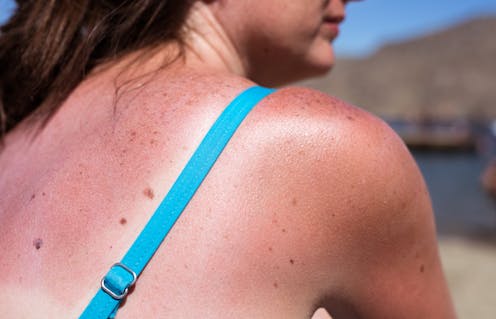
With summer holidays underway, it’s time to think about the sun and your skin. Australia has the highest rate of skin cancer[1] in the world, so we need to be doing more to protect ourselves from the damaging effects of ultraviolet radiation.
Unfortunately, some medicines can increase your risk of sunburn, because they either enhance UV absorption in your skin or cause you to have a light-activated reaction.
It’s important not to skim over the information provided with your medication, to speak to your pharmacist for on-the-spot advice and to take extra precautions if required.
Read more: I can't get sunburnt through glass, shade or in water, right? 5 common sunburn myths busted[2]
What happens to your skin
There are two main ways that medications can increase your risk of sunburn; a phototoxic reaction and a photoallergic reaction[3].
A phototoxic reaction is the most common way for a medication to cause an increase in sun sensitivity. This is where the drug molecule is able to absorb UV light, and then releases it back into the skin. Once the oral medication has been absorbed into the blood stream, or after the topical medication is applied to the skin, a phototoxic reaction can occur anytime within minutes or hours of sun exposure. Typically, only the skin that is exposed to the sun will react.
The second, less common mechanism, is via a photoallergic reaction. This can occur with certain medications that are applied directly to the skin, or that are taken by mouth and then circulated to the skin.
After exposure to the sun, a drug can undergo structural changes. Once these structural changes happen, small proteins in our body can bind to the drug, resulting in our immune system recognising it as a foreign substance. Then antibodies are produced to fight it.
The resulting reaction in many cases resembles eczema or a red rash. This type of reaction can take anywhere between one to three days to occur, and will only occur on the parts of the body that are exposed to the sun.
Importantly, both phototoxic and photoallergic reactions are damage to the skin from UV exposure that can increase the risk of later developing skin cancer.
There are also some types of medicines that can cause heat sensitivity and increase your risk of dehydration. This can occur if a medicine has effects that increase urination, prevent sweating, or reduce blood flow to the skin. Examples of these medications include diuretics, some types of antihistamines and stimulant medications for ADHD.

Read more: Common skin rashes and what to do about them[5]
Which medicines can affect your skin?
There are many medicines that can affect your skin and make you more sensitive to the sun, so it’s important to know which ones to look out for.
The first are the antibiotics. Tetracycline-based drugs are particularly known to cause sensitivity. An example is the drug doxycycline[6] which is used to treat infections, acne, and as a malaria prophylactic (or prevention) for those who are going to a tropical location (lots of sun).
Other antibiotics known to cause sun sensitivity are fluoroquinolones[7], like ciprofloxacin, and sulfamethoxazole[8], which treat a broad range of illnesses such as urinary tract infections, pneumonia or gastroenteritis.
The antifungals griseofulvin and voriconazole are known to cause sun sensitivity. You may be taking these medicines for skin or nail fungal infections[9].
For people who suffer from skin conditions such as acne, psoriasis, or eczema, the oral retinoid medications including acitretin and isotretinoin and the topical cream pimecrolimus will leave you sensitive to the sun.
Non-steroidal anti-inflammatory drugs, like diclofenac, can leave you sun sensitive, especially if applied on the skin, so you need to be sure you adequately protect those areas. The same applies for some opioid-based pain patches, like fentanyl[10]. When you remove the patch, the skin underneath will be sensitive to the sun.
Amiodarone[11] is a drug used to treat irregular heart beats and azathioprine[12] is an immuno suppressing drug used for people who have inflammatory immune conditions or organ transplants. Both are known to cause sun sensitivity.
Finally, a large number of drugs used in cancer chemotherapy will sensitise your skin[13]. These include: 5-fluorouracil, 5-aminolevulinic acid, vemurafenib, imatinib, mercaptopurine, and methotrexate.
It is important to note that not all people who use one of these medicines will have a sun sensitivity reaction – but extra precautions should be taken.
 It is much better to be sun safe than sun sorry.
Shutterstock[14]
It is much better to be sun safe than sun sorry.
Shutterstock[14]
Read more: Why does Australia have so much skin cancer? (Hint: it's not because of an ozone hole)[15]
Protect your skin
If you are taking a medicine that can make you more sensitive to the sun then always ensure you are sunsmart[16].
Remember the five S advice from the Cancer Council[17]:
- slip on suitable clothing
- slop on sunscreen that is rated SPF30 or higher to exposed skin, especially on your face and arms
- slap on a hat
- seek shade when you can
- slide on sunglasses.
And if you are concerned a medicine you are taking may be putting you at more risk of sunburn, speak to your pharmacist[18]. They can confirm if your medicine does increase your risk of sunburn and discuss options. This could include having your doctor issue a prescription for a different drug.
Never just stop taking a medicine because you are concerned about the risk of sun damage or any other side effects; always discuss it first with your health care provider.
Read more: Burnt is out, 'skinscreen' is in. How sunscreen got a beauty makeover[19]
References
- ^ highest rate of skin cancer (www.wcrf.org)
- ^ I can't get sunburnt through glass, shade or in water, right? 5 common sunburn myths busted (theconversation.com)
- ^ phototoxic reaction and a photoallergic reaction (www.skincancer.org)
- ^ Shutterstock (image.shutterstock.com)
- ^ Common skin rashes and what to do about them (theconversation.com)
- ^ doxycycline (www.nps.org.au)
- ^ fluoroquinolones (www.nps.org.au)
- ^ sulfamethoxazole (www.nps.org.au)
- ^ nail fungal infections (www.healthline.com)
- ^ like fentanyl (www.nps.org.au)
- ^ Amiodarone (www.nps.org.au)
- ^ azathioprine (www.nps.org.au)
- ^ cancer chemotherapy will sensitise your skin (blog.uvahealth.com)
- ^ Shutterstock (www.shutterstock.com)
- ^ Why does Australia have so much skin cancer? (Hint: it's not because of an ozone hole) (theconversation.com)
- ^ sunsmart (www.sunsmart.com.au)
- ^ Cancer Council (www.cancer.org.au)
- ^ speak to your pharmacist (www.choosingwisely.org.au)
- ^ Burnt is out, 'skinscreen' is in. How sunscreen got a beauty makeover (theconversation.com)