When arts organisations accept donations, there is always a price to pay
- Written by: Jo Caust, Associate Professor and Principal Fellow (Hon), School of Culture and Communication, The University of Melbourne
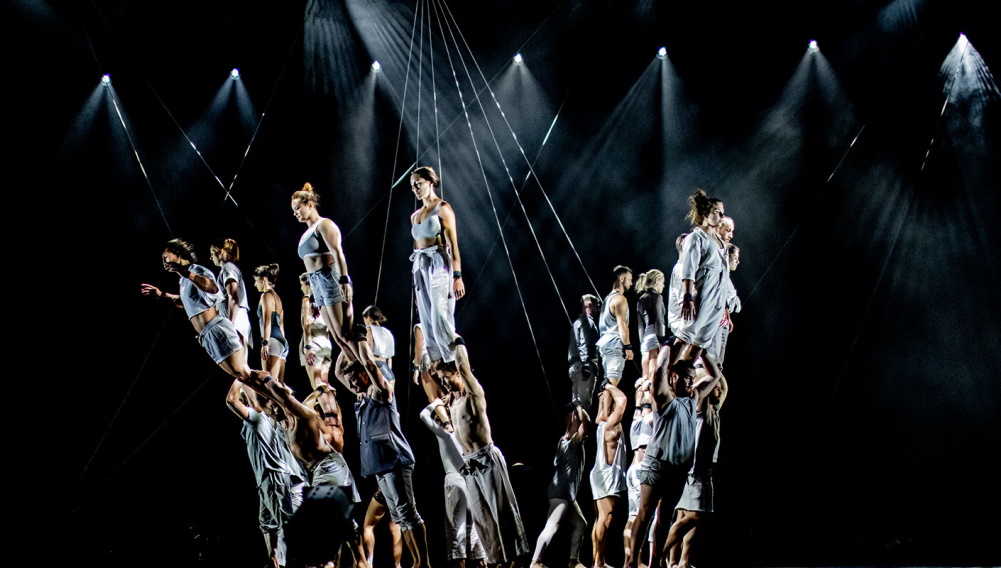
The Sydney Festival opens today under a cloud. Several artists and arts organisations have withdrawn[1] from the festival over the Israeli Embassy’s sponsorship of the dance work Decadance, by Israeli choreographer Ohad Naharin.
The crazy thing is the value of the sponsorship in question. A$20,000 is very small in the context of the festival’s overall budget[2].
Why, then, did the festival accept the funding agreement[3] for Decadance, given the overall size of its budget and the potential community reaction?
It’s true it is common, when a festival invites an arts performance from another country, for the country of origin to provide financial support for the project. They do this because they see an advantage for their culture to be presented internationally.
But critics have said[4] this particular funding arrangement “serves to artwash the Israeli regime’s violent control over the lives of Palestinians”.
This is not an isolated incident but part of a broader global debate around sources of arts funding. If an arts organisation accepts money from a donor, there is always a price to pay. It’s a question of how high the price is.
Read more: The Biennale, Transfield, and the value of boycott[5]
Is a donation ever free?
Arts organisations can sometimes demonstrate a strange naivety when asking for or accepting donations. It’s as though the gift is more precious than its actual monetary value. Certainly, government funders and bodies such as Creative Partnerships Australia[6] provide rewards such as matched funding to arts organisations for attracting private donations.
Ironically, too, there are expectations from governments that arts organisations must find outside funders, to justify receiving government support. A recent arts minister, George Brandis, threatened[7] in 2014 that if arts organisations or artists rejected private donations, they should be banned from receiving any government grants.
On the other hand, the donor, in this case the Israeli Embassy, insists[8] it’s not about politics but that
culture is a bridge to coexistence, cooperation and rapprochement and should be left out of the political arena.
But are there ever any “free” donations? And can we separate the “giver” from their brand or past actions?
A history of protest over arts sponsorship
There was an outcry[9] at the 2014 Sydney Biennale about an art sponsor, Transfield, and its connection with offshore asylum seeker processing centres. That did not go well for either party, with both suffering negative press and eventually breaking ties.
In December 2021 the Metropolitan Museum of Art in New York finally removed the Sackler[10] name from seven of its exhibition spaces, given that family’s association[11] with producing the drug at the centre of the US opioid crisis, OxyContin.
The museum’s board seemingly took this action reluctantly, thanking the family for their gracious donations, despite the community havoc wrought by their drug.
The Fringe World festival in Perth provoked an outcry in 2020 for insisting on accepting a large sponsorship from fossil fuel giant Woodside, and then later stipulating[12] artists “not do any act or omit to do any act that would prejudice any of Fringe World’s sponsorship arrangements”.
Artists put in a difficult position
Artists are always desperately searching for money to make their art happen.
Yet it was the artists who stood up and withdrew their labour during the 2014 Sydney Biennale. It was the artists who protested the sponsorship of the Fringe World festival, and it is the artists again who are protesting and withdrawing their labour from the 2022 Sydney Festival.
When artists protest about the sources of arts funding, they are often framed as ungrateful brats rather than people standing up for their beliefs.
Artists are some of the poorest people in our community, and yet are prepared to forgo their limited income to support fellow artists from other countries – in this case Palestine. This is not meant as a criticism of artists from Israel, for example the dancers involved in Decadance, but a criticism of their government.
Arts organisations are not separate from life or politics. And arts and cultural practices more broadly are not independent of any political association or connections. Nations around the world use arts and culture to promote their views, or to project a more benign image of their culture.
It is true, as the Israeli Embassy states[13], that arts and culture are a bridge for creating better cultural understanding.
But the protesters would argue that arts or cultural practices can be used cynically to drive a political or cultural agenda, hence the accusation of “artwashing[14]”.
So where does this leave the Sydney Festival?
So far, according to a statement[15], the festival’s board has said it wishes to:
affirm its respect for the right of all groups to protest and raise concerns […] All funding agreements for the current Festival – including for Decadance - will be honoured, and the performances will proceed. At the same time, the Board has also determined it will review its practices in relation to funding from foreign governments or related parties.
But it may have been wiser if the board had been more careful about its funding arrangements. Arts organisations, like artists, must be vigilant about the contracts they enter into.
Read more: We should value the Biennale protest, not threaten arts funding[16]
References
- ^ withdrawn (www.smh.com.au)
- ^ overall budget (issuu.com)
- ^ funding agreement (www.sydneyfestival.org.au)
- ^ said (junkee.com)
- ^ The Biennale, Transfield, and the value of boycott (theconversation.com)
- ^ Creative Partnerships Australia (creativepartnerships.gov.au)
- ^ threatened (www.smh.com.au)
- ^ insists (www.theguardian.com)
- ^ outcry (theconversation.com)
- ^ removed the Sackler (www.nydailynews.com)
- ^ association (www.abc.net.au)
- ^ stipulating (www.theguardian.com)
- ^ states (www.theguardian.com)
- ^ artwashing (www.sbs.com.au)
- ^ statement (www.sydneyfestival.org.au)
- ^ We should value the Biennale protest, not threaten arts funding (theconversation.com)