Do we really ‘lose our filter’ as we age?
- Written by: Stephanie Wong, Lecturer/Research Fellow in Psychology, Flinders University

Many of us will have experienced some unexpected honesty from the older people in our lives. Whether it’s grandma telling you your outfit is unflattering or grandpa saying he doesn’t like the meal you’ve prepared, we often explain it away by saying “Oh, don’t mind grandpa, he’s just lost his filter”.
But do we really have a “filter”, and do we lose it as we get older?
What do we mean when we say ‘filter’?
When someone has no “filter”, it means they say things without thinking about their audience. They may blurt out something rude, inappropriate, or unkind, without considering the likely consequences.

“Filters” are an important part of our everyday social interactions. A brief Monday morning chat with your boss is more complex than it may seem. For example, you might stop yourself from telling them they smell awful after their morning bike ride into the office and should’ve showered before your meeting. You might consider telling them about the fungal infection you discovered on your toenail over the weekend but decide against it. Of course, what you do or do not say also depends on how well you know them and what’s considered socially acceptable in your workplace.
Your “filter” relies on cognitive processes such as inhibitory control, which stops you from saying the first thing that pops into your mind. It also relies on social cognition, which refers to the ability to understand and predict other people’s behaviours, thoughts, and intentions. This helps us to recognise what behaviour is appropriate in a particular social setting and to adapt our behaviour based on this.
The prefrontal cortex, which is located within the frontal lobes of our brains, acts as our “filter”, helping us say and do things in a socially appropriate way. When this part of the brain isn’t functioning properly, we might act as though we’ve lost our “filter”.
Read more: Five common myths about the ageing brain and body[1]
What happens to our ‘filter’ as we age?
As we get older, our brains start to shrink. This is a normal part of the ageing process known as brain atrophy. It affects how well our brain cells can communicate with one another. Importantly, brain atrophy doesn’t happen to all areas of the brain at once. It is particularly noticeable in the frontal lobes[2].
 The area of the brain that controls our social cognition shrinks as we age.
Tim Kilby/Unsplash, CC BY[3]
The area of the brain that controls our social cognition shrinks as we age.
Tim Kilby/Unsplash, CC BY[3]
Researchers have linked age-related shrinking in the frontal lobes with declines in inhibitory control[4] and social cognition[5]. Studies have also found older adults respond differently to socially awkward situations[6] than younger adults.
For example, older adults have more difficulty recognising when someone’s said something embarrassing or tactless[7], and show poorer understanding of sarcasm[8].
So as we get older, normal ageing processes in our brains may make it much easier for things to slip out through our “filters”.
Read more: What's happening in our bodies as we age?[9]
What if it’s more than just a few slip-ups?
In some rare cases, losing your “filter” can be a sign of something more serious, such as damage to the frontal lobes due to a brain injury or stroke, or a neurodegenerative condition such as frontotemporal dementia[10].
People with frontotemporal dementia present with striking changes in their personality and social behaviour. This could involve losing their normal inhibitions, disregarding social conventions and other socially inappropriate or embarrassing behaviour.
However, these changes are completely out of character and are typically accompanied by other symptoms such as rigidity, loss of empathy, apathy, difficulties with reasoning and judgement, overeating or unusual food preferences and declines in self-care and personal hygiene.
Read more: Explainer: how is frontotemporal dementia different and what are the warning signs?[11]
What other things could be at play?
Aside from changes in the brain that impact inhibitory control and social cognition, it could simply be that as we get older, we care less about what others think.
Compared to younger adults, older adults are less self-conscious[12], reporting fewer experiences of emotions such as shame, guilt, and embarrassment. They also have higher overall levels of happiness and life satisfaction[13].
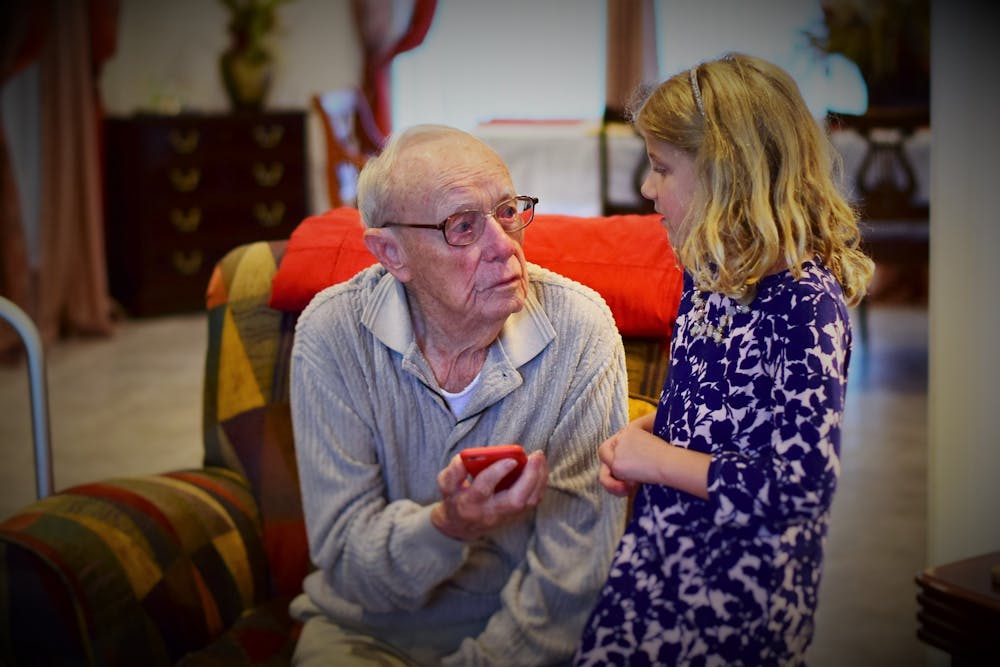
 Older people are also just more comfortable in their own skin.
Freddy Kearney/Unsplash, CC BY[14]
Older people are also just more comfortable in their own skin.
Freddy Kearney/Unsplash, CC BY[14]
Perhaps we learn to let go of our “filters” and embrace the social awkwardness as we get older. Perhaps grandpa really didn’t like your cooking, and feels secure enough to tell you.
So, what does this mean for those of us who seem to be losing our “filter”?
Based on what we know about the brain and ageing, blurting out a remark without thinking isn’t necessarily something to be alarmed about. And if you’re on the receiving end, try not to take it too personally. If these remarks seem out of character or extreme, however, consider raising this with other family members or a doctor.
References
- ^ Five common myths about the ageing brain and body (theconversation.com)
- ^ frontal lobes (pubmed.ncbi.nlm.nih.gov)
- ^ CC BY (creativecommons.org)
- ^ inhibitory control (link.springer.com)
- ^ social cognition (www.ncbi.nlm.nih.gov)
- ^ socially awkward situations (pubmed.ncbi.nlm.nih.gov)
- ^ tactless (pubmed.ncbi.nlm.nih.gov)
- ^ sarcasm (pubmed.ncbi.nlm.nih.gov)
- ^ What's happening in our bodies as we age? (theconversation.com)
- ^ frontotemporal dementia (www.dementia.org.au)
- ^ Explainer: how is frontotemporal dementia different and what are the warning signs? (theconversation.com)
- ^ less self-conscious (pubmed.ncbi.nlm.nih.gov)
- ^ happiness and life satisfaction (pubmed.ncbi.nlm.nih.gov)
- ^ CC BY (creativecommons.org)
Read more https://theconversation.com/do-we-really-lose-our-filter-as-we-age-176248