Times Media Advertising

The Times Australia
The Times World News

.

Higher education must reinvent itself to meet the needs of the world today. Enter the distributed university

  • Written by: Richard F. Heller, Emeritus Professor, University of Newcastle
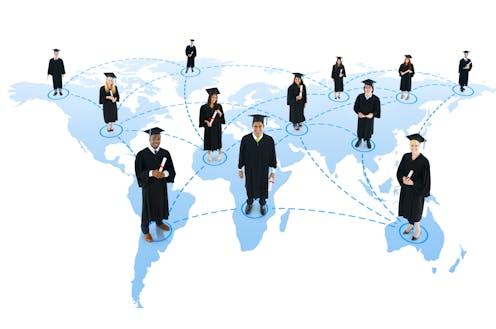
Higher education must reinvent itself to meet the needs of the world today. Enter the distributed university

Universities face many threats to their future. The traditional universities have become over-managed business enterprises[1], which may not reflect societal, national or global educational needs. The COVID-19 pandemic has brought many of these issues into focus.

In a new book[2], I propose a model that responds to the broad range of challenges universities face. I call this model the distributed university – that is, a university that distributes education online to where it is needed.

Read more: Amid global crisis, how can universities be regenerated to serve the common good?[3]

In more than 50 years as an academic in Australia and the UK, I have seen the potential for a pivot to online learning that, through distributed learning, could solve many of the problems the higher education sector faces.

I have been involved in online master’s-level programs to build public health capacity in both high-income and low-to-middle-income countries. Face-to-face teaching designed for the International Clinical Epidemiology Network[4] was augmented by distance learning – first paper-based, followed by online. I established the University of Manchester’s first fully online master’s program.

More recently, I founded and co-ordinated the global, fully online, volunteer-led People’s Open Access Education Initiative (Peoples-uni)[5].

Man looking at computer screen with the faces of the many people taking part in an online meeting
The distributed university reflects the way we communicate and learn in today’s world. Shutterstock

Read more: COVID has changed students' needs and expectations. How do universities respond?[6]

What are the problems facing universities?

The pressures on universities are both external and internal.

Externally, universities need to be responsive to the ways people access information today (and will tomorrow). They also need to ensure environmental sustainability. And amid global inequalities in access to higher education, our universities are overly dependent on income from overseas students[7].

Internal developments pose multiple threats too. Universities have downgraded teaching, with academics not rewarded for educational excellence as opposed to research. They have adopted a competitive business model, rather than a collaborative model of education, and intrusive managerial oversight instead of placing trust in academics. And they work in centralised ivory towers rather than engaging with local communities and industries.

Read more: Amid global crisis, how can universities be regenerated to serve the common good?[8]

The distributed university responds to these problems by:

  • reducing global inequalities in access
  • emphasising local relevance
  • reducing impacts on the environment
  • building trust in place of managerialism
  • collaborating rather than competing.

How does the distributed university work?
Cover of book 'The Distributed University'
Springer Link[9] The distributed university I describe in my book (free to read and download) sets up higher education to adapt to the changes in how we work and learn today. Online learning, which must be fit for purpose[10], is central to this as it allows for structural change. Smaller local hubs can largely replace central large campuses, reducing the large carbon footprint created by students and staff travelling to campus. These hubs may be physical or virtual. The distributed university offers education mainly online rather than in lecture halls. Local or regional hubs engage with local communities, industries and other education providers. They encourage practice-based active learning, which can be a hybrid of online and face-to-face. Each of the hubs can be replicated over geography (including internationally) and over time. Learning needs will change over time as careers and interests develop. Central administration is much smaller, but ensures the courses being offered meet societal needs. Intrusive managerialism is replaced by trust in academics – made easier by this structure. It is not generally recognised that online education is much more transparent than face-to-face. All materials, student contact and student-tutor interactions are captured, allowing for unobtrusive quality assurance. Social interaction between students and between academics is offered partly in the hubs but mainly online. This reflects the way we communicate and learn in today’s world. Read more: Beyond Zoom, Teams and video lectures — what do university students really want from online learning?[11] IT support for education and research is vital. It will allow us to respond to future developments in communications and to the changes and challenges of the fourth industrial revolution[12]. The distributed university will be light on the environment. Although online education is IT-heavy and has its own carbon footprint, it’s much smaller[13] – even more so when powered by renewables – than the face-to-face version with buildings and travel. It will thus show leadership in achieving environmental sustainability. This model’s local and regional hubs will also encourage regional development. Our recent research paper[14] highlights the environmental benefits of online education. A group of 128 master’s degree students (mainly from Africa) studied online rather than travel to live and study in the UK. They saved nearly a million kilograms of carbon emissions. Read more: Why universities are starting to re-evaluate their academics' travel[15] Doctor treats a young boy Distributed learning is a proven concept that has helped build public health capacity in Africa. Shutterstock Three new programs COVID has exposed the over-reliance on overseas student fees. This revenue has largely been diverted to support research[16]. The government’s recent international education strategy[17] makes no mention of the role Australia can play in reducing global inequalities in access to education. Read more: Australia's strategy to revive international education is right to aim for more diversity[18] In addition to the benefits described above, a pivot to online education opens up other opportunities. I describe three potential programs: a global online program, a tertiary version of the International Baccalaureate and a “PlanE for Education”. A global online program[19] can create low-cost learning for overseas students. This will help meet current educational needs while providing a bridge to future mutually beneficial partnerships with emerging economies. Research must be properly funded, and not rely on the diversion of income from overseas students paying high fees. To help reduce the destructive emphasis on competition between universities[20], a higher education version of the International Baccalaureate used in schools might be created. This would involve global collaboration between universities, which would reduce competition and standardise quality. Continuing the collaboration theme is a proposal to create “PlanE for Education[21]”. This would be similar to initiatives such as PlanS[22] that require publicly funded research to be published in open access journals or platforms. At least some of the educational resources generated in universities using public money would be made freely available under PlanE. Read more: Making Australian research free for everyone to read sounds ideal. But the Chief Scientist's open-access plan isn't risk-free[23] We live in a digital and distributed world. Universities should too. The notion of a distributed university may help the higher education sector survive, prosper and be sustainable. References^ over-managed business enterprises (www.nteu.org.au)^ new book (link.springer.com)^ Amid global crisis, how can universities be regenerated to serve the common good? (theconversation.com)^ International Clinical Epidemiology Network (pubmed.ncbi.nlm.nih.gov)^ People’s Open Access Education Initiative (Peoples-uni) (www.peoples-uni.org)^ COVID has changed students' needs and expectations. How do universities respond? (theconversation.com)^ overly dependent on income from overseas students (theconversation.com)^ Amid global crisis, how can universities be regenerated to serve the common good? (theconversation.com)^ Springer Link (link.springer.com)^ fit for purpose (theconversation.com)^ Beyond Zoom, Teams and video lectures — what do university students really want from online learning? (theconversation.com)^ fourth industrial revolution (www.weforum.org)^ much smaller (www.emerald.com)^ recent research paper (f1000research.com)^ Why universities are starting to re-evaluate their academics' travel (theconversation.com)^ diverted to support research (theconversation.com)^ recent international education strategy (theconversation.com)^ Australia's strategy to revive international education is right to aim for more diversity (theconversation.com)^ global online program (link.springer.com)^ destructive emphasis on competition between universities (theconversation.com)^ PlanE for Education (link.springer.com)^ initiatives such as PlanS (theconversation.com)^ Making Australian research free for everyone to read sounds ideal. But the Chief Scientist's open-access plan isn't risk-free (theconversation.com)

Read more https://theconversation.com/higher-education-must-reinvent-itself-to-meet-the-needs-of-the-world-today-enter-the-distributed-university-175927

Times Magazine

Cartier: Discover the Collection That Became a Global Symbol of Luxury

Few luxury brands carry the same instant recognition as Cartier. The name itself evokes images of...

Cheap Wine in Australia: The Golden Age of Affordable Drinking

Australia has long enjoyed a reputation as one of the world’s great wine-producing nations, but fo...

Federal Budget and Motoring: Luxury Car Tax, Fuel Excise and the Cost of Driving in Australia

For millions of Australians, the Federal Budget is not an abstract economic document discussed onl...

Buying a New Car: Insider Tips

Buying a new car is one of the largest purchases many Australians make outside buying a home. Yet ...

Hybrid Vehicles: What Is a Hybrid, an EV and a Plug-In Hybrid?

Australia’s car market is changing faster than at any point since the decline of the local Holden ...

Chinese Cars: If You Are Not Willing to Risk Buying One, What Are the Current Affordable Petrol Alternatives

For years Australian motorists shopping for an affordable new car generally looked toward familiar...

The Times Features

Property Still Attractive To Investors Post Federal Bud…

Australia’s federal budget may have shaken the property sector, but it has not destroyed investor ...

What to Expect from Your First Invisalign Treatment Con…

Thinking about straightening your teeth but not keen on traditional braces? You’re not alone. A lo...

Day Spa Culture in Australia: What to Look For Before B…

The modern day spa is no longer viewed as an occasional luxury reserved for celebrities, honeymoon...

The Rocks and Circular Quay: Ten Restaurants

Restaurants That Showcase Sydney Dining at Its Best Sydney’s dining scene has always benefited from...

Australian Fashion Week: Local Style Takes Centre Stage

Australian fashion is once again stepping onto the global stage as Australian Fashion Week draws d...

Selling a House in Sydney: Did the Budget Make It More …

For many Australians, selling a home should be one of life’s simpler financial transactions. Find...

Cheap Wine in Australia: The Golden Age of Affordable D…

Australia has long enjoyed a reputation as one of the world’s great wine-producing nations, but fo...

Korean Food and Longevity

South Korean Food and Longevity: Why the World Is Suddenly Paying Attention For years, people aro...

Pretty Woman: The Movie That Keeps On Giving

Some films entertain audiences for a few months and quietly fade into cinematic history. Others be...