How to brush your teeth properly, according to a dentist
- Written by: Arosha Weerakoon, Lecturer, General Dentist & PhD Candidate, The University of Queensland
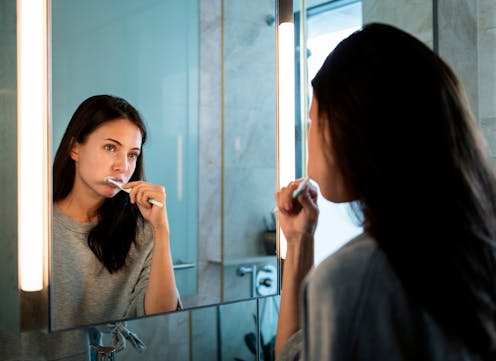
Most of us brush our teeth on autopilot. So let’s stop and ask: are you doing it properly? For a full two minutes? Do you use the correct type of brush and toothpaste?
Did you know you’re supposed to spit, not rinse after brushing?
And brushing soon after eating acidic foods, like citrus, can damage your teeth?
Here, I answer five questions commonly asked at the dentist.
1. Am I brushing correctly?
For starters, make sure you’re brushing both teeth and gums at least twice a day.
Brushing removes dental plaque, the grey-white bacterial mass that sticks to the tooth and gum surface.
If left undisturbed for at least a day, plaque bacteria multiply and begin to mature[1].
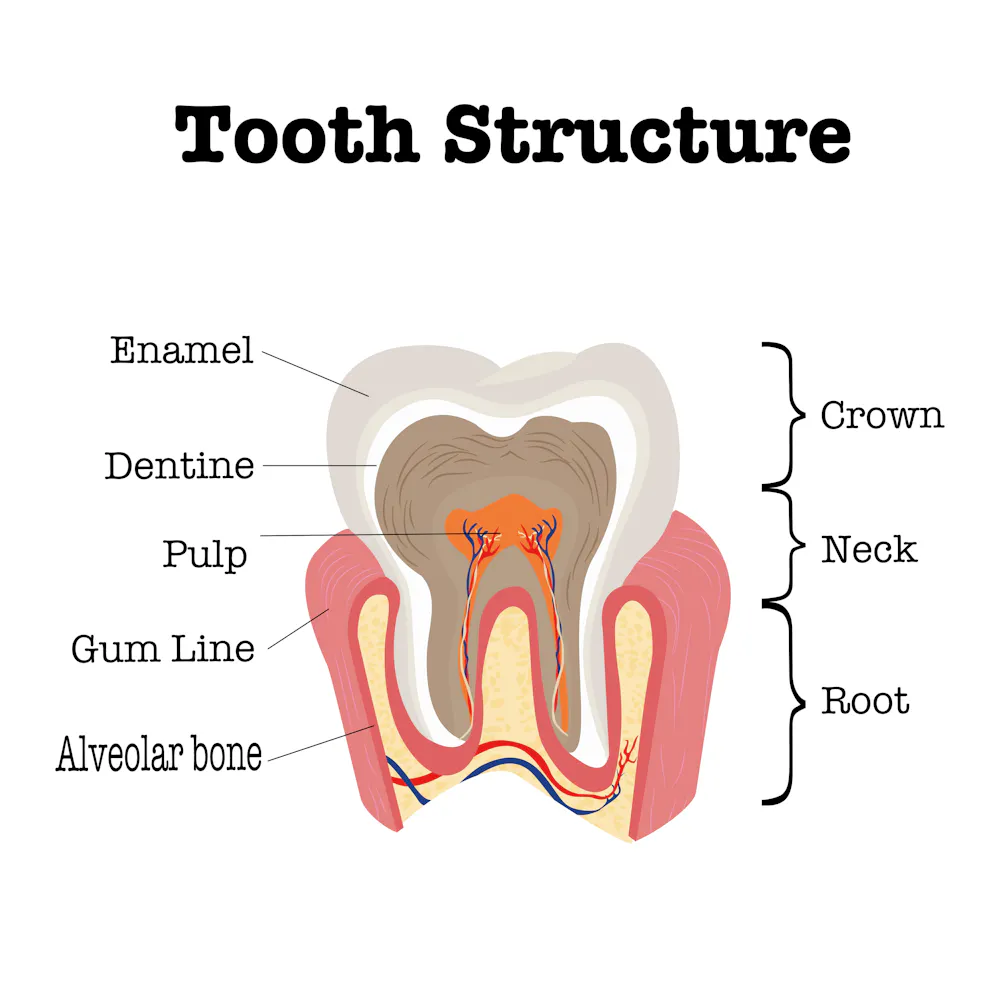
Mature plaque forms an architecturally complex mass with its own sewerage system.
Plaque feeds on the food we eat, particularly carbohydrates (sweet and savoury) to reinforce and build[2] a complex structure that releases acids[3] and gassy, smelly by-products (plaque sewage).
Mature plaque on your teeth and gum surfaces can lead to cavities (holes in our teeth) and gum disease.
Cavities form in our teeth when the mineral in our enamel and eventually, dentine, dissolves to neutralise plaque acids[4]. Over time, the tooth softens and caves in.
Every time you brush, you stop plaque bacteria from feeding on your food, multiplying and maturing. Mature plaque mixed with mineral in your saliva forms calculus or tartar[5].
Calculus can only be removed completely by a dentist or hygienist using special tools.
Not brushing before bed is especially risky[6]; saliva flow reduces and food stuck between your teeth ferments, creating a perfect petri dish for plaque growth. This is where flossing or using tapered interdental cleaners[7] can help.
Make sure you clean the teeth at the back of your mouth, and don’t rush. The Australian Dental Association recommends brushing for two minutes[8] morning and night. Watch this video for some handy tips on how to brush your teeth.
2. How do I look after my gums and prevent bad breath?
Bad breath can be caused by gum disease[9].
After two to three weeks of poor brushing[10], the mature plaque causes the gums to swell, redden and bleed easily.
This is because the gum’s blood vessels leak immune fighting cells to try and destroy the plaque[11].
But the plaque’s defence system repels the attack. Everything your body throws at it bounces off and starts to break down the bone that holds your teeth in your head.
This process is known as advanced gum disease or periodontal disease. It happens slowly and painlessly. As the gums recede, teeth appear elongated.
Untreated, your teeth may become painful, loosen and even fall out.
This is why it’s important to have a regular dental check-up and to brush and floss frequently.
3. What kind of toothbrush should I use?
The Australian Dental Association recommends[12] using a toothbrush with a small head and soft bristles.
Some of us are magnificent manual tooth brushers, but many would benefit by using an electric toothbrush[13].
Why? The same reason we ditched the broom for a vacuum cleaner.
It’s faster, efficient and does a better job – as long as you hover over the surfaces you need to clean. Aim for teeth as well as gums.
Electric toothbrushes come with various features[14] to suit different budgets and needs.
For instance, some have an in-built warning signal to prevent you from brushing so hard you abrade (wear away) your teeth and gums.
4. When should I delay brushing?
Generally, wait at least 30 minutes after vomiting or consuming acidic foods and beverages[15].
If in doubt, check the food label as there are many different acids in our diet[16].
Acids soften the enamel and dentine like soaking dirty saucepans in the sink.
And if we don’t give our saliva enough time to mop up the acids, the softened tooth surface scratches away when we brush.
 If we don’t give our saliva enough time to mop up the acids before brushing, the acids soften the tooth surface. Shutterstock
5. What kind of toothpaste should I use?
Keep it simple. Select a toothpaste that contains fluoride[17].
Fluoride[18] fills and reinforces the microscopic gaps in our teeth to create an acid-resistant barrier.
It also forms a non-stick surface to prevent plaque from attaching and maturing[19].
Do spit and not rinse at the end; avoiding spitting and rinsing means you get a fluoride treatment each time you brush.
What about whitening toothpastes? Whitening toothpastes can have strong abrasives that wear the tooth surface to cause sensitivity.
Most stain particles in our natural teeth hide in microscopic gaps in enamel.
The most efficient and least destructive way of removing these stains is by using peroxide-based[20] whitening products.
Talk to your dentist about options[21] and be wary of home remedies or gimmicks. And remember, whitening will not change the colour of dentures, crowns, veneers or fillings.
References
- ^ multiply and begin to mature (journals.asm.org)
- ^ reinforce and build (onlinelibrary.wiley.com)
- ^ acids (link.springer.com)
- ^ dissolves to neutralise plaque acids (link.springer.com)
- ^ calculus or tartar (journals.sagepub.com)
- ^ especially risky (link.springer.com)
- ^ interdental cleaners (www.ada.org.au)
- ^ two minutes (www.teeth.org.au)
- ^ gum disease (pubmed.ncbi.nlm.nih.gov)
- ^ two to three weeks of poor brushing (onlinelibrary.wiley.com)
- ^ immune fighting cells to try and destroy the plaque (onlinelibrary.wiley.com)
- ^ recommends (www.ada.org.au)
- ^ benefit by using an electric toothbrush (www.cochrane.org)
- ^ various features (www.choice.com.au)
- ^ acidic foods and beverages (onlinelibrary.wiley.com)
- ^ different acids in our diet (adavb.org)
- ^ fluoride (www.cochranelibrary.com)
- ^ Fluoride (www.teeth.org.au)
- ^ prevent plaque from attaching and maturing (link.springer.com)
- ^ using peroxide-based (onlinelibrary.wiley.com)
- ^ options (www.ada.org.au)
Read more https://theconversation.com/how-to-brush-your-teeth-properly-according-to-a-dentist-177219