Wellness is not women's friend. It’s a distraction from what really ails us
- Written by: Kate Seers, PhD Candidate, Charles Sturt University
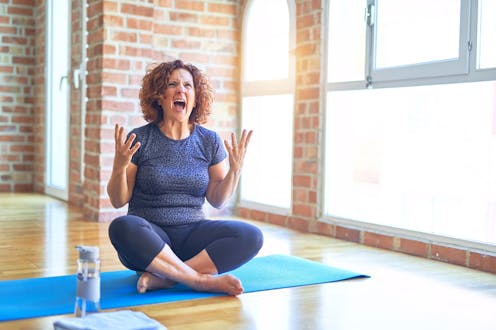
Wellness is mainly marketed to women. We’re encouraged to eat clean, take personal responsibility[1] for our well-being, happiness and life. These are the hallmarks of a strong, independent woman in 2022.
But on the eve of International Women’s Day, let’s look closer at this neoliberal feminist[2] notion of wellness and personal responsibility – the idea women’s health and well-being depends on our individual choices.
We argue wellness is not concerned with actual well-being, whatever wellness “guru” and businesswoman Gwyneth Paltrow suggests[3], or influencers say on Instagram.
Wellness is an industry. It’s also a seductive distraction from what’s really impacting women’s lives. It glosses over the structural issues undermining women’s well-being. These issues cannot be fixed by drinking a turmeric latte or #livingyourbestlife.
Read more: How neoliberalism colonised feminism – and what you can do about it[4]
What is wellness?
Wellness is an[5] unregulated US$4.4 trillion global industry due to reach almost $7 trillion by 2025. It promotes self-help, self-care, fitness, nutrition and spiritual practice. It encourages[6] good choices, intentions and actions.
Wellness is alluring because it feels empowering. Women are left with a sense of control over their lives. It is particularly alluring in times of great uncertainty and limited personal control. These might be during a relationship break up, when facing financial instability, workplace discrimination or a global pandemic.
But wellness is not all it seems.
Read more: Boosting your ‘gut health’ sounds great. But this wellness trend is vague and often misunderstood[7]
Wellness blames women
Wellness implies women are flawed and need to be fixed. It demands women resolve their psychological distress, improve their lives and bounce back from adversity[8], regardless of personal circumstances.
Self-responsibility, self-empowerment and self-optimisation underpin how women are expected to think and behave.
As such, wellness patronises women[9] and micro-manages their daily schedules[10] with journaling, skin care routines, 30-day challenges, meditations, burning candles, yoga and lemon water.
Wellness encourages women to improve their appearance through diet and exercise, manage their surroundings[11], performance at work[12] and their capacity to juggle the elusive work-life balance[13] as well as their emotional responses[14] to these pressures[15]. They do this with support from costly life coaches, psychotherapists and self-help guides.
Wellness demands women focus on their body[16], with one’s body a measure of their commitment to the task of wellness. Yet this ignores how much these choices and actions cost.
Newsreader and journalist Tracey Spicer says[17] she has spent more than A$100,000 over the past 35 years for her hair to “look acceptable” at work.
Wellness keeps women focused on their appearance[18] and keeps them spending.
It’s also ableist[19], racist[20], sexist[21], ageist[22] and classist[23]. It’s aimed at an ideal of young women, thin, white, middle-class and able-bodied.
Read more: Friday essay: how 19th century ideas influenced today's attitudes to women’s beauty[24]
But we can’t live up to these ideals
Wellness assumes women have equal access to time, energy and money to meet these ideals. If you don’t, “you’re just not trying hard enough[25]”.
Wellness also implores women[26] to be “adaptable and positive”.
If an individual’s #positivevibes and wellness are seen as morally good[27], then it becomes morally necessary for women to engage in behaviours framed as “investments” or “self-care”.
For those who do not achieve self-optimisation (hint: most of us) this is a personal, shameful failing.
Read more: There's no magic way to boost your energy. But 'perineum sunning' isn't the answer[28]
Wellness distracts us
When women believe they are to blame for their circumstances, it hides structural and cultural inequities. Rather than questioning the culture that marginalises women and produces feelings of doubt and inadequacy, wellness provides solutions in the form of superficial empowerment, confidence and resilience.
Women don’t need wellness. They are unsafe.

Women are[30] more likely[31] to be murdered by a current or former intimate partner, with reports of the pandemic increasing[32] the risk and severity of domestic violence[33].
Women are more likely to be employed in unstable casualised labour, and experience economic hardship and poverty[34]. Women are also bearing the brunt of the economic fallout from COVID[35]. Women are more likely to be juggling a career with unpaid domestic duties[36] and more likely to be homeless[37] as they near retirement age.
In their book Confidence Culture[38] UK scholars Shani Orgad and Rosalind Gill argue hashtags such as #loveyourbody and #believeinyourself imply psychological blocks, rather than entrenched social injustices, are what hold women back.
What we should be doing instead
Wellness, with its self-help rhetoric, absolves the government[39] of responsibility to provide transformative and effectual action that ensures women are safe, delivered justice, and treated with respect and dignity.
Structural inequity was not created by an individual, and it will not be solved by an individual.
So this International Women’s Day, try to resist the neoliberal requirement to take personal responsibility for your wellness. Lobby governments to address structural inequities instead.
Follow your anger[40], not your bliss, call out injustices when you can. And in the words of sexual assault survivor and advocate Grace Tame, “make some noise”.
References
- ^ personal responsibility (www.instagram.com)
- ^ neoliberal feminist (theconversation.com)
- ^ suggests (goop.com)
- ^ How neoliberalism colonised feminism – and what you can do about it (theconversation.com)
- ^ is an (globalwellnessinstitute.org)
- ^ encourages (globalwellnessinstitute.org)
- ^ Boosting your ‘gut health’ sounds great. But this wellness trend is vague and often misunderstood (theconversation.com)
- ^ bounce back from adversity (journals.sagepub.com)
- ^ patronises women (www.instagram.com)
- ^ micro-manages their daily schedules (www.instagram.com)
- ^ their surroundings (www.instagram.com)
- ^ performance at work (www.businessnewsdaily.com)
- ^ juggle the elusive work-life balance (www.apa.org)
- ^ their emotional responses (medium.com)
- ^ to these pressures (theconversation.com)
- ^ focus on their body (www.instagram.com)
- ^ says (www.instagram.com)
- ^ focused on their appearance (www.hercampus.com)
- ^ ableist (medium.com)
- ^ racist (www.byrdie.com)
- ^ sexist (msmagazine.com)
- ^ ageist (www.self.com)
- ^ classist (www.rnz.co.nz)
- ^ Friday essay: how 19th century ideas influenced today's attitudes to women’s beauty (theconversation.com)
- ^ you’re just not trying hard enough (www.theguardian.com)
- ^ implores women (journals.sagepub.com)
- ^ morally good (ideas.ted.com)
- ^ There's no magic way to boost your energy. But 'perineum sunning' isn't the answer (theconversation.com)
- ^ Diego Fedele/AAP Image (photos.aap.com.au)
- ^ Women are (www.ourwatch.org.au)
- ^ more likely (www.abs.gov.au)
- ^ pandemic increasing (theconversation.com)
- ^ domestic violence (www.theguardian.com)
- ^ casualised labour, and experience economic hardship and poverty (lighthouse.mq.edu.au)
- ^ of the economic fallout from COVID (grattan.edu.au)
- ^ unpaid domestic duties (www.bmj.com)
- ^ to be homeless (www.mercyfoundation.com.au)
- ^ Confidence Culture (www.dukeupress.edu)
- ^ absolves the government (www.consultmcgregor.com)
- ^ Follow your anger (www.mindful.org)