a forensic poet with obsessive resolve
- Written by: Jessica Wilkinson, Associate Professor, Writing and Publishing, RMIT University
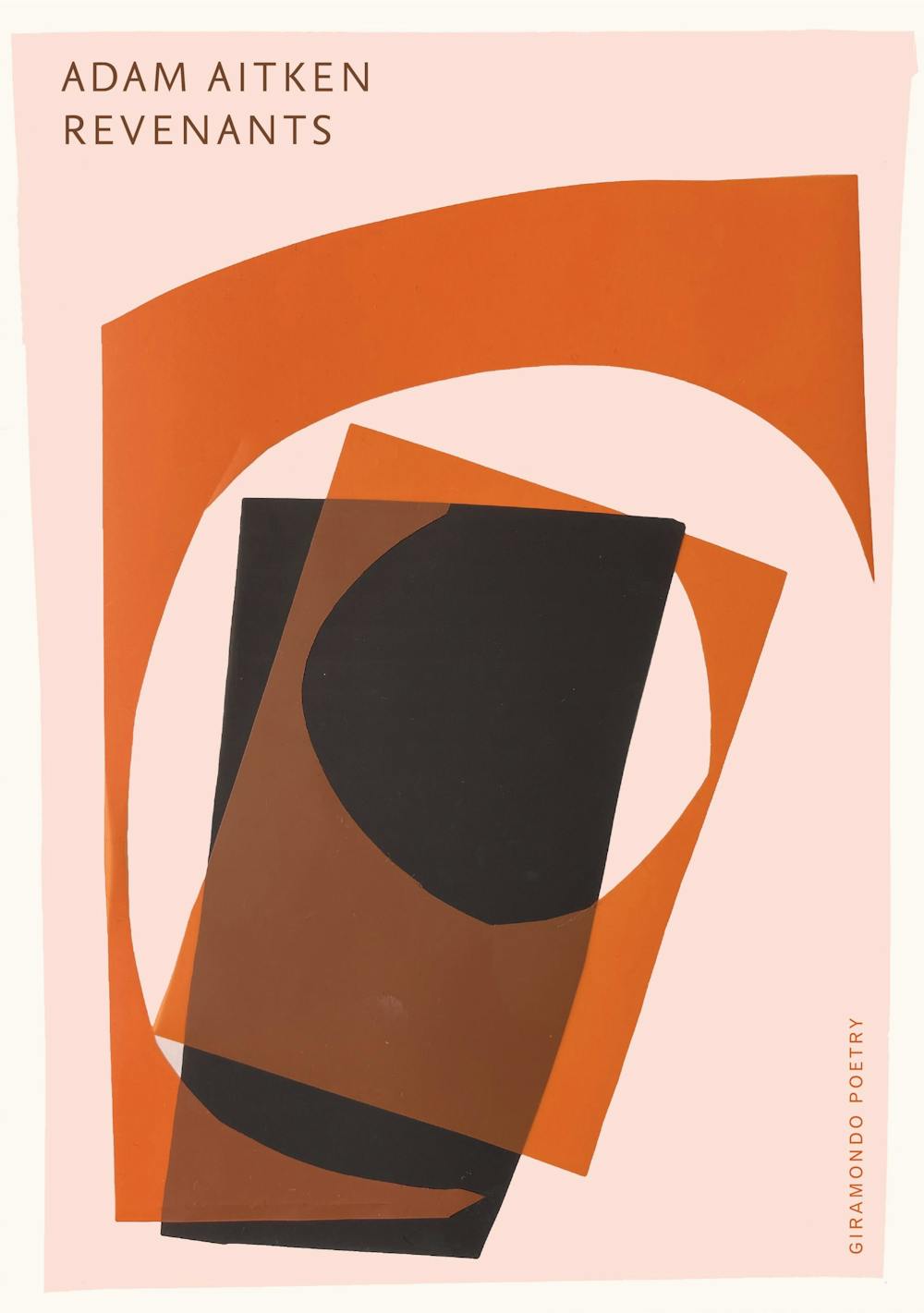
The first poem of Adam Aitken’s new collection Revenants is a curiosity that demands close attention:
Xmas, Singapore 1957
Much better than thatMelbourne dayin ’56 –so my father wrotein blue fountain penon airline parchment
to his mother Jean.
Apéro-time thenEnglish goose + trimmings,a bottle of BOAC Bordeaux,2 anti-acid for dessert
all in best company.
Review: Revenants - Adam Aitken (Giramondo)
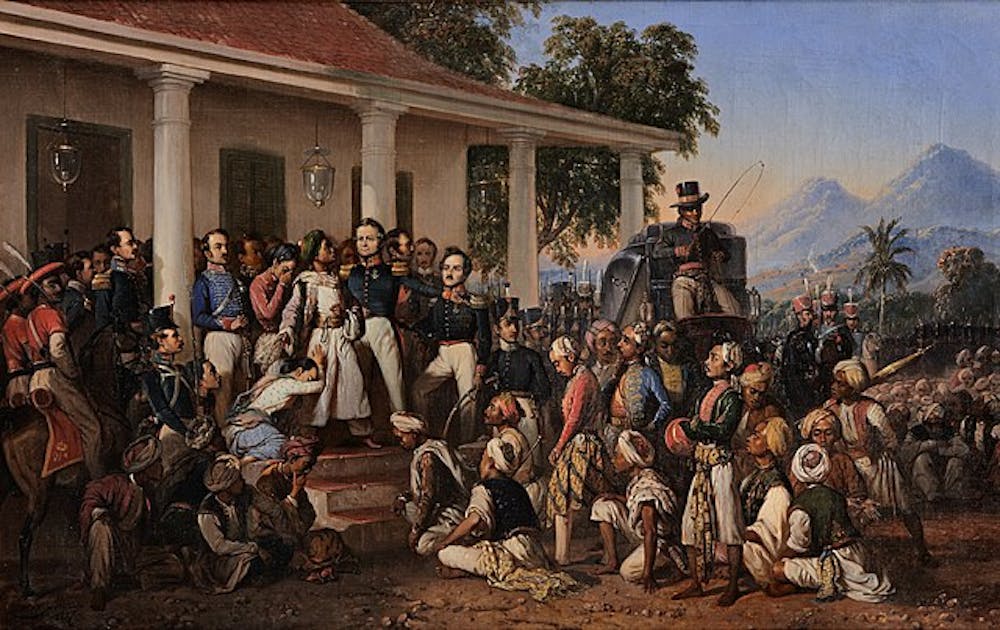 The Arrest of Prince Diponegoro – Raden Saleh (1857)
Wikimedia commons
It seems as if Aitken is testing what a poem can do with cultural texts, how poetry can be employed to submit language to a certain pressure, demanding the release of complexities and contradictions, hidden narratives and motivations.
In another example, both amusing and tender, Aitken finds meaning between and among discarded objects. Bootsale, Chateau St Victor is a list poem, a catalogue of objects that symbolise lost attachments and absent narratives:
a portrait of ? ? /
a bag of dog collars /
a book of facsimile love lettersof the original chateau patronand mistress …
The poem reeks of loss and grief, yet ironically signals a new life for these objects: they have the potential to be picked up by new owners and made useful once more.
Read more:
In his last poems, Les Murray offers a gentle, gracious bow of farewell, and just a few barbs[2]
A poetics of hybridity
Aitken’s second preoccupation in Revenants, developing his poetics of hybridity, emerges from his attempts to gain a greater understanding of what we inherit, not only materially or genetically, but also in terms of sensibility.
Addressing his father again, in the poem The Far East, Aitken writes:
Having never given uploving you, you becamethe template of my becoming.
The Arrest of Prince Diponegoro – Raden Saleh (1857)
Wikimedia commons
It seems as if Aitken is testing what a poem can do with cultural texts, how poetry can be employed to submit language to a certain pressure, demanding the release of complexities and contradictions, hidden narratives and motivations.
In another example, both amusing and tender, Aitken finds meaning between and among discarded objects. Bootsale, Chateau St Victor is a list poem, a catalogue of objects that symbolise lost attachments and absent narratives:
a portrait of ? ? /
a bag of dog collars /
a book of facsimile love lettersof the original chateau patronand mistress …
The poem reeks of loss and grief, yet ironically signals a new life for these objects: they have the potential to be picked up by new owners and made useful once more.
Read more:
In his last poems, Les Murray offers a gentle, gracious bow of farewell, and just a few barbs[2]
A poetics of hybridity
Aitken’s second preoccupation in Revenants, developing his poetics of hybridity, emerges from his attempts to gain a greater understanding of what we inherit, not only materially or genetically, but also in terms of sensibility.
Addressing his father again, in the poem The Far East, Aitken writes:
Having never given uploving you, you becamethe template of my becoming.
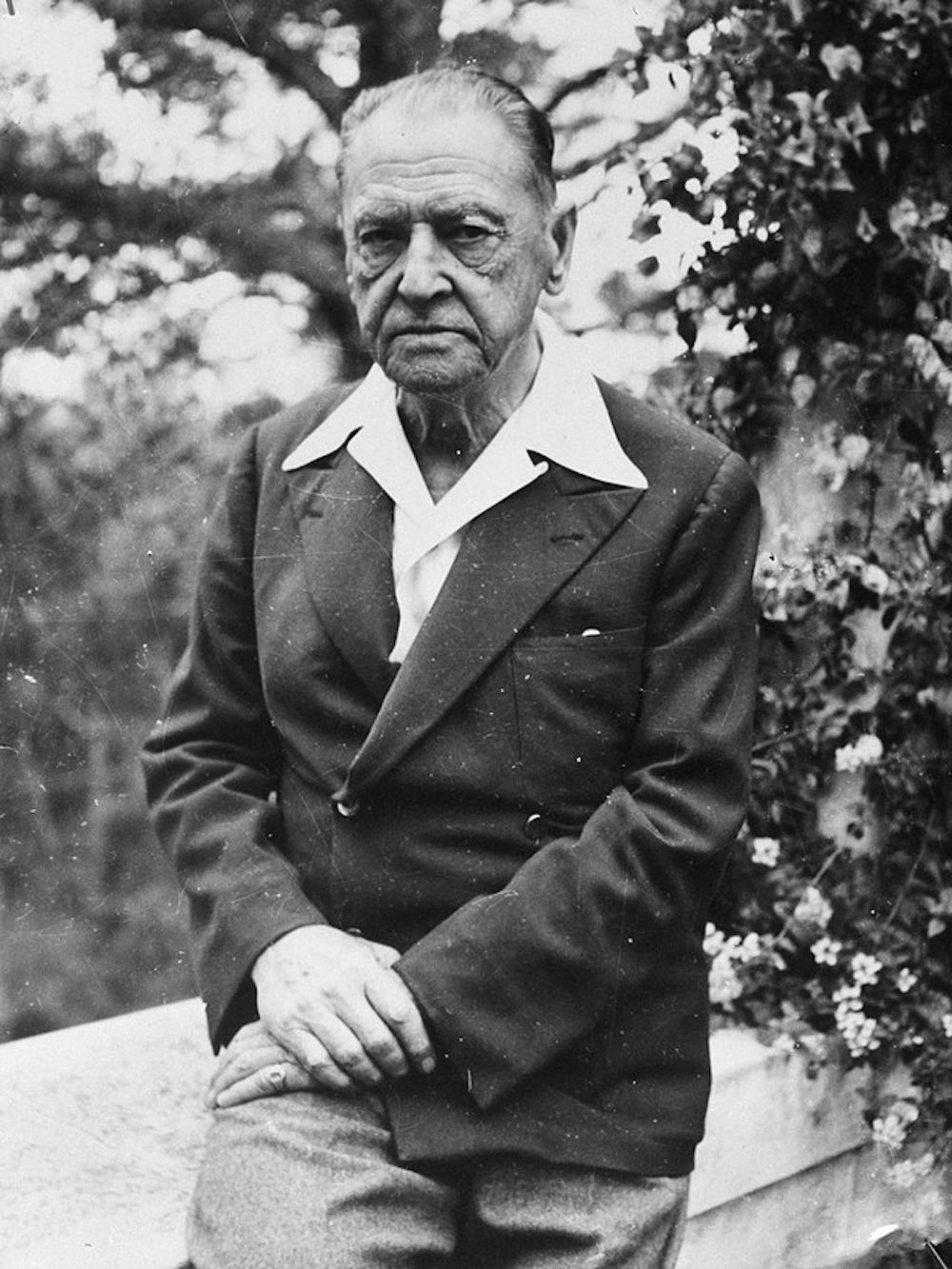 William Somerset Maugham in 1965.
Anefo/Wikimedia commons
This echoes an idea explored by Aitken in an essay published in Southerly in 2013, in which he refers to his father as “an agent of hybridisation”. His Melbourne-born father travelled abroad as a young man to work in Singapore, Hong Kong, Kuala Lumpur and then Bangkok, where he met and married Aitken’s Thai mother; they moved to London, where Aitken was born, and then to Australia in the late 1960s.
When Aitken writes that his father is an agent of hybridisation, he is not simply referring to the fact that he married and had children with a “diasporic Asian wife”. He is referring to his father’s “status as a postcolonial […] Westerner in South-East Asia”, who involved himself in the everyday of any place in which he lived, and who struggled with the colonial legacy in Asia.
As such, Revenants delivers a string of hearty zingers against colonial British expats and wayfarers –
My father was not English,not Maugham
– and celebrates his father’s declarations: “Eastern food, and chopsticks. / If you can’t use them you can’t eat!”
Hybridity, Aitken writes in the Southerly essay, “is more than identity: it is a poetics of Being with no dominant template”. It involves a respectful adapting “to diverse demands placed upon you when living in the foreign place”.
As such, the poems that pursue his father’s experiences in South-East Asia in the first section of Revenants provide a pathway to Aitken’s own traveller’s perspective and sensibility.
This is more fully explored in the second and third sections of the collection. These poems rove from Sydney to Malaysia, Hawaii to France, but they are not “tourist” poems that observe each location from a comfortable remove, nor are they geographical renderings sketched along nationalised or nostalgic lines. Indeed, Ala Moana explicitly reviles the nostalgia-machine of tourism that pervades the Hawaiian islands.
Instead, the poems dwell curiously in and with the everyday realities of these very different places. They are attuned not only to the now of a place, but to its layers of histories, memories and texts.
This multi-layered sensitivity can be seen, for example, in the long poem Notes on the River, referring to the Mekong River in Laos. Scientific reports about fish in the region are interwoven with lyric poetry that records and reflects on time spent in Siem Riep. Imagery arising from movements along the banks of the river (of people, rubbish etc.) collides with memories that appear to be evoked in situ.
Curiously, there are also quotations (or echoes) of lines by other poets (acknowledged in the notes at the back of the book), yet these lines are not directly related to Aitken’s subject matter. It is as if these texts were part of his daily reading at the time. As he moves through the spaces of the poem, they resonate with the landscape.
The intertextual nature of the poem enacts Aitken’s engagement with the river, self-reflexively noted in the poem itself:
To these images riga theory of fluid dynamicsand digital composition,poem somewhere betweenBaudelaire and Photoshop
Aitken’s use of quotations, fragments and anecdotes that he has pondered or scrutinised in previous works is a minor feature of Revenants, also prefigured by the opening poem. Yet I find this feature to be a significant and exciting one.
We might recognise, for example, the “return” of the Xmas meal in 1957, the swapping of the digger’s hat for Dutch clogs, and the assessment of Maugham. These language “bites” are reframed and reconsidered, as if the data is being interpreted in different ways, as if Aitken is a forensic poet with an obsessive resolve.
One could compare these various texts and uses of documentary material from book to book, yet it is perhaps more significant to note how this activity foregrounds the ways in which our relationship with and to texts – as with people, places and things – changes over time.
Attuning to these changes and their stimuli, Aitken roams across personal, historical, geographical, cultural and textual terrains in Revenants. Yet that first poem, Xmas, Singapore 1957, hovers like a navigational compass or companion, keeping us close to his purpose as we move through this wide-ranging, exploratory work.
References^ Omar Musa blends words and the wood carving of Borneo to explore beauty, rage and history (theconversation.com)^ In his last poems, Les Murray offers a gentle, gracious bow of farewell, and just a few barbs (theconversation.com)
William Somerset Maugham in 1965.
Anefo/Wikimedia commons
This echoes an idea explored by Aitken in an essay published in Southerly in 2013, in which he refers to his father as “an agent of hybridisation”. His Melbourne-born father travelled abroad as a young man to work in Singapore, Hong Kong, Kuala Lumpur and then Bangkok, where he met and married Aitken’s Thai mother; they moved to London, where Aitken was born, and then to Australia in the late 1960s.
When Aitken writes that his father is an agent of hybridisation, he is not simply referring to the fact that he married and had children with a “diasporic Asian wife”. He is referring to his father’s “status as a postcolonial […] Westerner in South-East Asia”, who involved himself in the everyday of any place in which he lived, and who struggled with the colonial legacy in Asia.
As such, Revenants delivers a string of hearty zingers against colonial British expats and wayfarers –
My father was not English,not Maugham
– and celebrates his father’s declarations: “Eastern food, and chopsticks. / If you can’t use them you can’t eat!”
Hybridity, Aitken writes in the Southerly essay, “is more than identity: it is a poetics of Being with no dominant template”. It involves a respectful adapting “to diverse demands placed upon you when living in the foreign place”.
As such, the poems that pursue his father’s experiences in South-East Asia in the first section of Revenants provide a pathway to Aitken’s own traveller’s perspective and sensibility.
This is more fully explored in the second and third sections of the collection. These poems rove from Sydney to Malaysia, Hawaii to France, but they are not “tourist” poems that observe each location from a comfortable remove, nor are they geographical renderings sketched along nationalised or nostalgic lines. Indeed, Ala Moana explicitly reviles the nostalgia-machine of tourism that pervades the Hawaiian islands.
Instead, the poems dwell curiously in and with the everyday realities of these very different places. They are attuned not only to the now of a place, but to its layers of histories, memories and texts.
This multi-layered sensitivity can be seen, for example, in the long poem Notes on the River, referring to the Mekong River in Laos. Scientific reports about fish in the region are interwoven with lyric poetry that records and reflects on time spent in Siem Riep. Imagery arising from movements along the banks of the river (of people, rubbish etc.) collides with memories that appear to be evoked in situ.
Curiously, there are also quotations (or echoes) of lines by other poets (acknowledged in the notes at the back of the book), yet these lines are not directly related to Aitken’s subject matter. It is as if these texts were part of his daily reading at the time. As he moves through the spaces of the poem, they resonate with the landscape.
The intertextual nature of the poem enacts Aitken’s engagement with the river, self-reflexively noted in the poem itself:
To these images riga theory of fluid dynamicsand digital composition,poem somewhere betweenBaudelaire and Photoshop
Aitken’s use of quotations, fragments and anecdotes that he has pondered or scrutinised in previous works is a minor feature of Revenants, also prefigured by the opening poem. Yet I find this feature to be a significant and exciting one.
We might recognise, for example, the “return” of the Xmas meal in 1957, the swapping of the digger’s hat for Dutch clogs, and the assessment of Maugham. These language “bites” are reframed and reconsidered, as if the data is being interpreted in different ways, as if Aitken is a forensic poet with an obsessive resolve.
One could compare these various texts and uses of documentary material from book to book, yet it is perhaps more significant to note how this activity foregrounds the ways in which our relationship with and to texts – as with people, places and things – changes over time.
Attuning to these changes and their stimuli, Aitken roams across personal, historical, geographical, cultural and textual terrains in Revenants. Yet that first poem, Xmas, Singapore 1957, hovers like a navigational compass or companion, keeping us close to his purpose as we move through this wide-ranging, exploratory work.
References^ Omar Musa blends words and the wood carving of Borneo to explore beauty, rage and history (theconversation.com)^ In his last poems, Les Murray offers a gentle, gracious bow of farewell, and just a few barbs (theconversation.com)Read more https://theconversation.com/adam-aitken-a-forensic-poet-with-obsessive-resolve-176549