


COVID has changed our exercise habits, but it doesn't have to be for the worse
- Written by: Ben Singh, Research fellow, University of South Australia

During the pandemic, some people found their level of exercise greatly reduced, whereas for others it was a catalyst to increase their physical activity[1].
With the widespread switch to working from home, incidental physical activity was reduced. Some people took this newly freed up time as an opportunity to add exercise to their day[2], with online fitness programs and health apps reporting a boom[3].
However the early impetus to exercise appears to have been short-lived for many, with a study[4] comparing activity levels between the first and second waves of COVID in Victoria finding most people reported a reduction in their physical activity levels the second time around due to a lack of motivation.
A systematic review[5] found that overall, COVID has reduced physical activity and increased sedentary behaviour, and the effects could be lasting.
Now restrictions have eased, use of organised fitness venues are yet to return to pre-pandemic figures. A survey[6] of gym members found that in Australia, 47% of previous gym members hadn’t returned to the gym following lockdowns.
Ongoing concerns about COVID have led to caution about returning to public spaces such as gyms. But also, with many people changing their exercise habits and setting up home gyms during lockdowns, it’s become much more convenient working out at home.
Read more: Heading back to the gym? Here's how you can protect yourself and others from coronavirus infection[7]
It’s clear for many of us COVID changed how and how much we exercise. But the changes don’t necessarily have to be for the worse.
Is exercising at home as good as going to the gym?
People who switched to online workouts, fitness apps and home-gyms during COVID report[8] their workouts are less intense, less satisfying, less enjoyable and they felt less motivated compared with attending fitness venues.
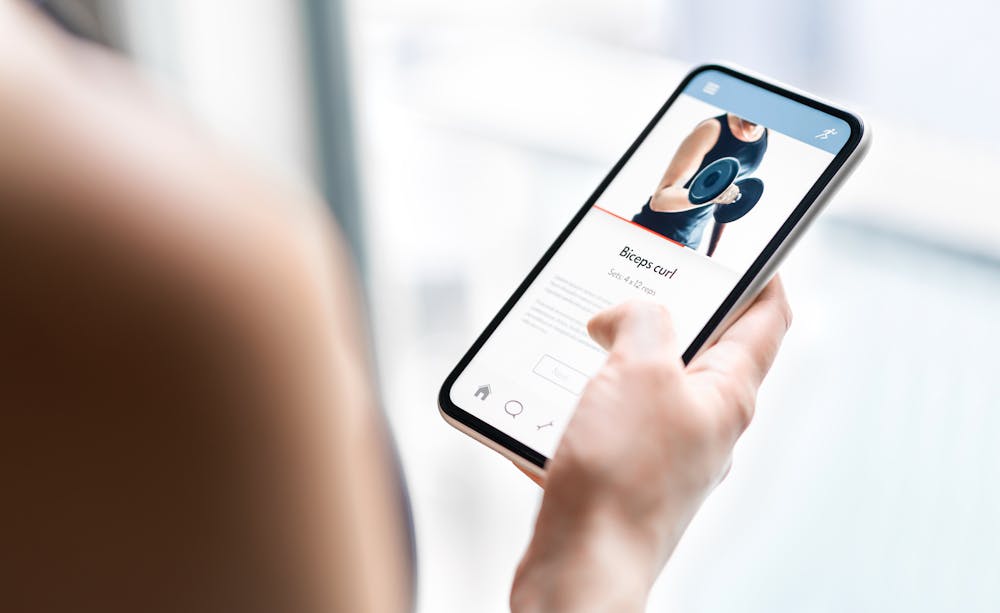
In addition to the physical effects, people report[9] missing the social aspects, camaraderie, and escapism of the gym. In-person classes also offer the benefits of supervision and instruction, which can help ensure workouts are completed safely and effectively.
However, online workouts, fitness apps and near-home workouts are likely here to stay, and offer numerous benefits, such as greater accessibility (no need to travel to the gym) and convenience, making it easy to fit in a workout while juggling work and family responsibilities.
Read more: Regaining fitness after COVID infection can be hard. Here are 5 things to keep in mind before you start exercising again[10]
How to ensure a good workout from home
1. monitor your intensity. If you think about your exertion on a scale of one to ten, where one is very light activity and ten is your maximal exertion, aim for a four to six.
2. make it enjoyable. Choosing an exercise you enjoy will help you stick[11] with your program. Try out different types of exercise until you find something you like (YouTube and apps are a great source of inspiration). If you hate lifting weights, try body weight exercises.
3. stay motivated[12] with a clear fitness goal. For example, you might decide you want to be able to do ten push-ups in four weeks, or run five kilometres in six months. Then you can devise a plan to gradually reach your goal.
4. commit to your workouts by planning[13] how much you’re going to do. This can include committing to a certain duration (such as jogging for 30 minutes) or number of repetitions (for example 20 push-ups), and not stopping until it’s achieved.
5. exercise with a friend or family member. Pre-planning your workouts and exercising with a support person means you’re more likely[14] to do them.
Read more: Why some people find it easier to stick to new habits they formed during lockdown[15]
6. aim to achieve the national guidelines[16]. This involves performing 150 to 300 minutes of moderate activity each week, such as brisk walking, cycling or swimming. You should also aim for strength exercises at least twice per week, such as push-ups, squats and lifting weights.
7. purchasing equipment such as hand-held weights, resistance bands, and even a weight bench can be a great investment and can add variety to your home workouts. However, you can still achieve a great home workout with household items. For example, putting your feet or hands on a chair to do push-ups.
8. minimise your risk of injury. It’s important to always take the time to do a proper warm-up[17], stretch regularly[18], and ensure you are using appropriate technique, especially when lifting weights. There are plenty of free apps and videos online which can guide you.
9. use virtual reality to make your workout a bit more exciting. There are various apps and online programs that let you train in virtual worlds, ranging from walking or jogging from Zombies[19] to exercise biking in a virtual world[20]. The early evidence[21] to support virtual workouts for improving motivation and adherence looks promising.
References
- ^ physical activity (www.clearinghouseforsport.gov.au)
- ^ add exercise to their day (bmcsportsscimedrehabil.biomedcentral.com)
- ^ boom (www.sciencedirect.com)
- ^ study (www.clearinghouseforsport.gov.au)
- ^ systematic review (bmjopensem.bmj.com)
- ^ survey (runrepeat.com)
- ^ Heading back to the gym? Here's how you can protect yourself and others from coronavirus infection (theconversation.com)
- ^ report (www.sciencedirect.com)
- ^ report (www.sciencedirect.com)
- ^ Regaining fitness after COVID infection can be hard. Here are 5 things to keep in mind before you start exercising again (theconversation.com)
- ^ help you stick (www.scirp.org)
- ^ stay motivated (www.tandfonline.com)
- ^ planning (pubmed.ncbi.nlm.nih.gov)
- ^ more likely (academic.oup.com)
- ^ Why some people find it easier to stick to new habits they formed during lockdown (theconversation.com)
- ^ national guidelines (www.health.gov.au)
- ^ warm-up (www.sciencedirect.com)
- ^ stretch regularly (www.ncbi.nlm.nih.gov)
- ^ Zombies (zombiesrungame.com)
- ^ virtual world (www.zwift.com)
- ^ early evidence (www.wiwi.uni-muenster.de)










