Anonymous social apps are taking over once more, but they aren't without risks
- Written by: Alexia Maddox, Research Fellow, Blockchain Innovation Hub, RMIT, RMIT University
Have you ever told a stranger a secret about yourself online? Did you feel a certain kind of freedom doing so, specifically because the context was removed from your everyday life? Personal disclosure and anonymity have long been a potent mix laced through our online interactions.
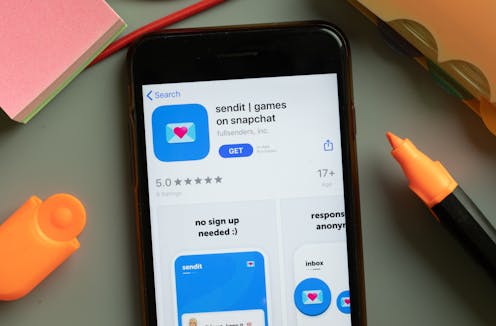
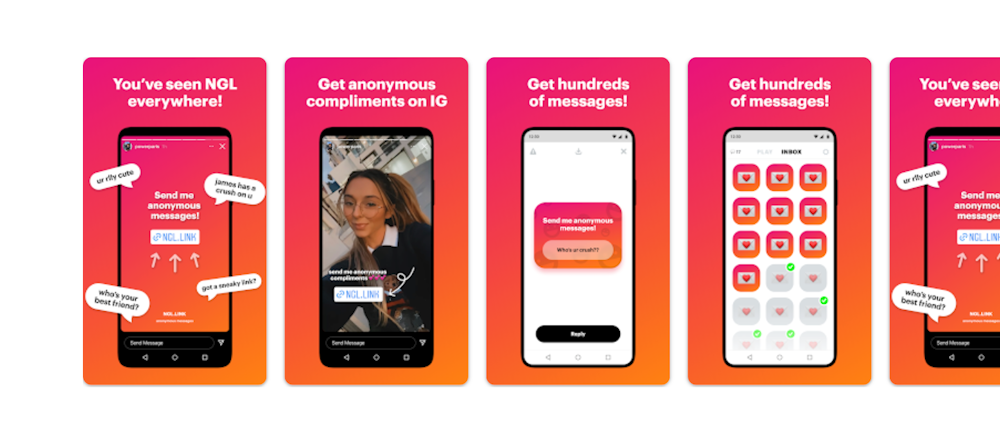
We’ve recently seen this through the resurgence of anonymous question apps targeting young people, including Sendit and NGL (which stands for “not gonna lie”). The latter has been installed 15 million times globally, according to recent reports[1].
These apps can be linked to users’ Instagram and Snapchat accounts, allowing them to post questions and receive anonymous answers from followers.
Although they’re trending at the moment, it’s not the first time we’ve seen them. Early examples include ASKfm, launched in 2010, and Spring.me, launched in 2009 (as “Fromspring”).
These platforms have a troublesome history. As a sociologist of technology, I’ve studied human-technology encounters in contentious environments. Here’s my take on why anonymous question apps have once again taken the internet by storm, and what their impact might be.
Why are they so popular?
We know teens are drawn to social platforms. These networks connect them with their peers, support their journeys towards forming identity, and provide them space for experimentation, creativity and bonding.
We also know they manage online disclosures of their identity and personal life through a technique sociologists call “audience segregation”, or “code switching”. This means they’re likely to present themselves differently[3] online to their parents than they are to their peers.
Digital cultures have long used online anonymity[4] to separate real-world identities from online personas, both for privacy and in response to online surveillance. And research has shown online anonymity enhances self-disclosure and honesty[5].
For young people, having online spaces to express themselves away from the adult gaze is important. Anonymous question apps provide this space. They promise to offer the very things young people seek: opportunities for self-expression and authentic encounters.
Risky by design
We now have a generation of kids growing up with the internet. On one hand, young people are hailed as pioneers of the digital age – and on they other, we fear for them as its innocent victims.
A recent TechCrunch[6] article chronicled the rapid uptake of anonymous question apps by young users, and raised concerns about transparency and safety.
NGL exploded in popularity[7] this year, but hasn’t solved the issue of[8] hate speech and bullying. Anonymous chat app YikYak[9] was shut down in 2017 after becoming littered with hateful speech – but has since returned[10].
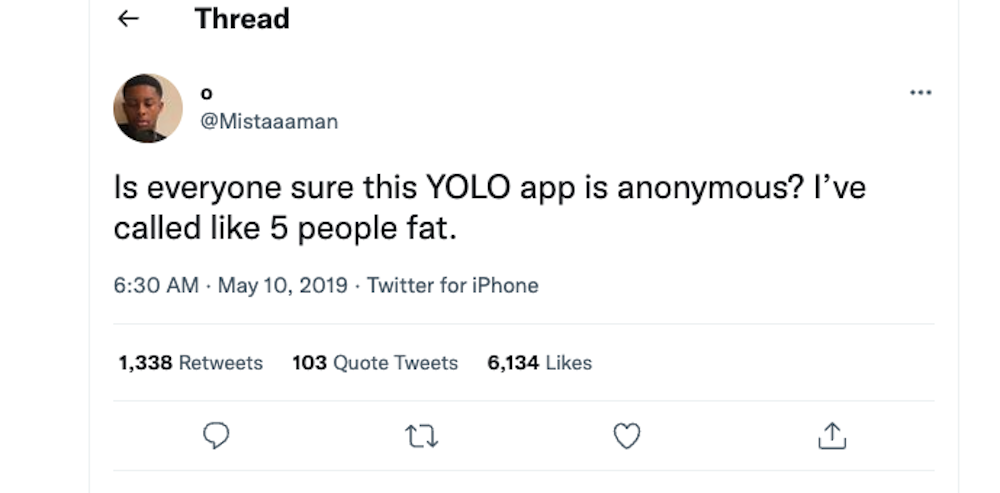 Anonymous question apps are just one example of anonymous online spaces. Screenshot/Twitter[11]
These apps are designed to hook users in. They leverage certain platform principles to provide a highly engaging experience, such as interactivity and gamification (wherein a form of “play” is introduced into non-gaming platforms).
Also, given their experimental nature, they’re a good example of how social media platforms have historically been developed with a “move fast and break things” attitude. This approach, first articulated by Meta CEO Mark Zuckerberg, has arguably reached its use-by date[12].
Breaking things in real life is not without consequence. Similarly, breaking away from important safeguards online is not without social consequence. Rapidly developed social apps can have harmful consequences[13] for young people, including cyberbullying, cyber dating abuse, image-based abuse and even online grooming.
In May 2021, Snapchat suspended[14] integrated anonymous messaging apps Yolo and LMK, after being[15] sued[16] by the distraught parents of teens who committed suicide after being bullied through the apps.
Yolo’s developers overestimated[17] the capacity of their automated content moderation to identify harmful messages.
In the wake of these suspensions, Sendit soared through the app store charts[18] as Snapchat users sought a replacement.
Snapchat then banned[19] anonymous messaging from third-party apps in March this year, in a bid to limit bullying and harassment. Yet it appears[20] Sendit can still be linked to Snapchat as a third-party app, so the implementation conditions are variable.
Are kids being manipulated by chatbots?
It also seems these apps may feature automated chatbots[21] parading as anonymous responders to prompt interactions – or at least that’s what staff at Tech Crunch found.
Although chatbots can be harmless (or even helpful), problems arise if users can’t tell whether they’re interacting with a bot or a person. At the very least it’s likely the apps are not effectively screening bots out of conversations.
Users can’t do much either. If responses are anonymous[22] (and don’t even have a profile or post history linked to them), there’s no way to know if they’re communicating with a real person or not.
It’s difficult to confirm whether bots are widespread on anonymous question apps, but we’ve seen them cause huge problems on other platforms – opening avenues for deception and exploitation.
For example, in the case of Ashley Madison[23], a dating and hook-up platform that was hacked in 2015, bots were used to chat with human users to keep them engaged. These bots used fake profiles created by Ashley Madison employees.
Read more: 'Anorexia coach': sexual predators online are targeting teens wanting to lose weight. Platforms are looking the other way[24]
What can we do?
Despite all of the above, some research[25] has found many of the risks teens experience online pose only brief negative effects, if any. This suggests we may be overemphasising the risks young people face online.
At the same time, implementing parental controls to mitigate online risk is often in tension with young people’s digital rights[26].
So the way forward isn’t simple. And just banning anonymous question apps isn’t the solution.
Rather than avoid anonymous online spaces, we’ll need to trudge through them together – all the while demanding as much accountability and transparency from tech companies as we can.
For parents, there are some useful resources[27] on how to help children and teens navigate tricky online environments in a sensible way.
Read more: Ending online anonymity won't make social media less toxic[28]
References
- ^ reports (techcrunch.com)
- ^ Screenshot/Google Play Store (play.google.com)
- ^ present themselves differently (oxford.universitypressscholarship.com)
- ^ online anonymity (www.tandfonline.com)
- ^ enhances self-disclosure and honesty (spssi.onlinelibrary.wiley.com)
- ^ TechCrunch (techcrunch.com)
- ^ exploded in popularity (www.businessinsider.com)
- ^ issue of (www.nbcnews.com)
- ^ YikYak (arstechnica.com)
- ^ since returned (techcrunch.com)
- ^ Screenshot/Twitter (twitter.com)
- ^ use-by date (hbr.org)
- ^ consequences (www.mdpi.com)
- ^ Snapchat suspended (techcrunch.com)
- ^ being (www.scribd.com)
- ^ sued (www.courthousenews.com)
- ^ overestimated (arstechnica.com)
- ^ the app store charts (techcrunch.com)
- ^ banned (www.snap.com)
- ^ appears (www.youtube.com)
- ^ chatbots (www.sciencedirect.com)
- ^ anonymous (screenrant.com)
- ^ Ashley Madison (journals.uic.edu)
- ^ 'Anorexia coach': sexual predators online are targeting teens wanting to lose weight. Platforms are looking the other way (theconversation.com)
- ^ some research (dl.acm.org)
- ^ digital rights (journals.sagepub.com)
- ^ useful resources (www.esafety.gov.au)
- ^ Ending online anonymity won't make social media less toxic (theconversation.com)