How to survive winter with a 15℃ indoor temperature
- Written by: Robert Nelson, Honorary Principal Fellow, The University of Melbourne
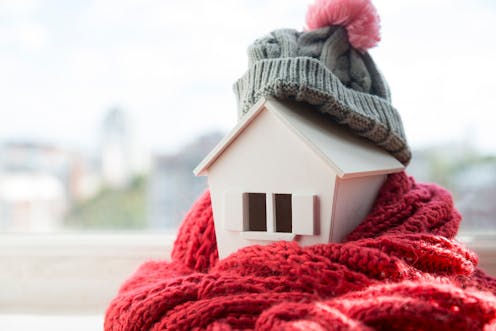
How high should you put the heating up over winter? If you don’t mind the bills and ecological impact, you have the encouragement of the World Health Organization to keep the house warm. They recommend an indoor temperature of at least 18°[1], declaring that you face health risks at lower temperatures. This advice is echoed by the Australian government[2]. The tone of some reports[3] is monitory and severe.
Based on these instructions, anyone would feel a reflex to bump up the thermostat. But before you brace for the bill-shock amid soaring energy prices, consider a different approach. Some people cope positively with the freeze and others face deep winter with panic. Given the range of psychological responses, I can only imagine there would be a difference in how people’s health would fare. If I’m full of dread at the prospect of feeling chilly, this stress could aggravate existing health issues.
It is entirely possible to avoid heating your entire house to 18℃ to stay warm. If you view your cold house as a project, you can take pleasure in the power of staying warm in your modern cave, while remembering that we evolved to withstand the cold with fewer options than we have today.
Over the last couple of winters, I’ve discovered many strategies for comfortable living at lower room temperatures. To add to traditional methods such as multiple layers of clothing and physical activity, there are now excellent appliances to fend off the chill. Personal heating devices have become rightly popular, such as electrical heated throw rugs to warm your clothing[4] rather than ambient air.
These new devices – think a more flexible electric blanket – are extremely efficient. Canberra energy efficiency enthusiast David Southgate found using these devices rather than heating the air cut his heating bill[5] by 95%.

Personally, I have found adequate clothing makes a temperature of 15℃ acceptable. In fact, dressing warmly poses more risk of overheating with low levels of activity. It’s satisfying to create your own warmth rather than rely on artificially supplied warmth. You start to notice thermodynamic properties of clothing that you’d never appreciate by relying on a thermostat.
If you wear a hooded gown, you’ll find not only that your ears are warm from being covered, but your uncovered face becomes flushed. That’s because warmth generated by your body wafts upward to escape through the aperture of the hood. As a result, the air that you breathe is also warm.
When it comes to clothing, we can equate warmth simply with insulation. In turn, we assess the insulating qualities of textiles with their thickness or air-trapping abilities[6]. We often tend to overlook the design of the clothing, which plays a key role in funnelling body warmth to exposed skin. The archetype of the hood was known two millennia before thermostats in both Greece (the garments μαφόρτης and κάλυμμα) and Rome (the garments cucullus, lacerna and tunica palliolata). They’re just as effective today.
Wearing a cowl won’t warm up your hands; but if the rest of you is warm – especially your feet – your exposed hands will benefit by the circulation. For anyone unconvinced by this assurance, fingerless gloves are a backstop.
The way medical science has catastrophised indoor temperatures lower than 18℃ wouldn’t be so bad if it were only incurious and unimaginative. Alas, there are alarming ecological consequences of a population believing that they’ll automatically get sick in the cold.
Carbon emissions from domestic heating are significant. You get a picture from gas bills in Queensland, which go up 1.4 times from summer to winter. In colder states, the figure is much higher[7]: 3.5 times in Victoria and 5.2 times in nippy Tasmania. We have to scrutinise if we really need our thermostats pegged at 18℃.
Before we accept recommendations on indoor temperatures by medical authorities, we need to know if the science has grappled with different experiences of cold.
Future research must distinguish between people in a cool room who feel cold and miserable or feel protected against cold by a range of practical measures.
Understanding the effect of these variables is urgent, because current authoritative guidance pushes us into heating our houses more than we have to. For most of the world, that means burning fossil fuel.
References
- ^ at least 18° (apps.who.int)
- ^ Australian government (www.energy.gov.au)
- ^ some reports (www.ncbi.nlm.nih.gov)
- ^ warm your clothing (www.jstor.org)
- ^ cut his heating bill (southgateaviation.files.wordpress.com)
- ^ air-trapping abilities (www.abc.net.au)
- ^ much higher (www.energycouncil.com.au)