


Government pulls teeth of Australian Building and Construction Commission
- Written by: Michelle Grattan, Professorial Fellow, University of Canberra
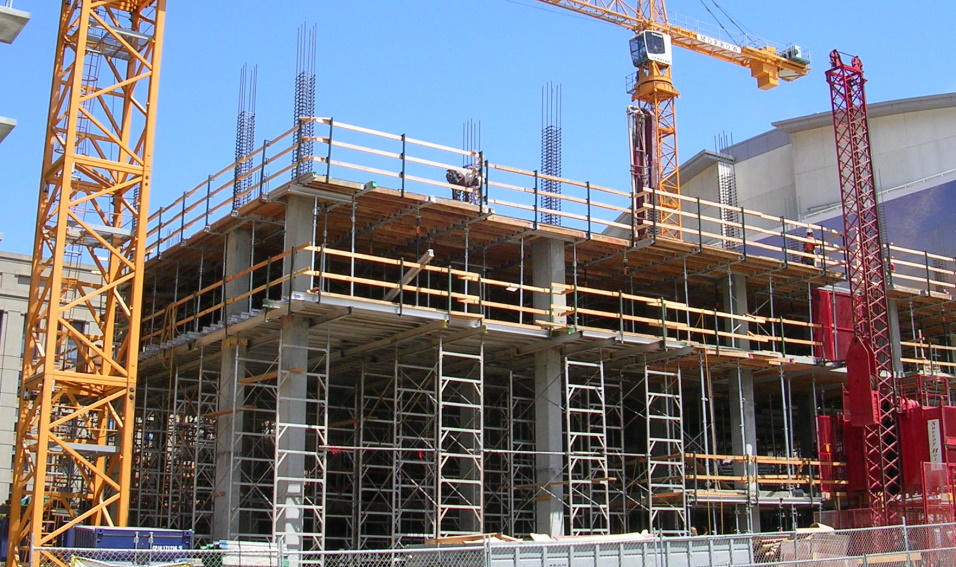
The government this week will take the first step in killing off the controversial Australian Building and Construction Commission by stripping back its powers “to the bare legal minimum”.
The government promised before the election that it would scrap the commission and Workplace Relations Minister Tony Burke said on Sunday this was a “downpayment” on that commitment. Legislation for the ABCC’s end will come in later this year.
The ABCC has long been a political football, and has been bitterly opposed by the powerful Construction Forestry Maritime Mining And Energy Union.
Burke said in a statement that in Tuesday’s changes, some of the ABCC’s powers would go back to the Fair Work Ombudsman and to health and safety regulators. “Its most ridiculous powers will be scrapped altogether.”
He said the ABCC was “politicised and discredited”. It had been set up by the Coalition “to discredit and dismantle unions and undermine the pay, conditions and job security” of workers.
“Workers and their representatives shouldn’t be harassed by a body that wastes taxpayers’ money on trivial nonsense like what stickers a worker might have on their helmet or whether a union logo might appear in a safety sign.”
Building workers should be subject to the same rules as other workers, Burke said. But since the Coalition brought in the building code, “construction employers and workers on government-funded building jobs have been subject to restrictions that don’t apply to people in other industries.
"The amended building code removes these restrictions, including prohibited enterprise agreement content requirements that are not imposed on other workers.
"Building and construction workers will now be able to freely bargain for agreements in the same way as other workers – including agreements that include clauses promoting job security, jobs for apprentices, and safety at work.”
Shadow workplace relations minister Michaelia Cash predicted chaos in the industry when the ABCC was abolished.
“Working days lost rose from 24,000 in 2011-12 to 89,000 in 2012-13 when Bill Shorten abolished the ABCC. But since the ABCC was re-established by the Coalition in December 2016, the commission has proved effective at tackling union excesses head on,” she said.
“We can now expect jobs will be lost, one of the nation’s most militant unions the CFMMEU will run riot, building costs will sky-rocket and large and small businesses will fold.’’
The Australian Industry Group condemned the government’s move and urged consultation with stakeholders.
CEO Innes Willox said it was a "backward step for the fight against bullying and intimidation and will add costs and delays to vital community infrastructure such as roads, hospitals and schools”.
But ACTU secretary Sally McManus welcomed “the removal of the anti-worker aspects of the building code as the first and important steps to the Albanese government implementing their election commitment to abolish the ABCC”.
“The code was one of the ideological projects of the previous government who spent nearly a decade attacking unions and suppressing wages,” she said.
The government is looking to a wide range of industrial relations changes, especially to improve the efficiency of enterprise bargaining. This will be one topic for the September jobs summit.
Asked on the ABC when we would see real wages growth, Burke said “we need to get wages moving and you can’t turn that around on a dime”.
He expressed concern that “increasingly I’m seeing reports where negotiations on bargaining aren’t simply about whether or not there should be a pay rise but some employers threatening just to unilaterally cancel agreements so that workers at this point in time could be facing an immediate real wage cut, like a dollar wage cut”.
The government has agreed to increase the staff allocation for some crossbench senators, in a compromise that will be seen in part as a gesture to the potential importance of their votes on key legislation.
Anthony Albanese flagged the compromise in an interview on Sky on Sunday.
Albanese earlier cut back the extra staff to which non-Greens crossbenchers were entitled (above their electorate staff) from four under the Morrison government to one (or, in the case of regional lower house crossbenchers, to two).
His office said on Sunday two extra staff would now go to each of the two senators from One Nation and each of the two from the Jacqui Lambie Network. ACT independent David Pocock would also get two.
According to the PMO, new United Australia Party senator Ralph Babet, from Victoria, is not included in the compromise. A spokeswomen for Babet said his office had had no communication about staff. “We hope it’s an oversight”, she said, adding his office would be communicating with the PMO on Monday.
The government says the extra staff are because the Senate crossbenchers have to represent a whole state or territory.
Pocock is only representing a small area but he is on the progressive side of politics and could often provide the additional vote the government needs to pass legislation supported by the Greens but opposed by the Coalition.
House of Representatives crossbenchers plan to make fresh representations about their staff on Monday, ahead of Tuesday’s opening of the new parliament.
While formalities will take up parliament’s time on Tuesday, the government plans to cram as much as possible into the first sitting week, with Albanese telling the ABC it planned to introduce “18 pieces of legislation […] in our first week”.










