Torturous births in House of the Dragon dramatise the question of whether women deserve to be more than just a womb
- Written by: Erin Harrington, Senior Lecturer in English and Cultural Studies, University of Canterbury
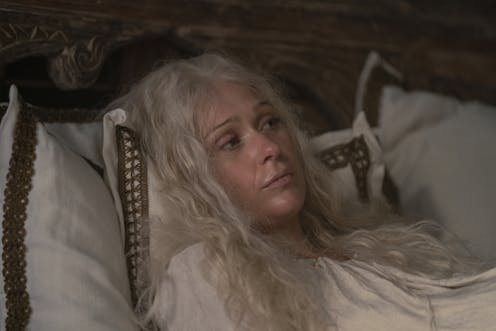
The premiere episode of Game of Thrones prequel House of the Dragon, The Heirs of the Dragon, establishes its central themes of gender and power in a bloody fashion. Its shocking depiction of a fatal cesarean birth is notable for its brutality – but also for how it reflects on histories of pregnant representation and reproductive politics.
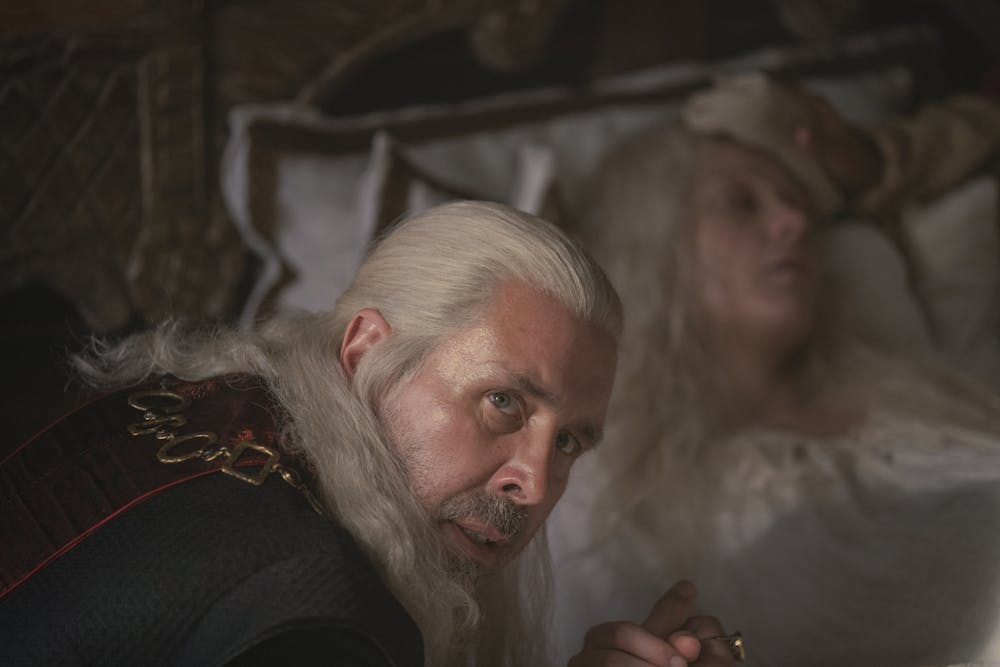
The series dramatises a civil war in which factions of the Targaryen family fight for the Iron Throne of Westeros. As we start, young Princess Rhaenyra (Emma D’Arcy) has been overlooked by her father, King Viserys (Paddy Consedine). He desires a male heir, even as queen consort Aemma (Sian Brooke) suffers through stillbirths and miscarriages.
We quickly see how women are at the mercy of men’s decisions. “Here you are surrounded by attendants all focused on the babe – someone must attend to you”, says Rhaenyra to her heavily pregnant mother. “This discomfort is how we serve the realm”, Aemma replies; “The childbed is our battlefield”.
The king calls a tournament to celebrate the impending birth of what he hopes will be a male heir. Violent, rhythmic scenes showing knights jousting and bludgeoning each other to a bloody pulp are crosscut with upsetting images of Aemma’s labour.
Brutality and betrayal
Showrunner Miguel Sapochnik, speaking with the Los Angeles Times[1], notes that as with Game of Thrones’ battles, each birth on this show will explore a theme. This theme was “torture”.
The baby is breech, and the labour difficult. A male doctor tells the king that fathers must make impossible choices. Viserys quietly approves a plan to cut the baby out, in the hope that it is a boy.
It is a terrible betrayal: he holds Aemma’s hand while she is restrained and sliced open. She bleeds to death – and her newborn son only lives a short while. It is a shocking depiction of the world’s priorities.
Read more: Game of Thrones prequel House of the Dragon confirms there will be no sexual violence on screen. Here's why that's important[2]
Pregnancy in visual culture
Beyond its brutality, the scene illustrates vividly changes to the visibility of pregnancy in visual culture.
Throughout most of the 20th century, pregnancy and birth were largely invisible in visual media. Pregnancy was deemed private and domestic, even vulgar. Notably, scenes of childbirth were banned and pregnancy deemed taboo in Hollywood films from 1927-68, thanks to various censorship regimes. Later, pregnant actors in television series would be written out, or have their bodies hidden through costuming or editing.
Now, images of pregnancy and childbirth are significantly more visible and varied. A watershed moment came in 1991 when Annie Leibovitz’s impactful (and controversial) portrait of Demi Moore – naked, beatific, and 7 months pregnant – graced the front cover of Vanity Fair. It challenged the notion that pregnant bodies should be hidden.
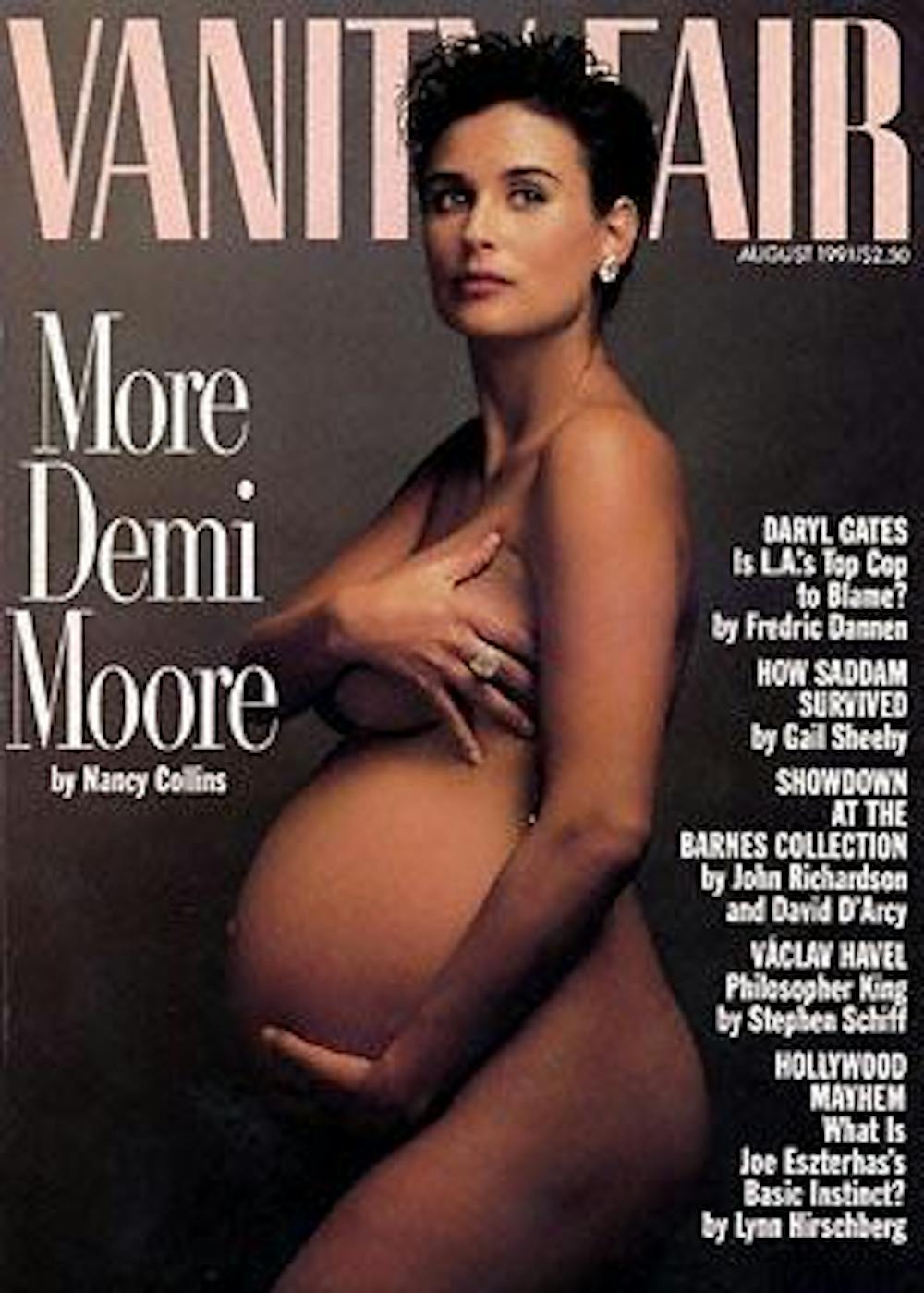 The August 1991 Vanity Fair cover, featuring a pregnant Demi Moore.
Vanity Fair
The August 1991 Vanity Fair cover, featuring a pregnant Demi Moore.
Vanity Fair
More recently, British series such as historical drama Call the Midwife[3] and the docu-drama One Born Every Minute[4], and American film Tully[5], have foregrounded female-led emotional and realistic representations of pregnancy and birth.
Pregnancies are more likely to be written in, not out, of television series. We have also seen the slow rise of sexy maternity fashion that shows off one’s “baby bump”, recently exemplified by singer and entrepreneur Rihanna’s boundary-pushing outfits[6]. The overt images of Aemma’s pregnant body sit within this cultural shift.
Read more: Madness, miscarriages and incest: as in House of the Dragon, real-life royal families have seen it all throughout history[7]
Monstrous births and bodily autonomy
But this scene’s graphic nature is unusual in mainstream media. Instead, it resonates with the long history of monstrous births in science fiction and horror.
These genres offer a subversive language with which to explore reproductive anxieties openly. The paranoia and gaslighting in Rosemary’s Baby[8] (1968), the chest-bursting scene in Alien (1979)[9], the gruesome forced caesarean in A’ l’Interieur (2007)[10], and the maternal dread in Mother! (2017)[11] all illustrate fears about embodiment, maternity and personhood.
The content and tone of this scene, and its place as an inciting incident within the series’ narrative, also reflects contemporary issues regarding women’s bodily autonomy. These speak to widespread cultural tensions about the competing rights of the adult and the unborn.
This is an issue everywhere, but currently has particular political resonance in the United States in the wake of the Supreme Court’s decision to overturn Roe v Wade. This has quickly opened the doors to oppressive bans on abortion in some US states, even in cases where a pregnancy endangers the life of the mother.
At its most conservative and adversarial, this positions female reproductive bodies as little more than vessels. This misogynistic position suggests that an unborn person has more of a right to life than an adult subject, and that a woman does not have the right to make choices about her own life and body. It is dehumanising.
House of the Dragon dramatises this dynamic in the context of a deeply patriarchal system that is in ways not that far removed form our own. A war of succession is prompted because a society can’t countenance the idea of a woman taking the throne.
In a show that is interested in exploring the dynamics of gender and power through the lens of medieval fantasy, the conflict is not just that of ambitious uncle against powerful niece, but whether a woman has a right to be more than a womb.
References
- ^ speaking with the Los Angeles Times (www.latimes.com)
- ^ Game of Thrones prequel House of the Dragon confirms there will be no sexual violence on screen. Here's why that's important (theconversation.com)
- ^ Call the Midwife (www.imdb.com)
- ^ One Born Every Minute (www.imdb.com)
- ^ Tully (www.imdb.com)
- ^ boundary-pushing outfits (www.harpersbazaar.com)
- ^ Madness, miscarriages and incest: as in House of the Dragon, real-life royal families have seen it all throughout history (theconversation.com)
- ^ Rosemary’s Baby (www.imdb.com)
- ^ Alien (1979) (www.imdb.com)
- ^ A’ l’Interieur (2007) (www.imdb.com)
- ^ Mother! (2017) (www.imdb.com)