Extremists use video games to recruit vulnerable youth. Here's what parents and gamers need to know
- Written by: Helen Young, Lecturer, School of Communication and Creative Arts, Deakin University

Reports of far-right extremists trying to recruit young people through video games have raised concerns for parents, guardians and youth alike.
In October, a statement from Australian Federal Police said officers had[1] seen evidence of extremist groups trying to recruit young people through online games. In one instance, a teen had shared a video game recreation of the 2019 Christchurch attack.
Another recent example came from online gaming platform Roblox, in which some users had set up recreations of the Nazi Third Reich[2].
Extremist groups, including jihadists and neo-Nazis, have a history of using video games to spread messages of hate. And while this doesn’t mean all gamers will be exposed, or radicalised if they are, it’s still a concern for security agencies the world over. Parents, guardians and gamers should be aware of the risks.
Is far-right extremism in gaming a problem?
Violent video games are sometimes blamed for acts of terrorist violence[3], especially when perpetrators are identified as gamers. However, although some studies have found violent games can cause players to become desensitised to violent images[4], decades of research have not shown a link between violent games and violent behaviour in real life[5].
That said, far-right extremists have long used games and gaming platforms to try to spread hateful ideologies.
There are many different beliefs that might fall under the label “far right”, but generally these ideologies are united in being anti-democratic, racist and against multiculturalism and equality.
Since as early as 2002, American neo-Nazi organisations have been creating and selling their own “white power” games[6], and modifying existing popular games to suit their agenda. Extremists will also try to recruit[7] through in-game chat functions and gaming-adjacent platforms (such as where games are streamed).
In 2002, American neo-Nazi leader Matt Hale said[8], in regards to recruiting people to his white supremacist “church”:
If we can influence video games and entertainment, it will make people understand we are their friends and neighbours.
In 2018, violent terrorist group[9] Atomwaffen Division (also called the National Socialist Order) was found posting freely[10] on the gaming platform Steam, before eventually being banned. A year later in 2019, the US Anti-Defamation League raised the alarm[11] about extremist content still spreading on Steam.
The tactics far-right extremists use to recruit
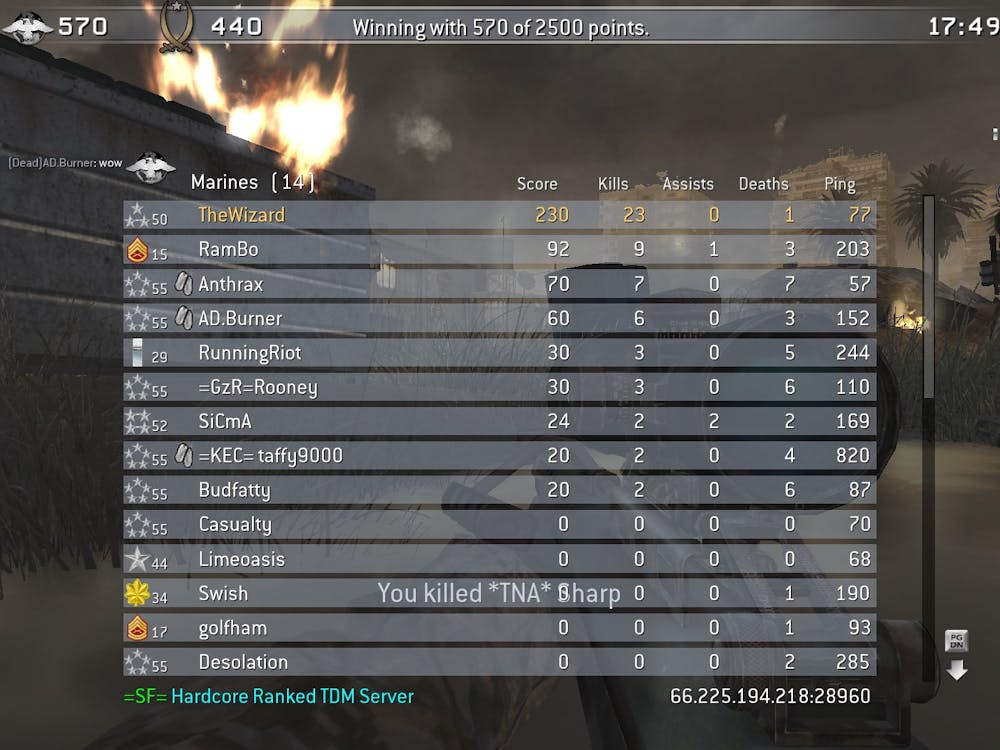
Former white supremacist Christian Picciolini has explained on Reddit[14] how far-right extremist recruiters target “marginalised youth” using popular games such as Fortnite, Minecraft and Call of Duty.
They “drop benign hints and then ramp up” when players are “hooked” on their message, Picciolini said. Of his own experience of being recruited, he said:
They appealed to my desperate need for identity, community and purpose. I was bullied and they provided safety. I was lonely and they provided family. That’s how they draw people in, with a sense of belonging and ‘humanitarianism’.
Far-right extremists will often interpret games to suit their own positions. For instance, they’ll point to the inherent superiority of a fantasy game species, such as elves, to draw false and racist parallels with reality.
They’ll also use gaming to find and build connections with others who share their views. By playing together they can reinforce each other’s beliefs, bond over “dark humour[15]” and use the game to act out violent fantasies.
And while moderating sites to remove extremist content is important, it’s complex to do in democracies for a range of technical, legal and ethical reasons[16]. Moderation should not be relied on as the only method for addressing far-right extremism online.
Extremists can also find ways to avoid moderation, such as by using coded language. For instance, 88 and 1488[17] are both associated with neo-Nazism – but most people wouldn’t know it.
Read more: Can gaming 'addiction' lead to depression or aggression in young people? Here’s what the evidence says[18]
What can we do about it?
As counter-terrorism expert Greg Barton recently told Channel 7[19], far-right extremists aim to prey on young, vulnerable young people as part of a potential radicalisation process:
It’s the sort of predatory behaviour where they’re trying to win their confidence that’s the concern. The video, the games, that’s just the bait to get them hooked.
As you’d expect, extremists use plenty of other hooks too. These include gyms and fitness groups[20], wellness culture[21] and even animal rights and environmentalism[22]. So recruitment via games is part of a wider problem.
Parents, guardians and young gamers can take protective steps – the first of which is to understand that extremist ideologies online can have an impact in the real world. It’s also important to remember video games themselves are not a cause of extremism, and both security services and parents should avoid thinking as such[23].
Further, not all young people who come into contact with extremist material or far-right extremists online will become radicalised. In fact, some people become more prosocial[24] when they encounter extremist propaganda. In other words, they think less aggressively and more empathetically towards others.
Millions of people play video games, but only a tiny proportion are radicalised towards violent ideologies or acts.
The best thing parents and community can do is be aware of the risks and be involved in the lives and interests of young people – especially when navigating the online world. This isn’t always easy, but the Australian eSafety Commissioner has some tips[25] on how to do this.
The US-based Western States Centre, which works against bigotry, also has a toolkit for parents and caregivers[26] on engaging with extremism and conspiracy theories. According to one of the authors, former educator and diversity consultant Christine Saxman, debating young people will likely not work:
You want to be on that critical thinking journey with them, not fighting them.
The Australian Federal Police also details warning signs[27] that might indicate someone is being drawn into far-right extremist beliefs. These include becoming distant from friends and family, and using violent, angry or abusive language (especially towards minority groups or public figures).
For more information you can visit the Australian government’s Living Safe Together[28] website.
Read more: Australia bans video games for things you'd see in movies. But gamers can access them anyway[29]
References
- ^ said officers had (www.afp.gov.au)
- ^ Nazi Third Reich (www.theaustralian.com.au)
- ^ terrorist violence (dana.org)
- ^ desensitised to violent images (www.psypost.org)
- ^ in real life (www.health.harvard.edu)
- ^ white power” games (www.splcenter.org)
- ^ try to recruit (home-affairs.ec.europa.eu)
- ^ Matt Hale said (www.google.com)
- ^ terrorist group (www.nationalsecurity.gov.au)
- ^ found posting freely (www.vice.com)
- ^ raised the alarm (www.adl.org)
- ^ Sam Delon/Flickr (www.flickr.com)
- ^ CC BY-SA (creativecommons.org)
- ^ has explained on Reddit (www.reddit.com)
- ^ dark humour (www.abc.net.au)
- ^ technical, legal and ethical reasons (books.google.com.au)
- ^ 88 and 1488 (www.adl.org)
- ^ Can gaming 'addiction' lead to depression or aggression in young people? Here’s what the evidence says (theconversation.com)
- ^ told Channel 7 (7news.com.au)
- ^ fitness groups (www.sbs.com.au)
- ^ wellness culture (www.theguardian.com)
- ^ animal rights and environmentalism (home-affairs.ec.europa.eu)
- ^ thinking as such (www.google.com)
- ^ become more prosocial (journals.sagepub.com)
- ^ has some tips (www.esafety.gov.au)
- ^ toolkit for parents and caregivers (www.westernstatescenter.org)
- ^ details warning signs (www.afp.gov.au)
- ^ Living Safe Together (www.livingsafetogether.gov.au)
- ^ Australia bans video games for things you'd see in movies. But gamers can access them anyway (theconversation.com)