Countless reports show water is undrinkable in many Indigenous communities. Why has nothing changed?
- Written by: Bradley J. Moggridge, Associate Professor in Indigenous Water Science, University of Canberra
Tap water in more than 500 remote Indigenous communities isn’t regularly tested and often isn’t safe to drink, according to a water industry report[1] released last week. In some communities, drinking water contained unacceptable levels of uranium, arsenic, fluoride and nitrate.
While these findings are dire, they aren’t news to us. There have been myriad reports over the years on the poor status of safe drinking water in Australia’s remote communities all pointing to inequity of essential services with implications for health. But little has been done to rectify this.
Safe drinking water is a basic human right, no matter where people live. First Nations communities have campaigned for decades for clean water on their Country. As Alyawarre Elders, Jackie Mahoney and Pam Corbett, from Alpurrurulam community in the Northern Territory explained during the report’s launch:
That’s why we’re fighting for this water. It’s not only for us, it’s for them too […] For our old people who fought before us and our kids’ future.
A bureaucratic inquiry cycle
The new report, by Water Services Association of Australia, is the latest to detail this ongoing health crisis[2]. Water can be both unsafe to drink (unpotable) and unacceptable to drink due to taste, colour and feel (unpalatable).
Its findings are consistent with a report by the Western Australian Auditor General[3] last year. It found 37 communities had an unfit drinking water supply due to contamination by microbes (bacteria and viruses), nitrates or uranium – and there had been no improvement since the issue was reported in 2015.
Similarly, a research paper published earlier this year found drinking water supplied to 25,000 people in 99 small communities[4] in 2018-19 didn’t pass Australian guidelines[5].
Numerous other reports have delivered similar findings. For example, a report in 1994[6] by the Australian Human Rights Commission examined ten communities and the condition of water and sanitation services, highlighting specific areas of concern.
In 2018, a review[7] of Australia’s progress on the United Nation’s Sustainable Development Goals confirmed that many remote communities don’t have the same level of access to water and sanitation services as urban centres, with flow-on effects to human health.
Read more: Aboriginal voices are missing from the Murray-Darling Basin crisis[8]
And in 2020, a Productivity Commission report[9] proposed new objectives to deliver safe and reliable drinking water in remote communities, noting the additional stressor of climate change.
These earlier reports show the drinking water crisis was identified decades ago. Last week’s report reveals not much has changed.
Not every tap delivers safe water
The reasons for undrinkable water[10] in remote communities are multiple and interlinked. We can group them into four broad areas.
The first is physical[11]. This is when the original water source (from the surface or groundwater) may be contaminated with excess levels of chemicals[12], such as agricultural or industrial chemicals.
The water may also have biological contaminants due to hot weather[13] or faeces from birds and other animals[14], increasing microbial growth.
And freshwater may become contaminated with salt as the sea level rises[15] and affects natural freshwater wells. This is a major issue for some Torres Strait islands.
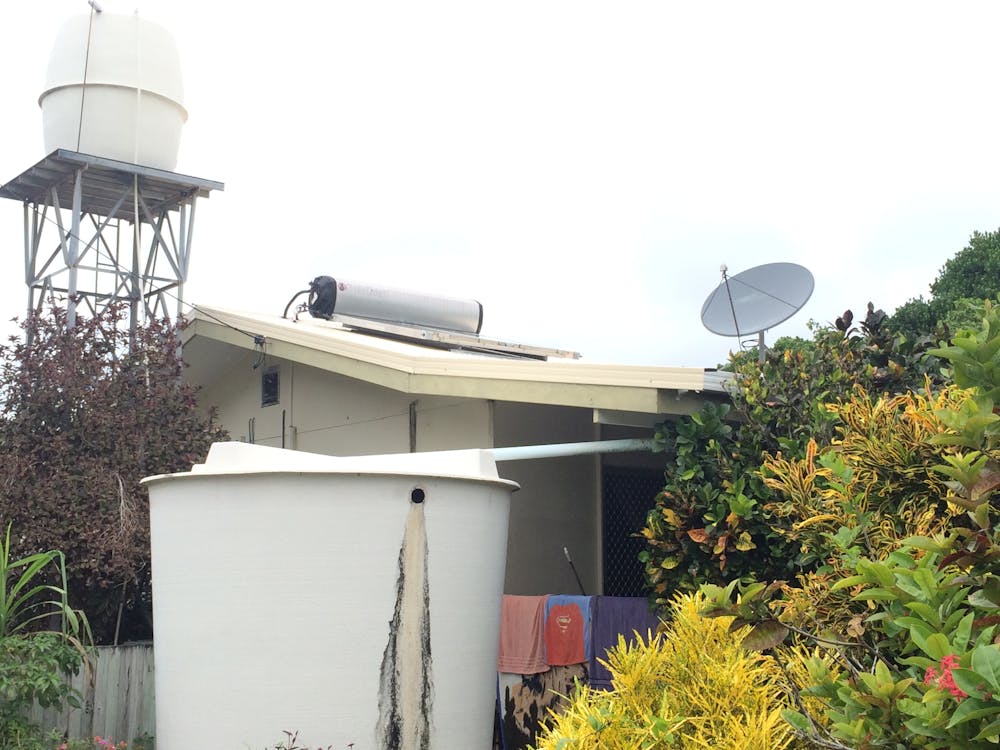 Many households have installed rainwater tanks in the Torres Strait to overcome water shortages. But these also need careful management to ensure the water remains safe to drink.
Cara Beal, Author provided (no reuse)
Many households have installed rainwater tanks in the Torres Strait to overcome water shortages. But these also need careful management to ensure the water remains safe to drink.
Cara Beal, Author provided (no reuse)
The second issue is technical[16]. Local water operators are located remotely, and don’t always get appropriate resources, training and support.
Third, there are financial[17] issues. It’s very expensive to deliver essential services, including water, to remote community councils within large states. For example, in Queensland’s remote Indigenous councils[18], these services are typically funded sporadically via short-term grants.
Read more: Some remote Australian communities have drinking water for only nine hours a day[19]
The final issue is social[20] and governance[21]. Water needs and practices on a cultural level are often poorly understood by service providers.
For example, during the recent drought, severe water restrictions[22] left remote communities without treated and accessible water for hours on end, every day. This not only limited water available for drinking, but also for cultural events such as sorry camps (when the community mourns a loss).
A system that’s fit for purpose, place and people
A feature of successful sustainable water in remote communities is to tailor initiatives[23] for each location. Such initiatives would be shaped by[24] available local staff, water sources, cultural and governance structures and types of pollutants.
All external partners should aim to build long-term working relationships[25] with the communities to avoid the “new face syndrome”. This is a common experience where different representatives visit communities without consistency, inhibiting long-term and trusted working relationships.
Sufficient funding will also be crucial for ongoing, sustainable delivery, with the ambition that water quality is the same as urban supplies.
And additional stressors, especially water insecurity due to climate change[26], need to be incorporated into water supply and related energy and sanitation planning.
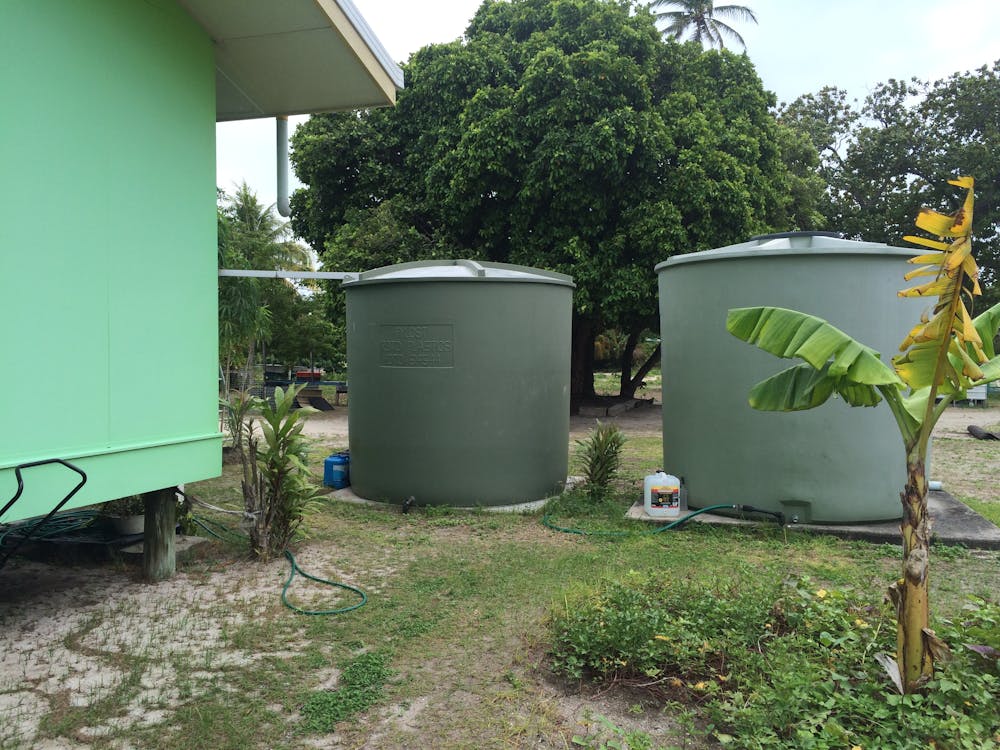 Rainwater tanks in the Torres Strait.
Cara Beal, Author provided (no reuse)
Rainwater tanks in the Torres Strait.
Cara Beal, Author provided (no reuse)
Importantly, all remote essential service delivery and management actions, including water, need to be undertaken collaboratively[27]. They should be led and authored by First Nations researchers[28], and draw from community strengths and knowledge[29] wherever possible.
This shifts water service efforts being for communities, to being with communities. Indeed, cultural sensitivity and guidance[30] is essential to ensure mutual respect and learning forms the basis of all supply delivery.
Read more: IPCC reports still exclude Indigenous voices. Come join us at our sacred fires to find answers to climate change[31]
In keeping with this cultural awareness is an action-based commitment by water suppliers to develop and thoroughly implement “Reconciliation Action Plans[32]”. These are plans in organisations aimed at embedding meaningful actions to advance relationships, respect and opportunities with Aboriginal and Torres Strait Islander peoples.
These plans should include Indigenous-led, co-designed solutions throughout the process. They should be achievable and place-based, however challenging that may be for water utilities and organisations.
Walking the talk
The Water Services Association of Australia’s report was launched by Minister for Indigenous Australians Linda Burney in Parliament this month. This was a powerful call to action on safe drinking water for all Australians to protect health, uphold human rights and implement sustainable development.
It is the responsibility of water service providers and their industry advocates to step up beyond their Reconciliation Action Plan obligations and “walk the talk” to collaborate with communities.
Let’s hope the next report on remote drinking water provision will describe successful and sustainable outcomes.
This article was co-authored with Charles Agnew, a water scientist.
References
- ^ water industry report (www.wsaa.asn.au)
- ^ ongoing health crisis (s3.treasury.qld.gov.au)
- ^ Western Australian Auditor General (audit.wa.gov.au)
- ^ 25,000 people in 99 small communities (www.nature.com)
- ^ Australian guidelines (www.nhmrc.gov.au)
- ^ a report in 1994 (humanrights.gov.au)
- ^ review (www.dfat.gov.au)
- ^ Aboriginal voices are missing from the Murray-Darling Basin crisis (theconversation.com)
- ^ Productivity Commission report (www.pc.gov.au)
- ^ reasons for undrinkable water (espace.library.uq.edu.au)
- ^ physical (iwaponline.com)
- ^ chemicals (onlinelibrary.wiley.com)
- ^ hot weather (www.annualreviews.org)
- ^ birds and other animals (www.tandfonline.com)
- ^ sea level rises (www.tsra.gov.au)
- ^ technical (onlinelibrary.wiley.com)
- ^ financial (www.tandfonline.com)
- ^ remote Indigenous councils (www.yarrabah.qld.gov.au)
- ^ Some remote Australian communities have drinking water for only nine hours a day (theconversation.com)
- ^ social (www.griffith.edu.au)
- ^ governance (www.mdpi.com)
- ^ severe water restrictions (theconversation.com)
- ^ tailor initiatives (www.rrh.org.au)
- ^ shaped by (iwaponline.com)
- ^ long-term working relationships (www.tandfonline.com)
- ^ due to climate change (www.climatecouncil.org.au)
- ^ collaboratively (www.mdpi.com)
- ^ First Nations researchers (globalwaterforum.org)
- ^ knowledge (www.tandfonline.com)
- ^ cultural sensitivity and guidance (www.tandfonline.com)
- ^ IPCC reports still exclude Indigenous voices. Come join us at our sacred fires to find answers to climate change (theconversation.com)
- ^ Reconciliation Action Plans (www.reconciliation.org.au)