Who is and isn't suited to barefoot running? And if I want to try, how do I start?
- Written by: Natalie Collins, Senior Lecturer in Physiotherapy, The University of Queensland
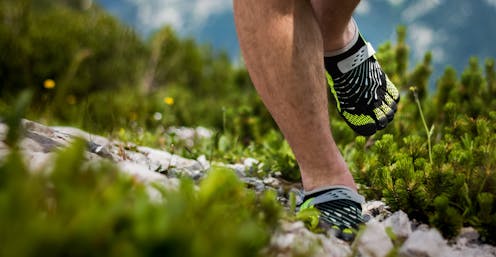
You might have noticed a buzz on social media about barefoot running, with many proponents breathlessly describing it as the most natural way to run.
But not everyone is a fan. The claims made about going barefoot can range from, “It’s the best thing I’ve ever done” to “I tried it and now I’m in terrible pain.”
So what does the research say about how to drop your usual runners and take up barefoot running, and why it seems to work for some people and not for others?
Our new paper[1], published in Medicine & Science in Sports & Exercise[2], tested a new way of switching from traditional shoe to barefoot running, and investigated why some runners may not tolerate barefoot running. We identified two key characteristics of runners who failed to transition to barefoot running.
Read more: Children should spend more time barefoot to encourage a healthier foot structure[3]
What we did and what we found
We studied 76 runners who transitioned to barefoot running over 20 weeks – using a minimal running shoe as an intermediate phase between traditional shoe and barefoot running.
The runners ran in traditional running shoes for the first four weeks. For the next four weeks, they increased their time in minimal running shoes by no more than 20% of their total running volume each week.
After running full-time in minimal shoes for another four weeks, they then spent the next four weeks gradually increasing their time running barefoot by no more than 20% per week.
Finally, they ran barefoot for a further four weeks.
We also asked the runners to do some calf and foot strengthening and stretching, to assist the muscles in the move from traditional shoe to barefoot running.
Using this strategy, 70% of runners were able to successfully transition to barefoot running over 20 weeks.
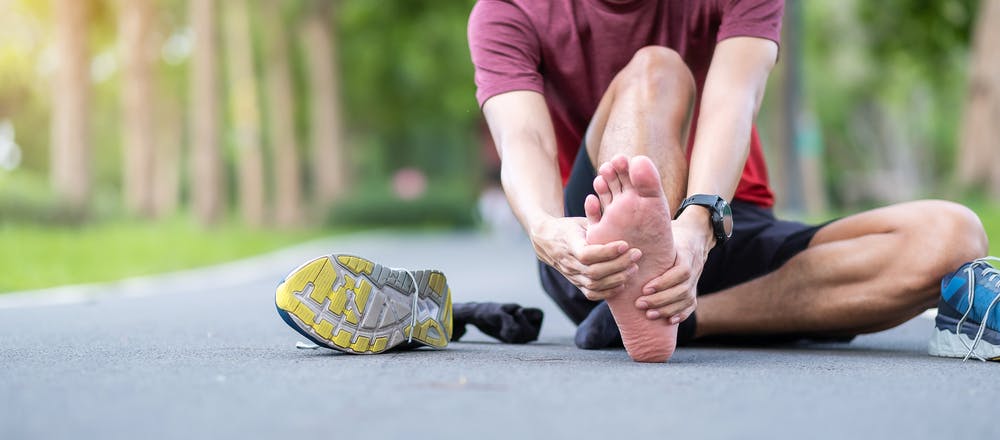
Pain in the calf when running in minimal shoes and pain in the foot when running barefoot were the main reasons for not being able to switch to barefoot running.
 Barefoot running tends to increase stress in the tissues of the foot and calf.
Photo by Kampus Production/Pexels, CC BY[4][5]
Barefoot running tends to increase stress in the tissues of the foot and calf.
Photo by Kampus Production/Pexels, CC BY[4][5]
So why doesn’t barefoot running suit some people?
We identified two features that were present in runners who failed to transition to barefoot running.
Contacting the ground first with the heel while running was one, and the other was very mobile feet (which means the arch is more flexible when the foot is bearing weight).
Why? It’s too early to say for sure, but we do know barefoot running tends to increase stress in the tissues of the foot and calf.
Our findings seem to indicate this tissue stress was not well tolerated in those who habitually contact the ground with their heels and/or have very mobile feet when they run barefoot or in minimal shoes.
This may result in pain and eventually injury. We also know from[6] other[7] studies[8] that running barefoot or in minimal shoes will result in higher rates of foot injury (such as stress fractures of the bones of the foot) and pain in the shin and calf. Traditional shoes usually provide more support and cushioning.
It seems runners who habitually contact the ground with their heel while running find it difficult to switch to contacting the ground with more of their midfoot or forefoot, which is what barefoot running tends to promote.
Those with mobile feet may need their muscles to work harder to stiffen the foot when pushing the foot off the ground while running.
Perhaps a more gradual transition period during which the limit is 10% (not 20%) weekly increase of running in minimal shoes or barefoot spread over a longer period (such as 40 weeks) would enable those wishing to run barefoot to do so without pain or injury.
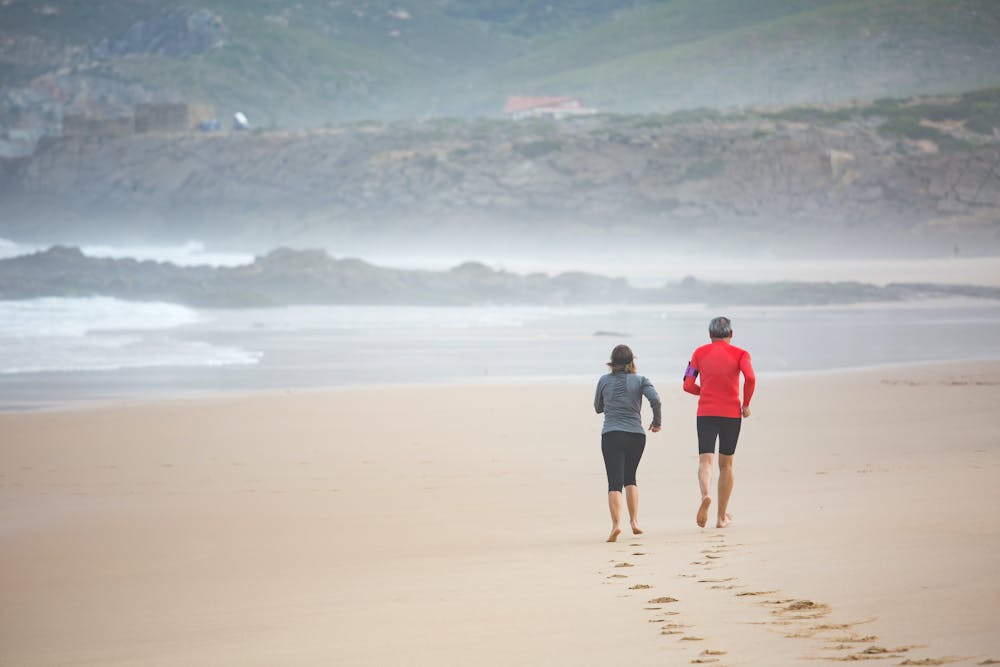
 If you want to try barefoot running, transition gradually.
Shutterstock
If you want to try barefoot running, transition gradually.
Shutterstock
Top tips for successful barefoot running
If you’re keen to try barefoot running, keep these tips in mind:
transition gradually over at least 20 weeks. Take longer if needed
use a minimal shoe as an intermediary, if possible
limit any increase in running in minimal shoes or barefoot to no more than 20% of total running distance per week
use pain during and in the 24 hours after running as a guide – especially if you feel the level of severity is unacceptable
consult a sports and exercise health care professional (such as a physiotherapist or podiatrist) if you experience pain or require assistance in transitioning – especially if you have previous injuries
consult a qualified run coach to assist with your running program
when barefoot running, protect your feet by running in well-lit conditions so you can see obstacles, and avoid excessively hot, cold or sharp surfaces
mix it up – people who run in lots of different types of footwear report fewer injuries than those who only run in one type of shoe.
It may also be that some runners are just not able to switch from their traditional running shoes to barefoot running.
Barefoot running may not be for everyone. It will not make you faster or reduce overall injury rate, and there is no evidence running barefoot burns more calories than running with shoes.
But if you’re thinking of giving barefoot running a go, transitioning gradually – using a minimal running shoe as an interim step – is more likely to result in a successful transition, and keep you running.
Read more: Eliud Kipchoge broke the men's marathon record by 30 seconds. How close is the official sub-2 hour barrier now?[9]
References
- ^ paper (journals.lww.com)
- ^ Medicine & Science in Sports & Exercise (www.acsm.org)
- ^ Children should spend more time barefoot to encourage a healthier foot structure (theconversation.com)
- ^ Photo by Kampus Production/Pexels (www.pexels.com)
- ^ CC BY (creativecommons.org)
- ^ from (journals.sagepub.com)
- ^ other (bjsm.bmj.com)
- ^ studies (bjsm.bmj.com)
- ^ Eliud Kipchoge broke the men's marathon record by 30 seconds. How close is the official sub-2 hour barrier now? (theconversation.com)