Elizabeth Gaskell’s North and South – class warfare, 'shoppy people' and radical love
- Written by: Matthew Sussman, Senior Lecturer, University of Sydney
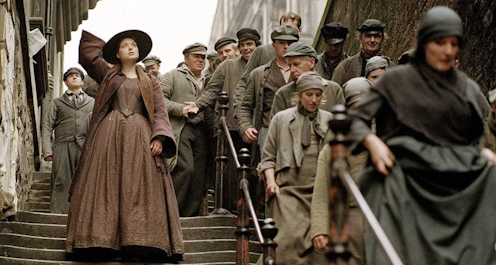
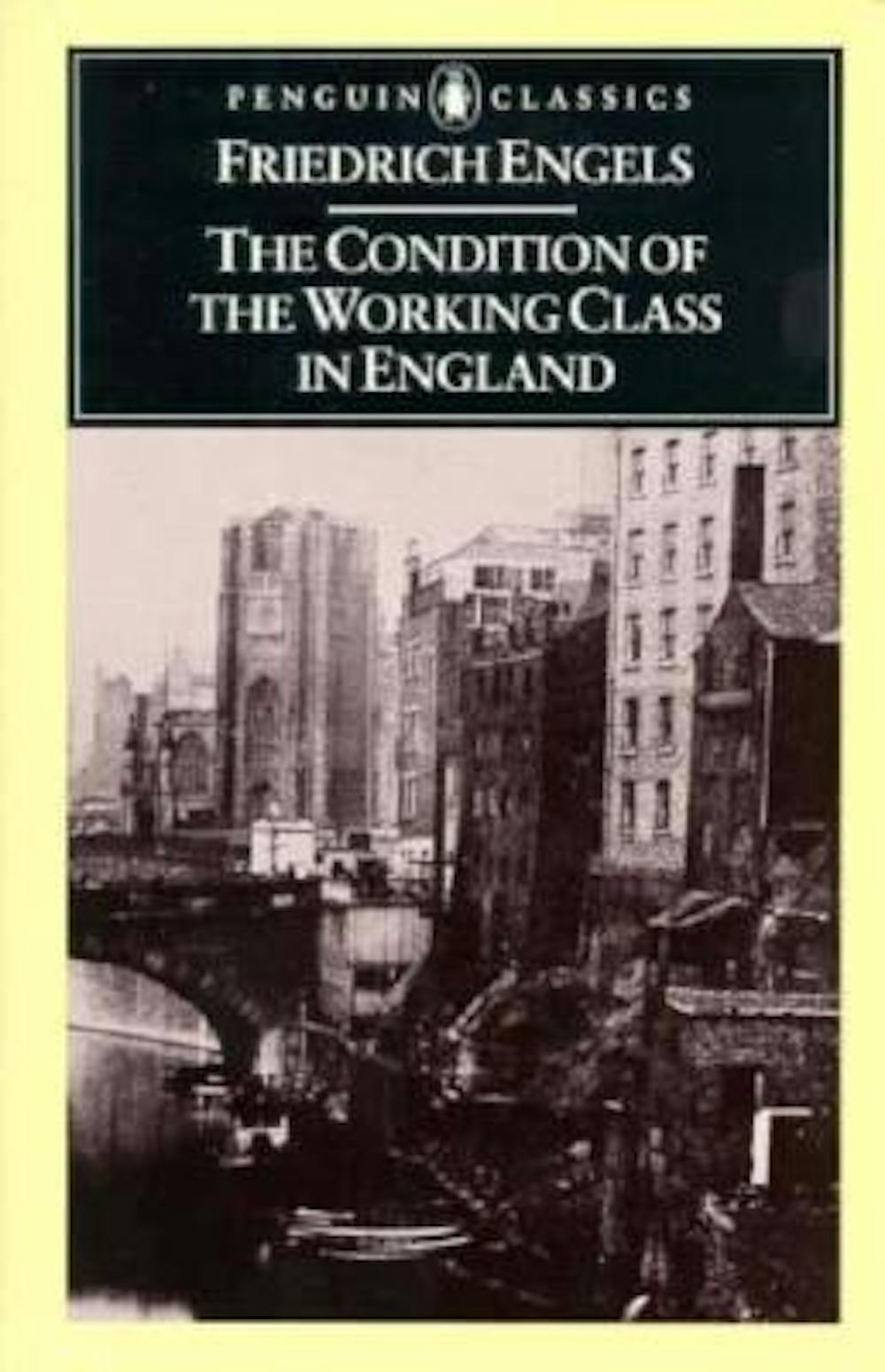
The industrial revolution was one of the biggest cataclysms in European history. Between 1790 and 1850, the countryside rapidly depopulated. Huge masses of people flooded into cities for factory work, living cheek-by-jowl in unhygienic slums.
In Britain, the government could barely keep up with the spirit of laissez-faire capitalism. There were almost no restrictions on child labour, working hours, or safety in the workplace. And, if progressive legislation was proposed, newly emboldened capitalists often resisted it as an imposition on their freedom – and their profits.
The social disruption caused by industrialisation was a nightmare for many poor and working-class people but an immense opportunity for novelists. The new cities had never been represented in fiction, and unless one lived in Liverpool or Leeds, the average person had only a dim understanding of what was taking place there.
The stories of their inhabitants, lurid with poverty and related social ills (such as child death, disease, and alcoholism), were begging to be told. Many authors firmly believed in the novel’s power to raise consciousness and foster political change by documenting these unsightly realities.
 The title of the story alludes to the growing gap between the industrial north and the agrarian south in Britain, the former a hotbed of working-class restlessness, the latter the traditional seat of order and power.
When we first meet her, Margaret Hale, the protagonist of the novel, is fully southern in character and sensibility. Like the Jane Austen heroine Elizabeth Bennet, she comes from the lowest rung of the highest class, her father being a poor but genteel clergyman in the Anglican church. Not wishing to marry for money, Margaret begins the novel by rejecting a marriage proposal from the eligible brother of her cousin’s fiancé.
We expect a Pride and Prejudice-style story to ensue, and the opening chapters are even set in Hampshire, the southern county that was fast becoming synonymous with Austen.
However, the narrative takes a dramatic turn when Margaret’s father reveals that he is unable to pledge his allegiance to the 39 Articles of the Anglican Church[2] due to spiritual “doubts”. (Gaskell was a Unitarian, and Hale might share her reluctance to endorse the unity of Trinity or the divinity of Christ.)
This refusal forces him to forfeit his position in the clergy and hustle off his family to Milton-Northern, a fictionalised Manchester. He hopes to earn money there as a tutor to industrialists seeking to burnish their new fortunes with the shine of a little culture.
The move devastates Margaret, not only because she fears for her father’s salvation and her fragile mother’s health, but also because she is sheltered and a snob. “I don’t like shoppy people,” she says early in the novel, summarily dismissing anyone contaminated by trade.
I’m sure you don’t want me to admire butchers and bakers, and candlestick-makers, do you, mamma?
Read more:
Great Expectations by Charles Dickens: class prejudices, the convict stain and a corpse-bride[3]
Dislocation
When Margaret arrives in Milton-Northern, Gaskell ensures readers share her sense of vulnerable dislocation. Everything is different, from the atmosphere (which tastes and smells of smoke), to the clothing (well-tailored but worn with “slovenly looseness”), to the “rough independent way” the local women deal with Margaret, who is used to queenly deference.
The title of the story alludes to the growing gap between the industrial north and the agrarian south in Britain, the former a hotbed of working-class restlessness, the latter the traditional seat of order and power.
When we first meet her, Margaret Hale, the protagonist of the novel, is fully southern in character and sensibility. Like the Jane Austen heroine Elizabeth Bennet, she comes from the lowest rung of the highest class, her father being a poor but genteel clergyman in the Anglican church. Not wishing to marry for money, Margaret begins the novel by rejecting a marriage proposal from the eligible brother of her cousin’s fiancé.
We expect a Pride and Prejudice-style story to ensue, and the opening chapters are even set in Hampshire, the southern county that was fast becoming synonymous with Austen.
However, the narrative takes a dramatic turn when Margaret’s father reveals that he is unable to pledge his allegiance to the 39 Articles of the Anglican Church[2] due to spiritual “doubts”. (Gaskell was a Unitarian, and Hale might share her reluctance to endorse the unity of Trinity or the divinity of Christ.)
This refusal forces him to forfeit his position in the clergy and hustle off his family to Milton-Northern, a fictionalised Manchester. He hopes to earn money there as a tutor to industrialists seeking to burnish their new fortunes with the shine of a little culture.
The move devastates Margaret, not only because she fears for her father’s salvation and her fragile mother’s health, but also because she is sheltered and a snob. “I don’t like shoppy people,” she says early in the novel, summarily dismissing anyone contaminated by trade.
I’m sure you don’t want me to admire butchers and bakers, and candlestick-makers, do you, mamma?
Read more:
Great Expectations by Charles Dickens: class prejudices, the convict stain and a corpse-bride[3]
Dislocation
When Margaret arrives in Milton-Northern, Gaskell ensures readers share her sense of vulnerable dislocation. Everything is different, from the atmosphere (which tastes and smells of smoke), to the clothing (well-tailored but worn with “slovenly looseness”), to the “rough independent way” the local women deal with Margaret, who is used to queenly deference.
 Everything is different, from the atmosphere (which tastes and smells of smoke), to the clothing.
BBC
In transposing the southern maiden to the northern town, Gaskell turns the world of the traditional novel upside-down, allowing regional players to occupy centre-stage. This is vividly illustrated when Margaret, overwhelmed by the throngs of city workers who stream from the factories at close of day, “had to endure undisguised admiration” from the “outspoken men” who cat-call her in the local slang.
Despite initial misgivings, she comes to understand her milieu with the help of two contrasting figures: the factory worker Higgins, whose thick Mancunian accent has long proved challenging to readers, and the mill owner Thornton, who becomes her father’s pupil.
Both characters represent the best and worst features of their class, reflecting Gaskell’s antipathy to reductive characterisations. Higgins is hard-working and community-minded, but numbs himself to hardship through drunkenness. Thornton is a self-made “shop-boy” who thinks others who fail to rise as he did deserve to be poor (rather than, as Margaret points out, because they lack his particular gifts and opportunities).
Whatever their vices and virtues, both are committed to seeing the other as an enemy. “I see two classes dependent on each other in every possible way,” Margaret despairs,
yet each evidently regarding the interests of the other as opposed to their own: I never lived in a place before where there were two sets of people always running each other down.
Through these opposing figures, Margaret gets initiated into a world characterised by class warfare rather than cooperation, in which the ruthless laws of political economy snuff out the potential for equality and fellow-feeling.
The major conflict in the plot concerns the workers’ decision to strike for better wages and conditions after Thornton proves intractable, which ultimately erupts into a violent riot. It is useless to debate whether Gaskell “supports” or “condemns” the strike, as the novel’s job is not to take a settled position.
Instead, by shuttling Margaret between Higgins and Thornton – both of whom she engages in vigorous debate – Gaskell endows her with the Birdseye view that they, as individuals, lack. This enables Margaret and the reader to appreciate the many facets of a thorny social issue.
Everything is different, from the atmosphere (which tastes and smells of smoke), to the clothing.
BBC
In transposing the southern maiden to the northern town, Gaskell turns the world of the traditional novel upside-down, allowing regional players to occupy centre-stage. This is vividly illustrated when Margaret, overwhelmed by the throngs of city workers who stream from the factories at close of day, “had to endure undisguised admiration” from the “outspoken men” who cat-call her in the local slang.
Despite initial misgivings, she comes to understand her milieu with the help of two contrasting figures: the factory worker Higgins, whose thick Mancunian accent has long proved challenging to readers, and the mill owner Thornton, who becomes her father’s pupil.
Both characters represent the best and worst features of their class, reflecting Gaskell’s antipathy to reductive characterisations. Higgins is hard-working and community-minded, but numbs himself to hardship through drunkenness. Thornton is a self-made “shop-boy” who thinks others who fail to rise as he did deserve to be poor (rather than, as Margaret points out, because they lack his particular gifts and opportunities).
Whatever their vices and virtues, both are committed to seeing the other as an enemy. “I see two classes dependent on each other in every possible way,” Margaret despairs,
yet each evidently regarding the interests of the other as opposed to their own: I never lived in a place before where there were two sets of people always running each other down.
Through these opposing figures, Margaret gets initiated into a world characterised by class warfare rather than cooperation, in which the ruthless laws of political economy snuff out the potential for equality and fellow-feeling.
The major conflict in the plot concerns the workers’ decision to strike for better wages and conditions after Thornton proves intractable, which ultimately erupts into a violent riot. It is useless to debate whether Gaskell “supports” or “condemns” the strike, as the novel’s job is not to take a settled position.
Instead, by shuttling Margaret between Higgins and Thornton – both of whom she engages in vigorous debate – Gaskell endows her with the Birdseye view that they, as individuals, lack. This enables Margaret and the reader to appreciate the many facets of a thorny social issue.
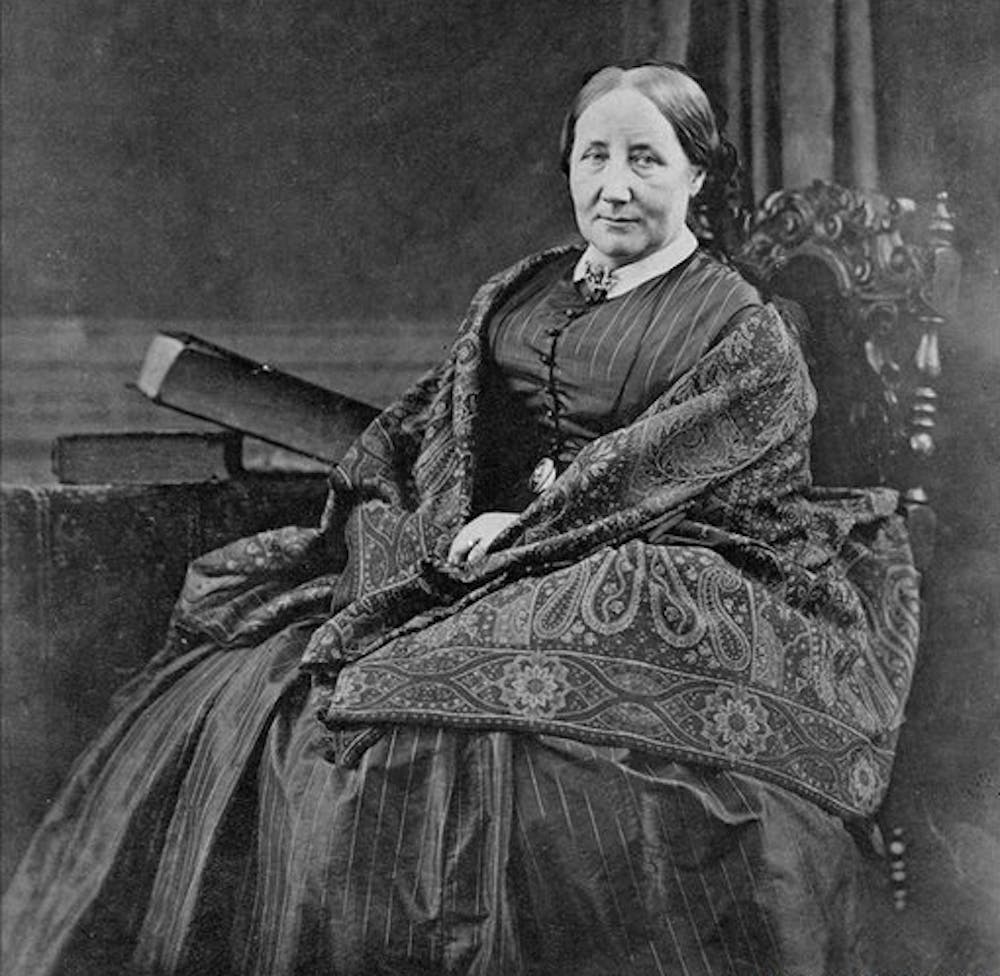 Elizabeth Gaskell circa 1860.
Wikimedia Commons
The marriage plot
On the surface, the bitter feud between Thornton and his workers suggests a dreary backdrop to the other main subject of the novel, which is the quietly growing attachment between Margaret, who champions sympathy for the poor, and Thornton, whose vision of the universe is dog-eat-dog.
Critics have long complained about the presence of “romance” in such a serious work. Why, for example, does the novel seem to abandon the romantic predictability of Pride and Prejudice at the start only to seek refuge in it by the end, which sees Margaret and Thornton happily engaged?
Read more:
Dangerous attractions and revolutionary sympathies: 5 Jane Austen facts revealed by music[4]
Some have argued this conclusion falsifies the novel’s political content, as if the dispute between “masters and men” can be “symbolically” resolved through the union of man and wife. However, as I argue elsewhere[5], such a view of the novel gets both it, and Pride and Prejudice, wrong. Gaskell’s handling of the well-worn “marriage plot” is highly original and even radical for two reasons that ensure this novel’s lasting power.
First, North and South is a primary example of what came to be called the “social problem novel,” in which writers brought important issues to light through the experiences of fictional characters. Authors in this genre understood that the novel had a unique potential to influence hearts and minds because, unlike the sermon or the philosophical treatise, a compelling story and sympathetic characters could help readers feel their way to new beliefs.
When Margaret first arrives in Milton-Northern, she is saved from total alienation by discovering what Gaskell calls a “human interest” in Higgins and his daughter, whom she regards as unique individuals rather than as personifications of a class.
Similarly, Thornton ceases to regard Margaret as a threat to his capitalist certitudes when he takes a human interest in her as a romantic partner.
In both cases, the abstract prescriptions of morality and politics are revealed to be misleading, and sometimes meaningless, without affectionate respect for the individuals they impact. Interpersonal intimacy is not a metaphor for class resolution but the very basis of it.
Secondly, Gaskell discerned in Austen’s example the radical potential of romantic love to reshape social systems. Since the 18th century, novelists had been telling stories of virtuous young women who get rewarded with marriages that catapult them up the class system. Pride and Prejudice is a notable example.
Elizabeth Gaskell circa 1860.
Wikimedia Commons
The marriage plot
On the surface, the bitter feud between Thornton and his workers suggests a dreary backdrop to the other main subject of the novel, which is the quietly growing attachment between Margaret, who champions sympathy for the poor, and Thornton, whose vision of the universe is dog-eat-dog.
Critics have long complained about the presence of “romance” in such a serious work. Why, for example, does the novel seem to abandon the romantic predictability of Pride and Prejudice at the start only to seek refuge in it by the end, which sees Margaret and Thornton happily engaged?
Read more:
Dangerous attractions and revolutionary sympathies: 5 Jane Austen facts revealed by music[4]
Some have argued this conclusion falsifies the novel’s political content, as if the dispute between “masters and men” can be “symbolically” resolved through the union of man and wife. However, as I argue elsewhere[5], such a view of the novel gets both it, and Pride and Prejudice, wrong. Gaskell’s handling of the well-worn “marriage plot” is highly original and even radical for two reasons that ensure this novel’s lasting power.
First, North and South is a primary example of what came to be called the “social problem novel,” in which writers brought important issues to light through the experiences of fictional characters. Authors in this genre understood that the novel had a unique potential to influence hearts and minds because, unlike the sermon or the philosophical treatise, a compelling story and sympathetic characters could help readers feel their way to new beliefs.
When Margaret first arrives in Milton-Northern, she is saved from total alienation by discovering what Gaskell calls a “human interest” in Higgins and his daughter, whom she regards as unique individuals rather than as personifications of a class.
Similarly, Thornton ceases to regard Margaret as a threat to his capitalist certitudes when he takes a human interest in her as a romantic partner.
In both cases, the abstract prescriptions of morality and politics are revealed to be misleading, and sometimes meaningless, without affectionate respect for the individuals they impact. Interpersonal intimacy is not a metaphor for class resolution but the very basis of it.
Secondly, Gaskell discerned in Austen’s example the radical potential of romantic love to reshape social systems. Since the 18th century, novelists had been telling stories of virtuous young women who get rewarded with marriages that catapult them up the class system. Pride and Prejudice is a notable example.
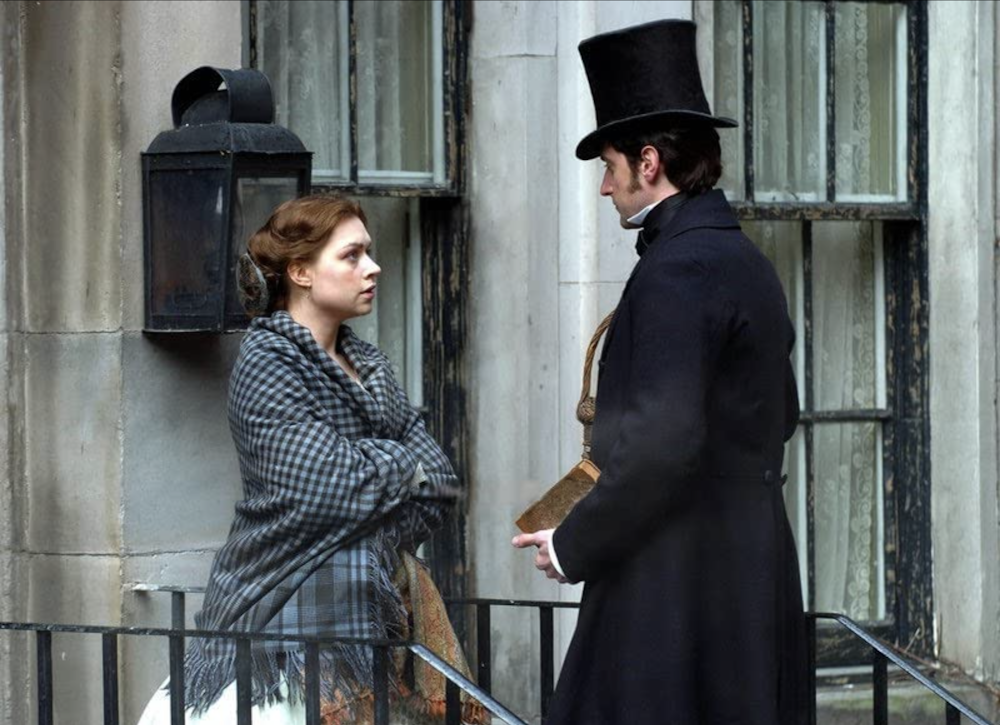 Richard Armitage and Daniela Denby-Ashe in the BBC TV adaptation of North & South (2004).
BBC
But, in North and South, Gaskell reverses the genders and the politics, too. Through a last-minute plot twist, Margaret comes to inherit a fortune that includes Thornton’s mill. Their marriage effectively saves him from bankruptcy and allows Margaret to take a more active role as landlord and manager.
Whereas Lizzy gets assimilated to Darcy’s household, Margaret will remain both master and mistress in Milton-Northern: her economic partnership with Thornton, like their emotional intimacy, is defined by reciprocal influence and mutual respect, with the sum being greater than its parts.
In place of strict dichotomies and zero-sum competitions, Gaskell shows how romantic attachment offers a conjunctive (and not just combative) model for the business of getting along with others.
Still, for those who love romance for its own sake, it would be hard to find a better example of subdued erotic intensity. When Thornton first encounters Margaret, he is instantly captivated by her movements as she pours the tea:
She had a bracelet on one taper arm, which would fall down over her round wrist. Mr. Thornton watched the replacing of this troublesome ornament with far more attention than he listened to her father. It seemed as if it fascinated him to see her push it up impatiently until it tightened her soft flesh; and then to mark the loosening – the fall.
In the veiled language that characterises the finest moments in Victorian fiction, Thornton’s world is opened to a new expanse of sexual possibility, and with it, intellectual awakening. Gaskell’s anxious yet thrilling collision of north and south makes its readers a similar promise.
References^ The Condition of the Working Class in England (www.goodreads.com)^ 39 Articles of the Anglican Church (en.wikipedia.org)^ Great Expectations by Charles Dickens: class prejudices, the convict stain and a corpse-bride (theconversation.com)^ Dangerous attractions and revolutionary sympathies: 5 Jane Austen facts revealed by music (theconversation.com)^ elsewhere (read.dukeupress.edu)
Richard Armitage and Daniela Denby-Ashe in the BBC TV adaptation of North & South (2004).
BBC
But, in North and South, Gaskell reverses the genders and the politics, too. Through a last-minute plot twist, Margaret comes to inherit a fortune that includes Thornton’s mill. Their marriage effectively saves him from bankruptcy and allows Margaret to take a more active role as landlord and manager.
Whereas Lizzy gets assimilated to Darcy’s household, Margaret will remain both master and mistress in Milton-Northern: her economic partnership with Thornton, like their emotional intimacy, is defined by reciprocal influence and mutual respect, with the sum being greater than its parts.
In place of strict dichotomies and zero-sum competitions, Gaskell shows how romantic attachment offers a conjunctive (and not just combative) model for the business of getting along with others.
Still, for those who love romance for its own sake, it would be hard to find a better example of subdued erotic intensity. When Thornton first encounters Margaret, he is instantly captivated by her movements as she pours the tea:
She had a bracelet on one taper arm, which would fall down over her round wrist. Mr. Thornton watched the replacing of this troublesome ornament with far more attention than he listened to her father. It seemed as if it fascinated him to see her push it up impatiently until it tightened her soft flesh; and then to mark the loosening – the fall.
In the veiled language that characterises the finest moments in Victorian fiction, Thornton’s world is opened to a new expanse of sexual possibility, and with it, intellectual awakening. Gaskell’s anxious yet thrilling collision of north and south makes its readers a similar promise.
References^ The Condition of the Working Class in England (www.goodreads.com)^ 39 Articles of the Anglican Church (en.wikipedia.org)^ Great Expectations by Charles Dickens: class prejudices, the convict stain and a corpse-bride (theconversation.com)^ Dangerous attractions and revolutionary sympathies: 5 Jane Austen facts revealed by music (theconversation.com)^ elsewhere (read.dukeupress.edu)