Beavers and oysters are helping restore lost ecosystems with their engineering skills – podcast
- Written by: Daniel Merino, Associate Science Editor & Co-Host of The Conversation Weekly Podcast, The Conversation
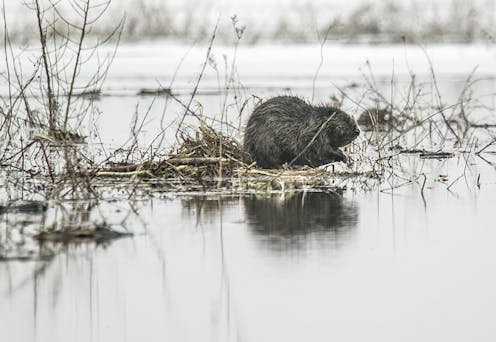
Whether you are looking at tropical forests in Brazil[1], grasslands in California[2] or coral reefs in Australia[3], it is hard to find places where humanity hasn’t left a mark. The scale of the alteration, invasion or destruction of natural ecosystems can be mindbogglingly huge.
Thankfully, researchers, governments and everyday people around the world are putting more effort and money into conservation and restoration every year. But the task is large. How do you plant a billion trees? How do you restore thousands of square miles of wetlands? How do you turn a barren ocean floor back into a thriving reef? In some cases, the answer lies with certain plants or animals – called ecosystem engineers – that can kick-start the healing.
In this episode of “The Conversation Weekly[4],” we talk to three experts about how ecosystem engineers can play a key role in restoring natural places and why the human and social sides of restoration are just as important as the science.
Ecosystem engineers are plants or animals that create, modify or maintain habitats. As Joshua Larsen[5], an associate professor at the University of Birmingham, explains, beavers are a perfect example of an ecosystem engineer because of the dams and ponds they build.
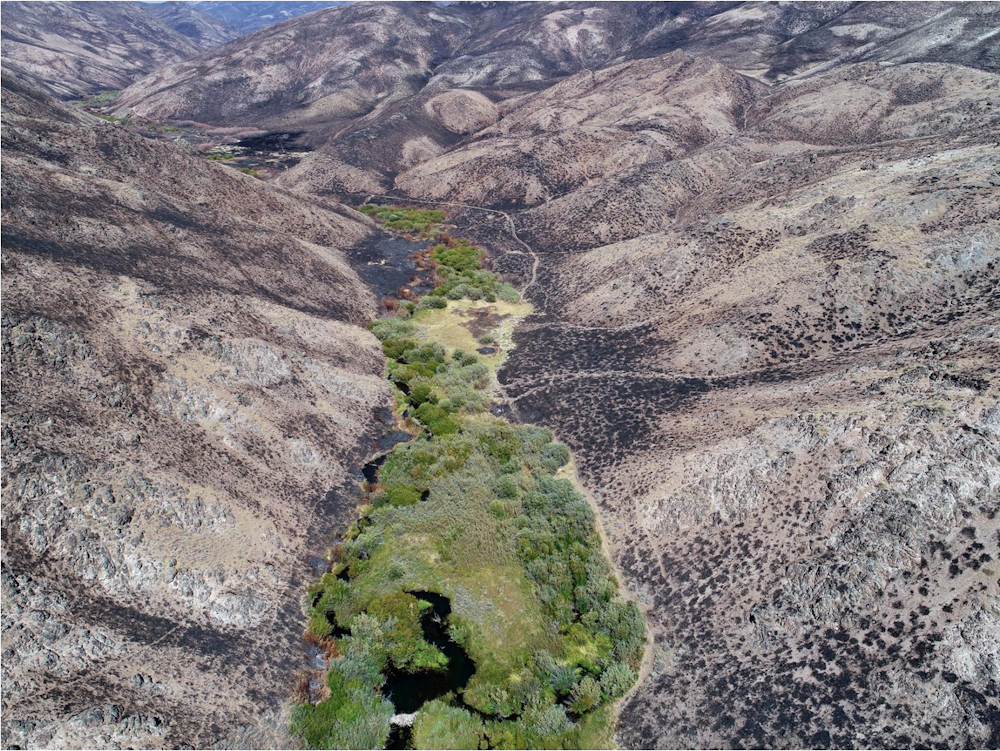
“They create this pocket of still water, which allows aquatic vegetation to start to colonize that wouldn’t otherwise be there,” says Larsen. Once a beaver establishes a pond, the surrounding area begins to change from a creek or river into a wetland.
Larsen is part of an effort to reintroduce beavers into Britain[8], a place where they have been extinct for over 500 years and the landscape reflects that loss. There used to be hundreds of thousands of beavers – and hundreds of thousands of beaver ponds – all across Britain. Without beavers, it would be prohibitively difficult to restore wetlands at that scale. But, as Larsen explains, “Beavers are doing this engineering of the landscape for free. And more importantly, they’re doing the maintenance for free.”
This idea of using ecosystem engineers to do the labor-intensive work of restoration for free is not limited to beavers. Dominic McAfee is a researcher at the University of Adelaide in Australia. He studies oysters and is leading a project to restore oyster reefs[9] on the eastern and southern coasts of Australia.
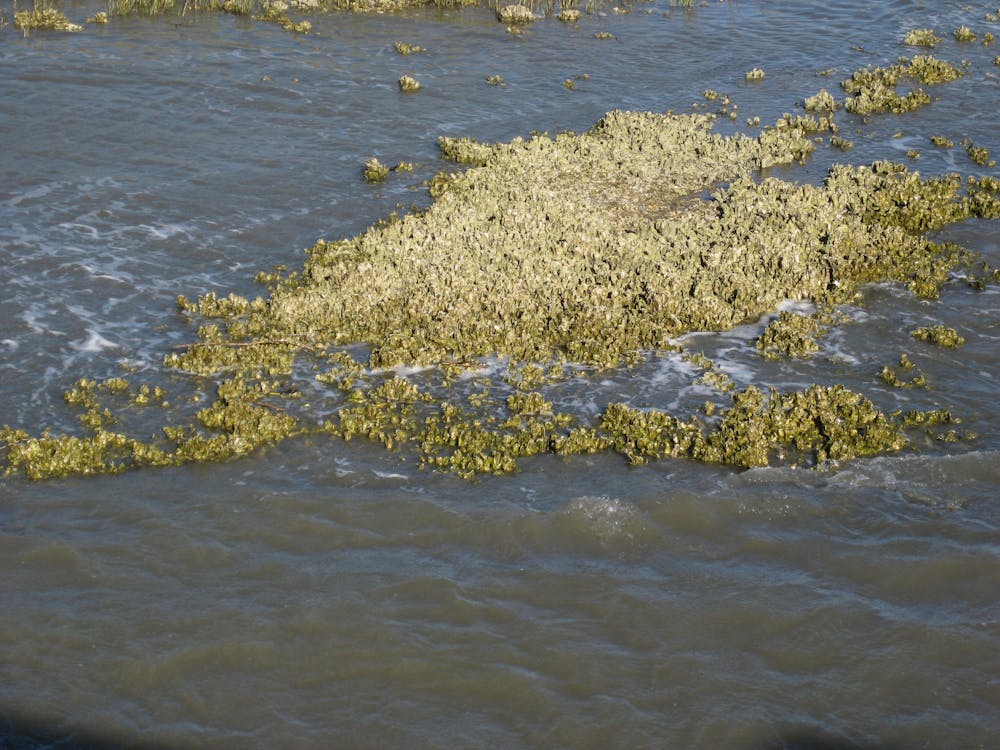 Oyster reefs provide important structure that supports entire ecosystems.
Jstuby/Wikimedia Commons[10]
Oyster reefs provide important structure that supports entire ecosystems.
Jstuby/Wikimedia Commons[10]
“These reefs were the primary sort of marine habitat in coasts, coastal bays and estuaries over about 7,000 kilometers (4,350 miles) of Australian coastline,” says McAfee. But today, “They’re all gone. All those reefs were scraped from the seafloor over the last 200 years.”
When you lose the oysters, you lose the entire reef ecosystem they support. So, a few years ago, McAfee and his colleagues decided to start bringing these reefs back. Oysters need a hard surface – like a rock, or historically, other oysters – to grow on. But all those old oyster reefs are gone and only sand remains. “So the first step to restore oysters is to provide those hard foundations. We’ve been doing that in South Australia by deploying limestone boulders,” explains McAfee. After just a year, McAfee and his colleagues are starting to see results, with millions of oyster larva sticking to these boulders.
At this point, McAfee says that challenges are less about the science and more about getting community and political support. And that is where Andrew Kliskey[11] comes in. Kliskey is a professor of community and landscape resilience at the University of Idaho in the U.S. He approaches restoration and conservation projects by looking at what are called social-ecological systems. As Kliskey explains, “That means looking at environmental issues not just from a single disciplinary point of view, but thinking that many things are often occurring in a town and in a community. Really, social-ecological systems means thinking about people and the landscape as being intertwined and how one interacts with the other.”
For scientists, this type of approach involves sociology, economics, indigenous knowledge and listening to communities that they are working with. Kliskey explains that it’s not always easy: “Doing this sort transdisciplinary work means being prepared to be uncomfortable. Maybe you’re trained as a hydrologist and you have to work with an economist. Or you work in a university and you want to work with people in a community with very real issues, that speak a different language and who have very different cultural norms. That can be uncomfortable.”
Having done this work for years, Kliskey has found that building trust is critical to any project and that the communities have a lot to teach researchers. “If you’re a scientist, it doesn’t matter which community you work with, you have to be prepared to listen.”
This episode was produced by Katie Flood and Daniel Merino, with sound design by Eloise Stevens. It was written by Katie Flood and Daniel Merino. Mend Mariwany is the show’s executive producer. Our theme music is by Neeta Sarl.
You can find us on Twitter @TC_Audio[12], on Instagram at theconversationdotcom[13] or via email[14]. You can also sign up to The Conversation’s free daily email here[15]. A transcript of this episode will be available soon.
Listen to “The Conversation Weekly” via any of the apps listed above, download it directly via our RSS feed[16], or find out how else to listen here[17].
References
- ^ tropical forests in Brazil (theconversation.com)
- ^ grasslands in California (news.stanford.edu)
- ^ coral reefs in Australia (theconversation.com)
- ^ The Conversation Weekly (theconversation.com)
- ^ Joshua Larsen (www.birmingham.ac.uk)
- ^ Schmiebel/Wikimedia Commons (commons.wikimedia.org)
- ^ CC BY-SA (creativecommons.org)
- ^ effort to reintroduce beavers into Britain (theconversation.com)
- ^ restore oyster reefs (theconversation.com)
- ^ Jstuby/Wikimedia Commons (commons.wikimedia.org)
- ^ Andrew Kliskey (www.uidaho.edu)
- ^ @TC_Audio (twitter.com)
- ^ theconversationdotcom (www.instagram.com)
- ^ via email (theconversation.com)
- ^ free daily email here (theconversation.com)
- ^ RSS feed (feeds.acast.com)
- ^ how else to listen here (theconversation.com)