Ketamine injections for depression? A new study shows promise, but it's one of many options
- Written by: Michael Musker, Enterprise Fellow (Senior Research Fellow/Senior Lecturer), University of South Australia
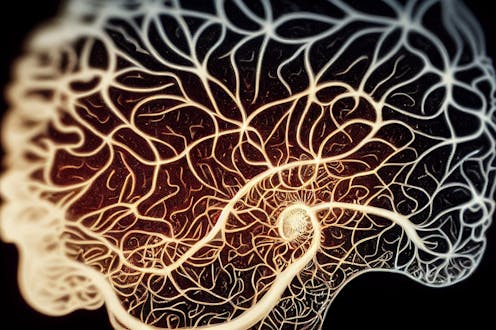
Ketamine might be better known as a recreational drug or anaesthetic. But there’s growing evidence for its use for people with hard-to-treat depression.
An Australasian study out today[1] showed some positive results for people with treatment-resistant depression when they had ketamine injections.
But we don’t know if these effects are sustained in the long term, and there are other ways of delivering ketamine. There are also other treatment options for this type of depression.
Read more: Weekly Dose: anaesthetic and recreational drug ketamine could be used to treat depression[2]
What is ketamine?
Ketamine has been used as a powerful general anaesthetic[3] for more than 50 years.
It’s also an illicit drug[4] of abuse and is considered a psychedelic. Psychedelics dramatically alter some neurotransmitters (chemical messengers) in the brain to create[5] a profound change in perception, mood and anxiety.
In early animal studies, ketamine led to increase in levels of certain brain chemicals, such as dopamine, by up to 400%[6]. This led researchers to trial ketamine in humans to see what would happen in our brains.
Now, doses of ketamine (at those lower than used as an anaesthetic) are being used to help treatment-resistant depression. That’s when someone has tried at least two antidepressants and shows no improvement.
It is usually prescribed under strict conditions and observation that mitigate some serious risks[7], such as increased feelings about suicide in some people. So people need to be assessed and monitored not only during treatment, but afterwards.
But some clinicians have resisted using ketamine due to its potential to become a drug of abuse[8].
Ketamine is also used to treat other mental health disorders such as PTSD[9] (post-traumatic stress disorder).
Read more: Hallucinations in the movies tend to be about chaos, violence and mental distress. But they can be positive too[10]
How about this new study?
The research involved multiple centres[11] across Australia and New Zealand and compared how well ketamine injected under the skin[12] compared with taking another drug in treating people with treatment-resistant depression.
The trial randomised the 184 study participants into different groups – some receiving ketamine, the rest the drug midazolam[13], twice a week over four weeks. Neither the study participants nor those assessing the results knew who had ketamine and who didn’t.
At the start of the study, all participants had a clinical depression score of at least 20 (moderate depression) using a particular scale known as the Montgomery-Asberg Depression Rating Scale.
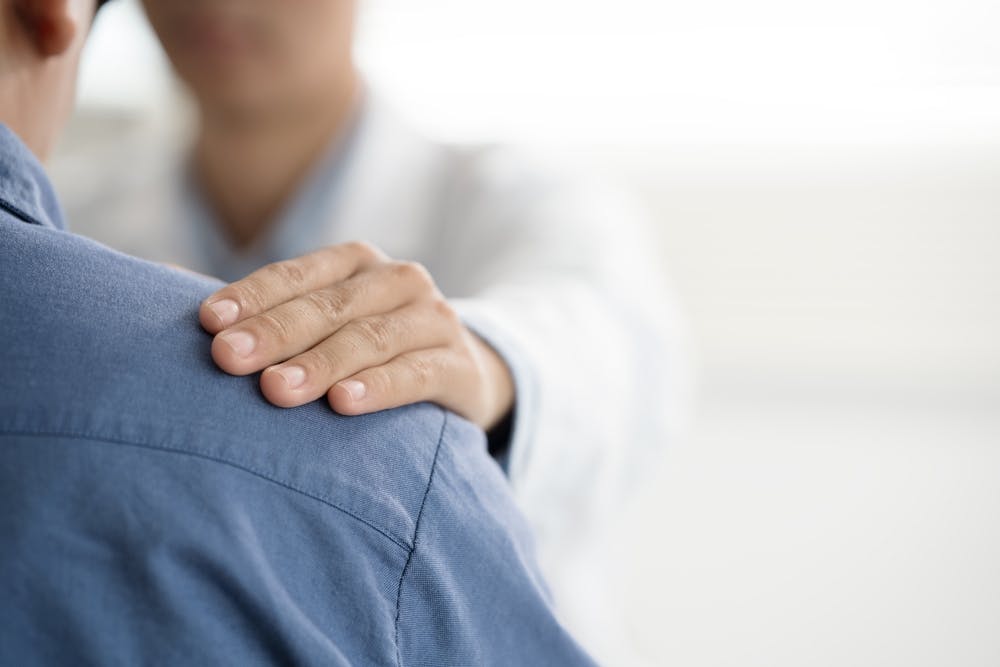
The researchers then looked for a score of less than 11, indicating a shift from a depression to remission.
After four weeks, there was a big difference between people treated with ketamine (19.6% in remission) compared with midazolam (2%). Another, less-strict way of measuring outcomes is to look for a halving of the depression score. This had an even bigger difference (29% compared with 4%).
However, four weeks after the treatment had ended, there was only limited sustained improvement in symptoms in the ketamine group. This suggests treatment may be needed over a longer period.
Read more: Do psychedelics really work to treat depression and PTSD? Here's what the evidence says[15]
There are other options
In the trial, ketamine was given via an injection under the skin, which is a low-cost and efficient option. But ketamine can also be delivered directly into the bloodstream via an intravenous drip. Neither of these two options are routinely available in Australia and New Zealand outside clinical trials.
A third option uses a different form[16] of ketamine and comes in a nasal spray[17] (approved for use in Australia[18] and New Zealand).
Each option delivers ketamine in different amounts, and research into how these work in practice, and how they compare, is ongoing[19].
There are also other drug and non-drug options for treatment-resistant depression. These include:
In a nutshell
Serious consequences of depression include suicide[20] or a lifetime of anguish. This latest research shows promising outcomes for people whose symptoms are harder to treat. But this option is not yet widely available outside a clinical trial. Only the ketamine nasal spray has been approved for use in Australia and New Zealand.
There are also other treatments. So if your existing treatment is not working for you, discuss this with your doctor who will explain what else is available.
If this article has raised issues for you, or if you’re concerned about someone you know, call Lifeline on 13 11 14. Beyond Blue provides the free resource A guide to what works for depression[21].
References
- ^ out today (www.cambridge.org)
- ^ Weekly Dose: anaesthetic and recreational drug ketamine could be used to treat depression (theconversation.com)
- ^ general anaesthetic (www.nature.com)
- ^ illicit drug (www.ncbi.nlm.nih.gov)
- ^ to create (pubmed.ncbi.nlm.nih.gov)
- ^ up to 400% (www.nature.com)
- ^ serious risks (www.ncbi.nlm.nih.gov)
- ^ drug of abuse (www.ranzcp.org)
- ^ PTSD (www.ncbi.nlm.nih.gov)
- ^ Hallucinations in the movies tend to be about chaos, violence and mental distress. But they can be positive too (theconversation.com)
- ^ multiple centres (www.australianclinicaltrials.gov.au)
- ^ under the skin (www.ncbi.nlm.nih.gov)
- ^ midazolam (pubmed.ncbi.nlm.nih.gov)
- ^ Shutterstock (www.shutterstock.com)
- ^ Do psychedelics really work to treat depression and PTSD? Here's what the evidence says (theconversation.com)
- ^ different form (www.nps.org.au)
- ^ nasal spray (www.spravato.com)
- ^ Australia (www.tga.gov.au)
- ^ ongoing (www.ncbi.nlm.nih.gov)
- ^ suicide (theconversation.com)
- ^ A guide to what works for depression (www.beyondblue.org.au)