Ballet flats are back. Here's what the research says about how they affect your feet
- Written by: Kristin Graham, Lecturer in Podiatry, University of South Australia
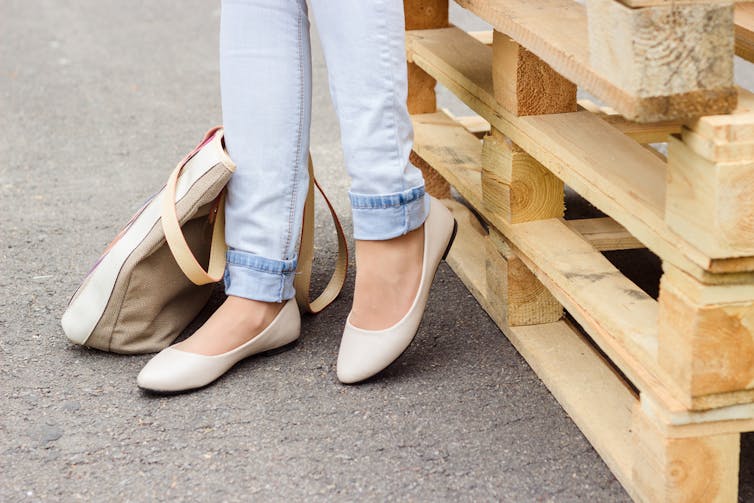
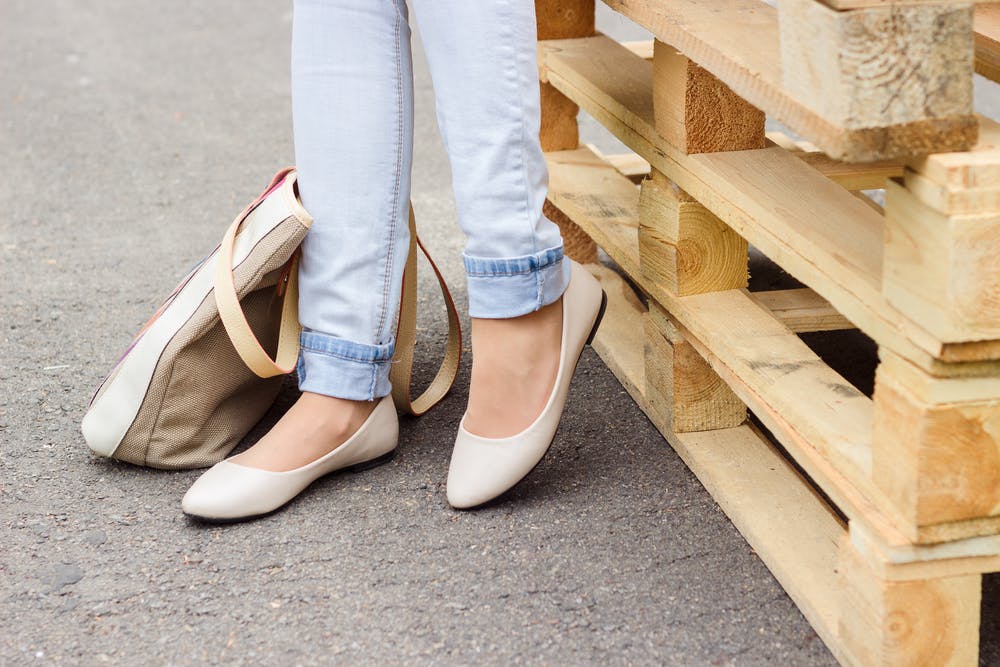
Ballet flat shoes – those thin-heeled lightweight slip-on shoes – are making a fashion comeback[1]. And it’s not hard to see why: they’re versatile, easy to wear, soft, flexible and often worn by celebrities.
We have often been warned of the dangers of high-heeled shoes, so you might think ballet flats are problem-free.
When you look at the research, however, a complicated picture emerges. There’s no definitive evidence to show ballet flats are generally harmful to foot health in the long-term. But ill-fitting ballet flats can be a problem.
Read more: Do high top shoes actually reduce ankle sprain risk? Here's what the research says[2]
Make sure it fits, especially in the toe box
An estimated 70%[3] of the population are wearing ill-fitting shoes. This mismatch between foot and shoe shape can increase foot pain, reduce stability[4], and can mean more blisters, corns and calluses. And habitual wearing of tight shoes has been associated[5] with bone changes in the toes and feet over time.
Many flats feature a shallow and narrow toe box (the part of the shoe where the toes go). A too-small toe box often doesn’t align with the shape of a foot and ends up squishing the toes. It can also increase[6] pressure on top of and under the foot, and restrict[7] the movement of the forefoot during walking.
But a too-big toe box is also a problem. Too much foot movement within the shoe can cause pressure and friction on the skin, which can also lead to calluses, corns, blisters, and wounds.
A poorly fitting toe box can also cause micro trauma to toenails which, ultimately, can change their look and thickness[8].
So if you’re wearing flats, make sure you choose a shoe with the right sized toe box.
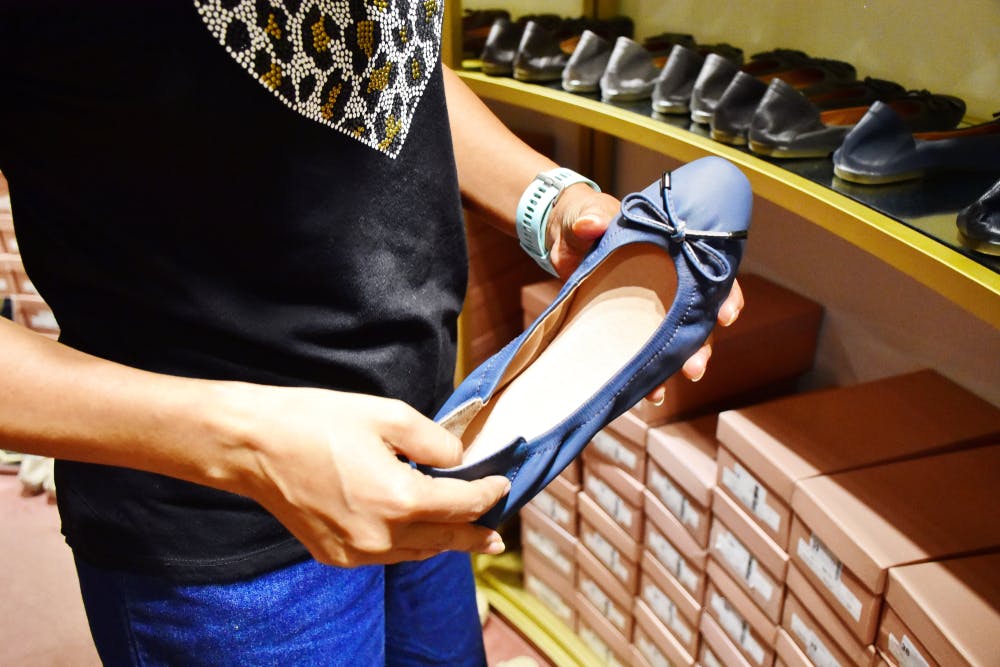 Flats are often accused of lacking support.
Shutterstock
Flats are often accused of lacking support.
Shutterstock
What about the heel?
Health professionals often recommend a small heel over a completely flat shoe. Very flat shoes can place[9] more[10] strain on the soft tissues that support the foot arch – specifically, the plantar fascia.
Research[11] has shown moving from a completely flat shoe to a small, raised heel reduces the tension force on the plantar fascia during standing activities.
On the other hand, other research[12] has shown most people will adapt their ankle and knee motion to accommodate shoes of different heel heights.
What about support?
Ballet flats tend to have very flexible, thin soles and heel counters (the part, coloured red in this picture, that hugs the heel and the back part of the foot).
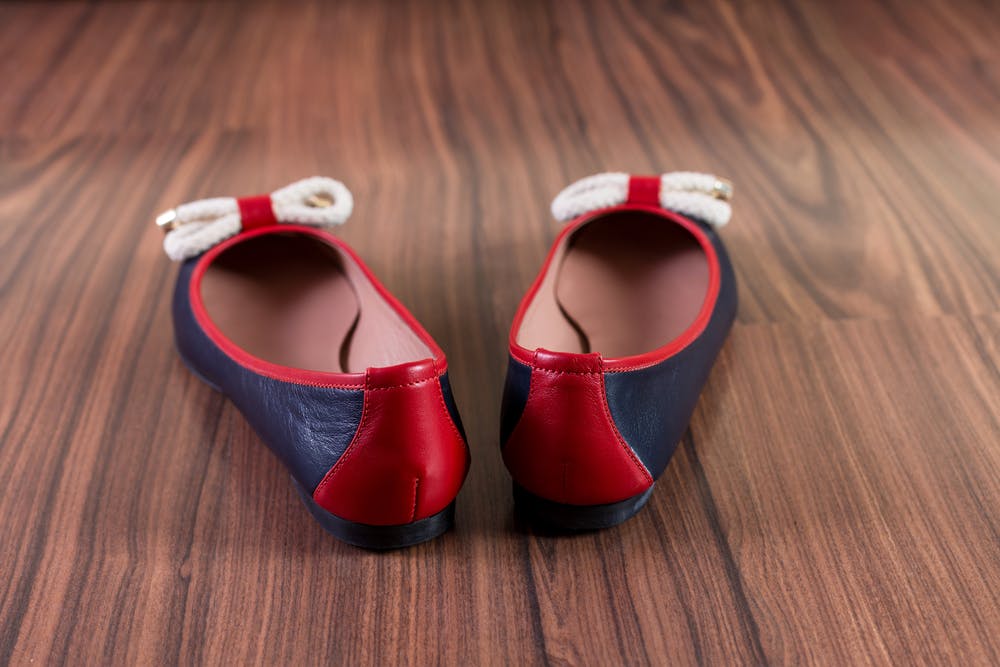 The heel counter here is coloured red.
Shutterstock
The heel counter here is coloured red.
Shutterstock
These thin and flexible structures mean flats are often accused of lacking support. But debate rages among foot and shoe experts about how important support is in the first place.
Research[13] on barefoot-style shoes has shown walking in these types of shoes significantly reduces some loads on the knee compared to more stable supportive shoes.
Minimalist shoes have also been found to increase strength[14] in certain foot muscles used when we push off during walking, running or jumping.
However, other research found stable supportive shoes can improve knee pain[15] when walking more than flat flexible shoes.
The thin soles in flats mean there is little cushioning under the foot. While more cushioning can improve comfort, and reduce stress and strain on your foot sole skin[16], there is no evidence it reduces loads across the lower leg.
In fact, walking in cushioned shoes has been shown to increase[17] the load on the knee compared to flat, flexible shoes.
 We have often been warned of the dangers of high-heeled shoes, so you might think ballet flats are problem-free.
Shutterstock
We have often been warned of the dangers of high-heeled shoes, so you might think ballet flats are problem-free.
Shutterstock
So, what’s the verdict?
The verdict is mixed. Yes, there’s evidence poorly fitting shoes and a flat heel can be detrimental, with consequences seen in the rearfoot[18] (around the ankle) and knee[19].
But there’s also no hard evidence ballet flats cause long-term foot health problems.
What matters is choosing a well-fitted shoe to suit your foot shape and needs.
If you’re shopping for ballet flats, try to:
choose a pair with a toe box that does not cramp your toes and has a sole at least as wide as your foot
choose flats that offer at least some structure and support
choose a pair with a small heel rather being than completely flat.
References
- ^ comeback (www.vogue.com)
- ^ Do high top shoes actually reduce ankle sprain risk? Here's what the research says (theconversation.com)
- ^ 70% (pubmed.ncbi.nlm.nih.gov)
- ^ reduce stability (pubmed.ncbi.nlm.nih.gov)
- ^ associated (www.sciencedirect.com)
- ^ increase (www.sciencedirect.com)
- ^ restrict (jfootankleres.biomedcentral.com)
- ^ their look and thickness (www.researchgate.net)
- ^ place (pubmed.ncbi.nlm.nih.gov)
- ^ more (www.sciencedirect.com)
- ^ Research (pubmed.ncbi.nlm.nih.gov)
- ^ research (journals.lww.com)
- ^ Research (pubmed.ncbi.nlm.nih.gov)
- ^ increase strength (pubmed.ncbi.nlm.nih.gov)
- ^ improve knee pain (pubmed.ncbi.nlm.nih.gov)
- ^ skin (www.sciencedirect.com)
- ^ increase (pubmed.ncbi.nlm.nih.gov)
- ^ rearfoot (www.sciencedirect.com)
- ^ knee (www.sciencedirect.com)