Australian universities have dropped in the latest round of global rankings – should we be worried?
- Written by: Judith Ireland, Education Editor, The Conversation, Australia
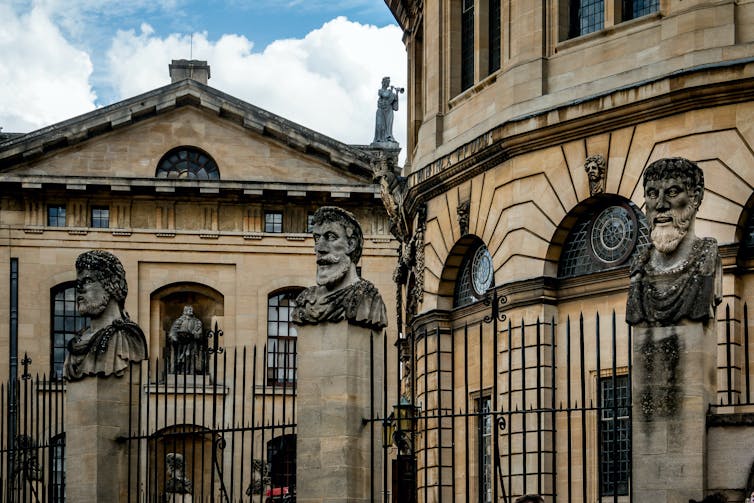
Every year, Times Higher Education[1] – a global higher education publication – ranks universities around the world. This one of three prominent international ranking systems for universities.
Its 2024 list has just been released[2] and includes 1,904 universities across 108 countries.
The top five universities are all in the United Kingdom and United States: Oxford University, Stanford University, Massachusetts Institute of Technology, Harvard University and the University of Cambridge.
In Australia, headlines have talked about a “slide[3]” down the world rankings for Australian universities, with our reputation also “slipping[4]”.
Australia’s highest-ranking institution, The University of Melbourne, dropped from 34 to 37. Many other local universities also fell in the rankings. For example, The University of Sydney dropped six places to 60 and the Australian National University dropped five places to 67.
The Conversation spoke to Associate Professor Gwilym Croucher[5], a higher education researcher at the University of Melbourne about what the latest rankings mean.
How are the rankings calculated?
The Times Higher Education takes in a range of measures, from teaching to research productivity, research citations, industry connections and international students.
The way the rankings are calculated is complicated. And there has been a change in the way universities are scored this year, with additional measures such as a weighting given to the relationship between research and patents.
Why have we seen Australia drop in the rankings?
One thing is there has been a change in the methodology this year, which has likely had some downside for how Australian universities have fared.
A second factor is the international landscape is becoming more competitive – two Chinese universities and the National University of Singapore are in the top 20. There’s significant higher education investment[7] in some countries, such as China, especially for their elite research universities.
This means on some measures, Australian universities are facing more competition.
The third thing is, while it’s hard to pinpoint exactly how Australia’s response to the pandemic affected the rankings, without a doubt, border closures during COVID had some impact on our international reputation.
The Times rankings take into account teaching and research reputation, both of which may have been affected by the pandemic when we saw classes go online.
Is this a problem?
While nobody likes to go down in the rankings, we have to be careful not to read too much into this news.
Rankings can be useful for indicating there are areas we need to address. For example, we know Australia’s research funding lags behind[8] other similar countries.
But these rankings are also based on somewhat narrow measures, such as research citations and ratios of students vs staff and undergraduate vs postgraduate students. These don’t necessarily tell us everything we need to know about teaching and research quality.
Read more: International student numbers hit record highs in Canada, UK and US as falls continue in Australia and NZ[9]
Besides media outlets, who will be looking at these rankings?
Many international students do pay attention to these rankings, it’s one way they judge the overall quality of education.
So this is another indication that competition for international students is fierce. Given international student fees have played a key role[10] in funding much research in Australian universities, this is important.
Any change in the rankings should give us pause to think about what we might change in Australia. But we are also in the middle of a higher education reform process[11] in Australia with the Universities Accord. The final report is due in December.
This is looking at teaching quality, research quality, research funding and international students. So, we are having a national discussion about these issues right now.
References
- ^ Times Higher Education (www.timeshighereducation.com)
- ^ list has just been released (www.timeshighereducation.com)
- ^ slide (www.smh.com.au)
- ^ slipping (www.abc.net.au)
- ^ Associate Professor Gwilym Croucher (theconversation.com)
- ^ Ray Harrington/Unsplash (unsplash.com)
- ^ significant higher education investment (egc.yale.edu)
- ^ research funding lags behind (theconversation.com)
- ^ International student numbers hit record highs in Canada, UK and US as falls continue in Australia and NZ (theconversation.com)
- ^ have played a key role (theconversation.com)
- ^ higher education reform process (theconversation.com)