Here's why we need a disability rights act – not just a disability discrimination one
- Written by: David Roy, Lecturer in Education, University of Newcastle
The Royal Commission into Violence, Abuse, Neglect and Exploitation of People with Disability has shared its final report. In this series[1], we unpack what the commission’s 222 recommendations could mean for a more inclusive Australia.
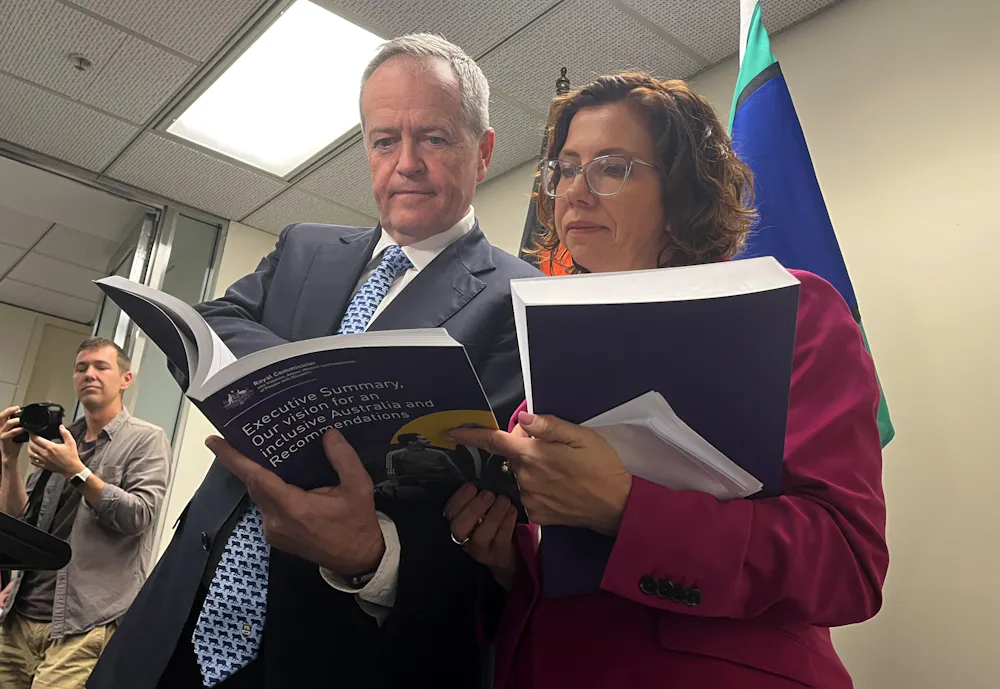
There were more than 200 recommendations for federal and state governments to consider within the Royal Commission into Violence, Abuse, Neglect and Exploitation of People with Disability’s final report, released on Friday.
A great deal of focus has been on housing, employment and education. However, the very first recommendation is for a new disability rights act[2]. This recommendation, if adopted, may have the greatest impact of all.
Here’s why it’s needed.
Conventions, rights and Australian law
Australia is a signatory to the seven core International Human Rights[3] treaties and has ratified them all (meaning we’ve voluntarily accepted legal obligations under international law). Once it ratifies a treaty, Australia is obliged[4] to ensure its domestic laws comply with it.
The seven treaties include the Convention on the Rights of Persons with Disability[5], signed in 2007. In addition, we have the 1992 Disability Discrimination Act[6] and we are a signatory to the Salamanca Statement[7] on the right of every child to education.
However there has been ongoing criticism of Australia[8] for not fully abiding by the international treaties we have signed.
The difference between discrimination and rights
The Disability Discrimination Act[9] is a reactive law. It comes into force when discrimination is already allegedly happening. The problem with this form of “formal equity” is it can reinforce inequity, even as it seeks to address it. It’s focus is not achieving equal outcomes or opportunities.
In its final report, the disability royal commission affirmed a commitment to make the Convention on the Rights of Persons with Disabilities a reality in Australian law.
A disability rights act would enshrine in law the ability to make proactive, positive actions to ensure inclusion, support and long term structural changes. A rights act would additionally support First Nation peoples with disability giving them additional protection that is culturally sensitive, as stated in the Royal Commission Report.
Read more: The disability royal commission heard horrific stories of harm – now we must move towards repair[11]
Reasonable adjustment versus undue burden
One major challenge to breaking down barriers to inclusion and equity is the phrase “reasonable accommodation[12]”, which is outlined in the Convention on the Rights of Persons with Disabilities as:
necessary and appropriate modification and adjustments not imposing a disproportionate or undue burden […] to ensure to persons with disabilities the enjoyment or exercise on an equal basis with others of all human rights and fundamental freedoms […]
These are often termed “reasonable adjustments”.
But are the changes to ensure inclusion “reasonable”? How can we tell?
This interpretation has been criticised because reasonable adjustment is intended to mean what is reasonable for the person faced with the barrier. But it’s usually interpreted as meaning what’s reasonable for the provider – say, a school, employer, accommodation or service organisation.
A new disability rights act would change the burden of proof. If a business, school system or care provide did not offer inclusive supports and adjustment, they would need to prove it was an undue burden on them. The commission said[13]:
As presently drafted, the [Disability Discrimination Act] creates little incentive for employers, schools, service providers and other duty-holders to take active measures to prevent disability discrimination.
Commissioners said one of the main deficiencies of the disability discrimination act is that:
the protection of a person’s rights depends on that person being prepared to make and pursue a complaint […] to have the knowledge and personal resources to pursue the claim, including the risk of an adverse costs order should the matter reach court.
Read more: Disability royal commissioners disagreed over phasing out 'special schools' – that leaves segregation on the table[14]
Why a disability rights act is important
Under current policies and practices, people with a disability are not sufficiently involved with decision making and the development of laws and policies. This is contrary to the Convention on the Rights of Persons with Disabilities.
A disability rights act would enshrine the requirement for people with a disability to be at the centre of any changes being made.
There also needs to be agreement across all sectors as to what constitutes disability[15] for a rights act to be implemented. There are still today, those that question the diagnosis of attention deficit hyperactivity disorder (ADHD) and systems that conflate indicators between disabilites[16]. If there isn’t a consistent definition, people and organisations can ignore or redefine disability based on their opinion, not community consensus or law.
A disability rights act would create a societal climate of positive action, to remove barriers before complaint, and for all aspects of society to promote meaningful equality and actively eliminate discrimination.
In the true spirit of inclusion, it could change societal attitudes and put supporting people with a disability at the core of all processes, rather than an afterthought – whether in the employment, education, housing, sport or legal sectors. It would break the vicious circle of disadvantage and exclusion[17].
Read more: When is a condition 'chronic' and when is it a 'disability'? The definition can determine the support you get[18]
A flow-on effect to all the recommendations
In their final education recommendations, a key division emerged[19] among the commissioners. Indeed this split also exists within the education sector.
Three of the commissioners said all children with a disability should be taught in mainstream settings and segregated settings should be closed. In this way, the streaming of exclusion that often leads to a lifetime of isolation from wider society could be disrupted.
A disability rights act would ensure segregated settings and potential educational deficiencies (whether in specialist or mainstream schools) would be challenged by a social model of disability rather than an archaic medical model, which focuses on specific diagnoses. It would empower us to break from the current failing systems and change the lens through which we see each other.
Creating a disability rights act would mean that if mainstream schools are not suitable for many children with a disability, then we would change the schools and the systems – not remove “certain” children.
References
- ^ series (theconversation.com)
- ^ a new disability rights act (disability.royalcommission.gov.au)
- ^ International Human Rights (www.ag.gov.au)
- ^ obliged (humanrights.gov.au)
- ^ Convention on the Rights of Persons with Disability (www.ohchr.org)
- ^ Disability Discrimination Act (www.legislation.gov.au)
- ^ Salamanca Statement (unesdoc.unesco.org)
- ^ criticism of Australia (www.afdo.org.au)
- ^ Disability Discrimination Act (www.legislation.gov.au)
- ^ AAP Image/Jacob Shteyman (photos-cdn.aap.com.au)
- ^ The disability royal commission heard horrific stories of harm – now we must move towards repair (theconversation.com)
- ^ reasonable accommodation (www.un.org)
- ^ said (disability.royalcommission.gov.au)
- ^ Disability royal commissioners disagreed over phasing out 'special schools' – that leaves segregation on the table (theconversation.com)
- ^ what constitutes disability (www.nccd.edu.au)
- ^ indicators between disabilites (theconversation.com)
- ^ exclusion (www.abc.net.au)
- ^ When is a condition 'chronic' and when is it a 'disability'? The definition can determine the support you get (theconversation.com)
- ^ emerged (theconversation.com)