A successful energy transition depends on managing when people use power. So how do we make demand more flexible?
- Written by: Chris Briggs, Research Director, Institute for Sustainable Futures, University of Technology Sydney
Energy security concerns[1] are mounting as renewable projects and transmission lines are delayed.
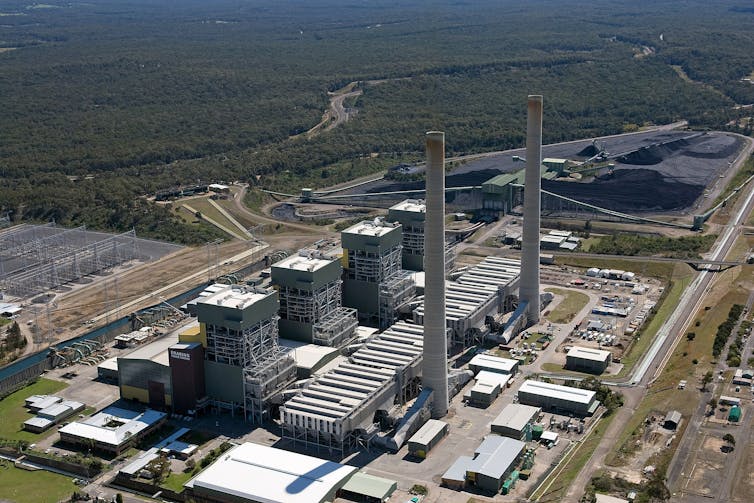
In New South Wales, for instance, the government has flagged it may defer[2] the closure of Eraring coal power station beyond 2025.
NSW has other new policies[3] to “get the energy transition back on track”. These include expanding “customer energy resources”, such as solar panels and batteries, and increasing “demand flexibility” (broadly, using smart technology to shift the times when businesses and homes use power).
With more variable supply from solar and wind energy, demand flexibility is a cheaper and cleaner way to keep the electricity grid stable.
Modelling[4] for the Australian Renewable Energy Agency (ARENA) shows this approach could save consumers up to A$18 billion to 2040. Shifting demand can avoid:
- higher-priced power use at the end of the day
- building new poles and wires to increase network capacity to meet peak demand
- paying coal plants to stay open.
Read more: Good news – there's a clean energy gold rush under way. We'll need it to tackle energy price turbulence and coal's exodus[7]
What does flexible demand involve?
Examples of flexible demand include:
shifting water heating[8] from night-time (mostly coal-powered) to daytime (using solar)
reducing temperatures in commercial coolrooms using solar power in the middle of the day, then switching chillers off[9] in the late afternoon until they return to standard refrigeration temperatures
remotely controlling air conditioners[10] to turn them down when the grid is under stress. Households get paid and don’t notice if the aircon is briefly turned down, but across many homes it can make a big difference.
Read more: In an energy crisis, every watt counts. So yes, turning off your dishwasher can make a difference[11]
The Australian Energy Market Operator (AEMO) estimates[12] NSW needs an extra 191 megawatts (MW) of capacity to maintain reliability when Eraring closes.
Another way to cover that capacity shortfall is more flexible demand. Queensland already has almost 150MW of remote-controlled air conditioning[13]. Other types of demand management that Queensland grid operators can call on total about 900MW.
In Western Australia, a newly signed contract will provide 120MW[14] of demand flexibility.
Read more: Unsexy but vital: why warnings over grid reliability are really about building more transmission lines[15]
So what are the obstacles to more flexible demand?
ARENA commissioned the Institute for Sustainable Futures to review the pilot demand flexibility projects[16] it has funded. Many didn’t deliver as much as hoped.
Sometimes, this was because businesses were too busy with day-to-day operations or payments for households were too low to catch their interest. But often it’s a matter of putting policies, technical standards and regulations in place to make demand management seamless and efficient.
ARENA has spent about $180 million on 55 projects with at least some focus on flexible demand. They include air conditioning, pool pumps and hot water systems in homes, commercial building air conditioning and electric vehicle charging.
4 ways to increase demand flexibility
What do these projects tell us about how to increase demand flexibility?
1. Better technical standards
The technical standards required of manufacturers often don’t ensure devices can be used to shape demand. Many air-conditioners couldn’t be controlled in ARENA pilots.
There is also no technical standard for “inter-operability” of devices within homes. Batteries, hot water systems and other devices with different companies’ technologies don’t always work well together.
Vehicle-to-grid charging[17] for electric vehicles will be the largest opportunity for demand flexibility, but there is no common technical standard. It’s vital to have one before the mass uptake of electric vehicles.
Read more: Owners of electric vehicles to be paid to plug into the grid to help avoid blackouts[18]
Outside Victoria, smart meters that provide real-time information on home energy use are rare. The Australian Energy Market Commission has recommended[19] governments accelerate roll-out of smart meters to 100% by 2030.
2. Simpler measurement systems
The measurement systems to calculate payments for demand flexibility are a barrier to expansion. It’s tricky as you need to measure how much electricity was used relative to what would otherwise have occurred.
ARENA pilots that tried to precisely measure residential demand flexibility found it was financially unviable at the smaller scale.
The system used for AEMO’s Wholesale Demand Response Mechanism[20] (WDRM) effectively limits participation to businesses with predictable, flat consumption profiles. This excludes as much as 80–90% of sites[21]. International measurement models[22] could be trialled here to open up participation.
Read more: New demand-response energy rules sound good, but the devil is in the (hugely complicated) details[23]
3. More certainty about payments
Earnings from providing demand flexibility depend on weather, market prices and so on. This uncertainty makes it hard to get businesses to sign up.
Overseas, some energy markets guarantee payment for making demand flexibility available. These have the highest participation[24].
The federal government is consulting on a capacity investment scheme[25]. Because it will have the same measurement system as the current mechanism, participation is likely to be limited.
4. Fresh policy approaches
Businesses that sign up under the Wholesale Demand Response Mechanism make bids in the National Electricity Market to be paid for reducing their power use[26] when demand and prices are high. This should reduce prices for all consumers and improve energy security when the grid is under stress. However, it has attracted only one participant – mainly due to the complex measurement system – and isn’t open to households.
Another incentive scheme[27] for electricity networks to invest in demand management is chronically under-used.
There are simpler alternatives that have worked before. The national Renewable Energy Target[28] and state energy efficiency certificate schemes fund rooftop solar or energy retrofits based on average output or energy savings from past experience. These simple calculations offer a relatively stable incentive, which could work for demand flexibility.
NSW’s Peak Demand Reduction Scheme[29], launched last year, could provide a model for using certificate schemes to boost demand flexibility.
Get serious about demand flexibility
The focus of NSW’s development of a customer energy resources policy[30] appears to be on “virtual power plants”. These co-ordinate household solar and battery systems to store solar power and export to the grid when it’s most needed.
Batteries are part of the solution, but cheaper options exist. An electric water heater with a 300-litre tank can store as much energy[31] as a second-generation Tesla battery at much less cost.
Modelling[32] for ARENA finds hot water systems could store as much energy as more than 2 million household batteries. Retrofitting these systems will spread savings more widely to include low-income households as well as those that can afford a battery.
Read more: Using electric water heaters to store renewable energy could do the work of 2 million home batteries – and save us billions[33]
It’s time we got serious about developing a holistic demand flexibility strategy. It will be cheaper and cleaner than paying coal plants to stay open.
References
- ^ Energy security concerns (www.smh.com.au)
- ^ may defer (www.theguardian.com)
- ^ other new policies (www.energy.nsw.gov.au)
- ^ Modelling (arena.gov.au)
- ^ Nick Pitsas, CSIRO/Wikimedia Commons (commons.wikimedia.org)
- ^ CC BY (creativecommons.org)
- ^ Good news – there's a clean energy gold rush under way. We'll need it to tackle energy price turbulence and coal's exodus (theconversation.com)
- ^ shifting water heating (theconversation.com)
- ^ switching chillers off (reneweconomy.com.au)
- ^ remotely controlling air conditioners (www.abc.net.au)
- ^ In an energy crisis, every watt counts. So yes, turning off your dishwasher can make a difference (theconversation.com)
- ^ estimates (aemo.com.au)
- ^ 150MW of remote-controlled air conditioning (www.energex.com.au)
- ^ contract will provide 120MW (reneweconomy.com.au)
- ^ Unsexy but vital: why warnings over grid reliability are really about building more transmission lines (theconversation.com)
- ^ review the pilot demand flexibility projects (arena.gov.au)
- ^ Vehicle-to-grid charging (theconversation.com)
- ^ Owners of electric vehicles to be paid to plug into the grid to help avoid blackouts (theconversation.com)
- ^ recommended (www.aemc.gov.au)
- ^ Wholesale Demand Response Mechanism (aemo.com.au)
- ^ 80–90% of sites (aemo.com.au)
- ^ International measurement models (aemo.com.au)
- ^ New demand-response energy rules sound good, but the devil is in the (hugely complicated) details (theconversation.com)
- ^ highest participation (www.aemc.gov.au)
- ^ consulting on a capacity investment scheme (www.energy.gov.au)
- ^ paid for reducing their power use (aemo.com.au)
- ^ incentive scheme (www.aer.gov.au)
- ^ Renewable Energy Target (www.cleanenergyregulator.gov.au)
- ^ Peak Demand Reduction Scheme (www.energy.nsw.gov.au)
- ^ customer energy resources policy (www.energy.nsw.gov.au)
- ^ store as much energy (www.uts.edu.au)
- ^ Modelling (www.uts.edu.au)
- ^ Using electric water heaters to store renewable energy could do the work of 2 million home batteries – and save us billions (theconversation.com)