Barkindji custodians near Broken Hill continue to care for ancestral dingo remains with help from archaeologists
- Written by: Amy Mosig Way, Lecturer in Archaeology, University of Sydney, and Archaeologist, Australian Museum
Just as people bury their pets today, First Nations groups across south-eastern Australia often buried their companion dingos. These companion animals were given ancestral burials – similar to family members.
Last week, at the request of the Menindee Aboriginal Elders Council, a group of researchers from the Australian Museum, University of Sydney and the Australian National University excavated a dingo burial.
It was found eroding out of a cutting on the junction of the Darling Barka and Ancestral Talyawalka rivers in the Menindee Lakes area, east of Broken Hill in New South Wales.
This dingo (kali in Barkindji language) had been buried in a midden, just as many ancestors were. It may be that burying family and dingos in middens is a way to connect them with the ancestors, as middens form a tangible link to the Old People.
A smoking ceremony for the burial
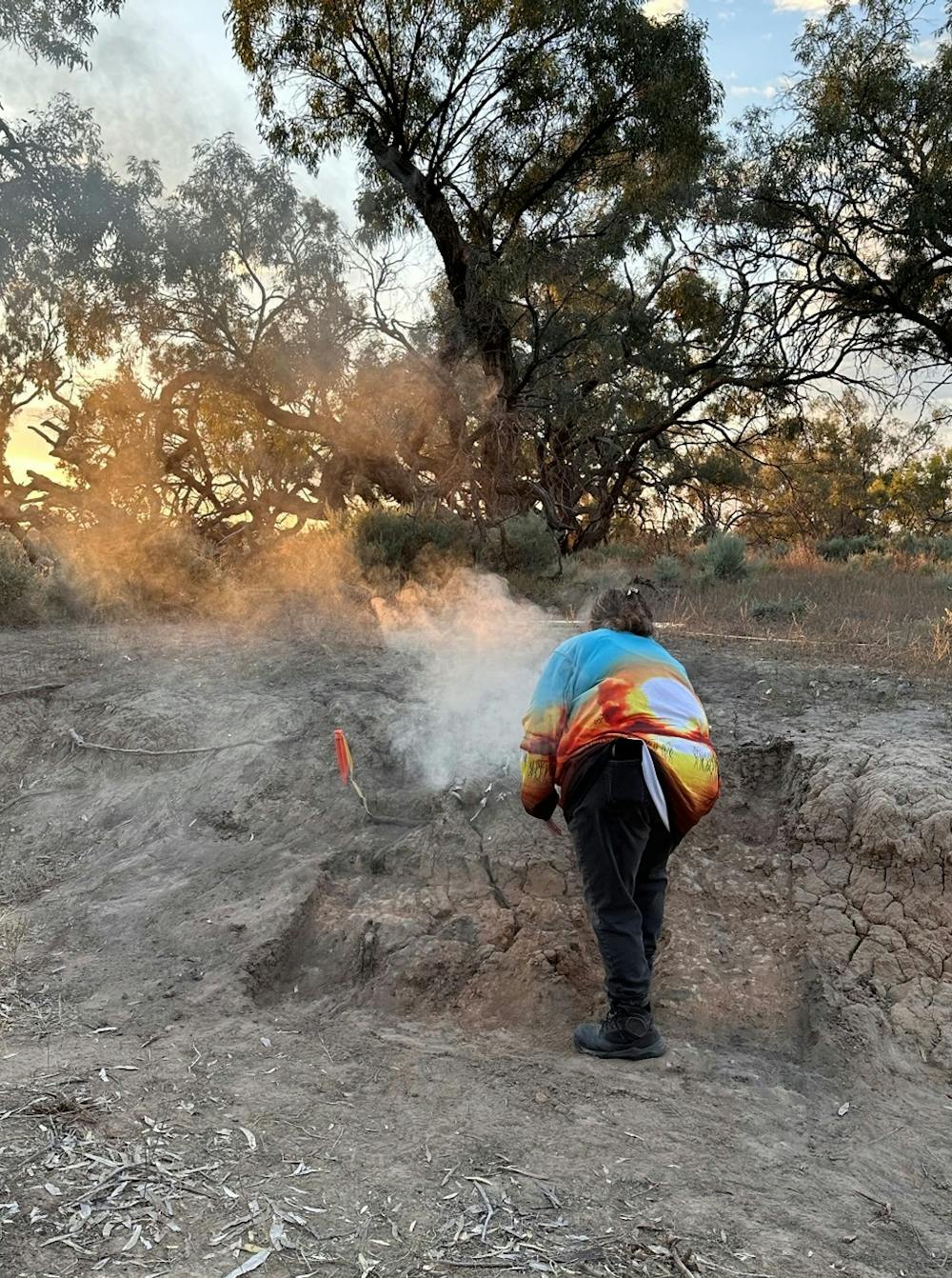
Barb Quayle, vice-chair of the Menindee Aboriginal Elders Council, conducted a smoking ceremony for the burial before the bones were lifted out of the midden.
A smoking ceremony is a long-standing custom of First Nations people. It involves passing smoke over a place, person or animal to cleanse it or ward off bad spirits for healing, spiritual renewal and strength.
Smoking ceremonies are very significant and are only performed where First Nations people determine they are necessary.
This burial was found right at the western edge of the areas where burying dingos in middens was practised. Dingo burials have been found in many archaeological sites in south-eastern Australia, particularly along the Murray-Darling river system and along the coast. Dingos are usually found buried in middens and often in the same place as ancestors.
Middens, contrary to popular belief, are not rubbish heaps. Rather they are sites built by the Old People. The act of burying family or companion dingos in middens imbues them with a spiritual character and connects them with the ancestors.
The dingo was first identified a few years ago as it eroded out of a road cutting. The Menindee Aboriginal Elders Council took Amy Way (co-author of this article), who has been working with the council since 2021, to see whether more could be found out about the dingo before it deteriorated further.
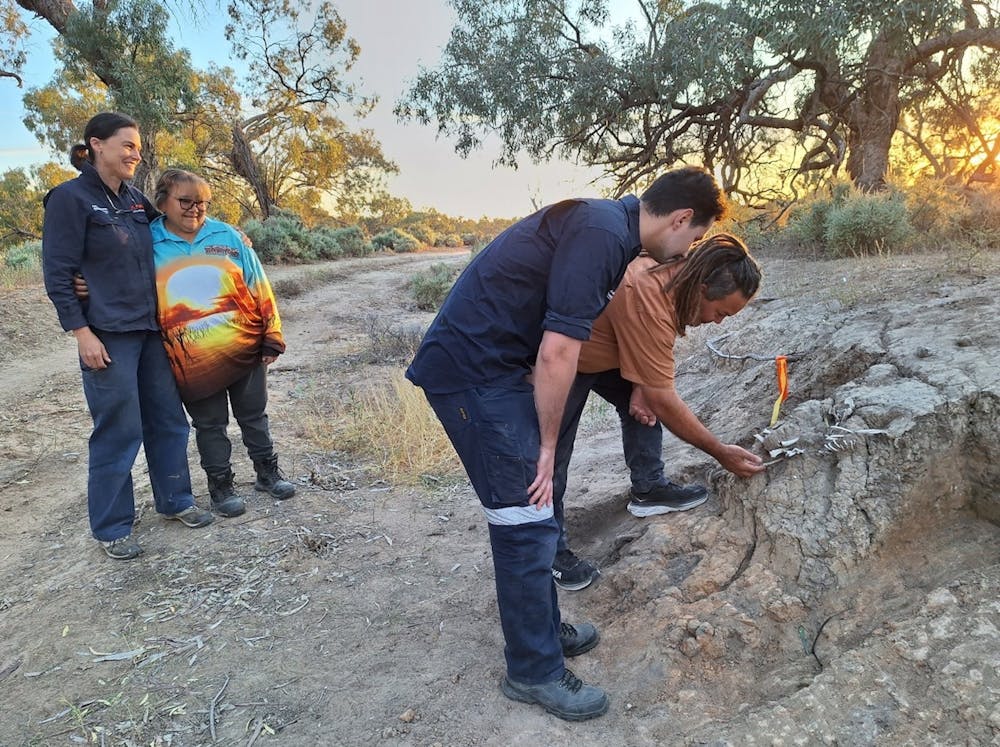 Amy Way, Barb Quayle, Loukas Koungoulos and David Doyle removing the first bone of the burial after the smoking ceremony.
Sam Player, Author provided (no reuse)
Amy Way, Barb Quayle, Loukas Koungoulos and David Doyle removing the first bone of the burial after the smoking ceremony.
Sam Player, Author provided (no reuse)
This dingo was old, short and male
Dingo expert Loukas Koungoulos, zooarchaeologist Rebecca Jones and archaeological geologist Sam Player were brought in especially to assist with the dingo excavation.
We can tell this was an old dingo from the wear on the teeth. Koungoulos, who examined the remains, believes the animal was several years into adulthood.
During the excavation, Koungoulos and Jones found a pathology (bone decay from a long-term ailment) at the ends of the long bones. This tells us the dingo may have had a long-term illness, such as arthritis, but we’ll need more detail to determine the exact nature of the ailment. One rib also had a possible healed fracture, which means the dingo may have been cared for to live through injury and illness.
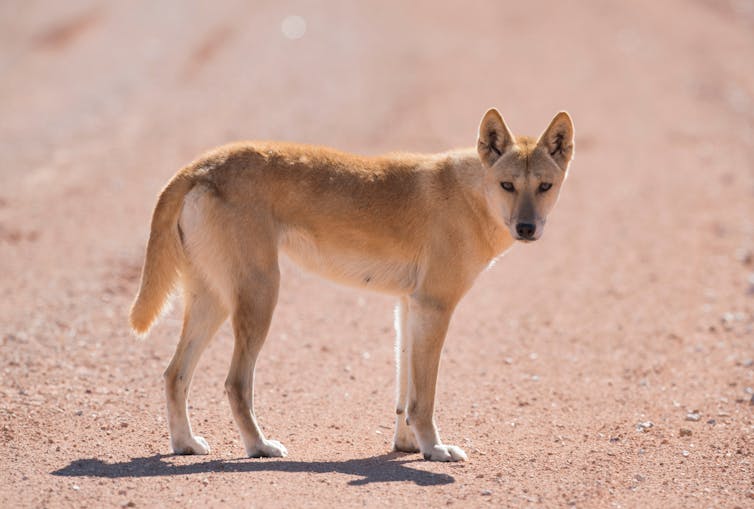
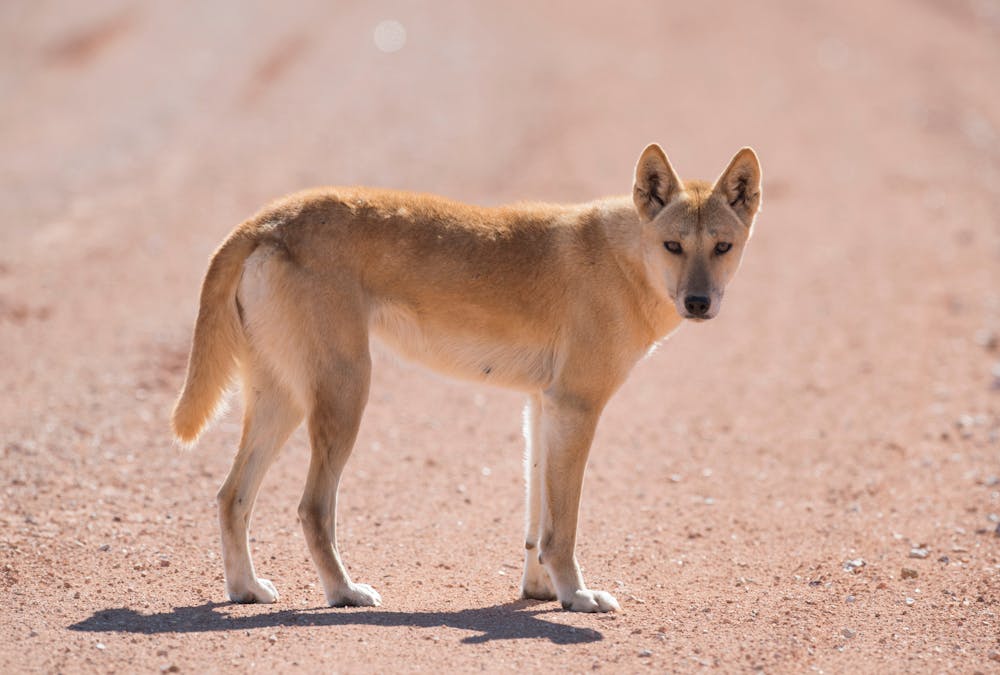 Dingos have lived with First Nations people in Australia for thousands of years.
Shutterstock[1]
Dingos have lived with First Nations people in Australia for thousands of years.
Shutterstock[1]
The length of the femur or thigh bone also tells us the dingo had a short stature. It’s possible ancestral companion dingos were smaller than both ancestral and modern wild dingos, as wild animals tend to be bigger than companion animals.
We see this today with feral cats being larger than domestic cats. Domestic animals are usually smaller than their wild ancestors. This may be from changes in their diet and becomes genetically encoded over time.
A good portion of the skeleton was still connected, and it was lying on its left side. We also know it was a male dog because the baculum or penis bone was present.
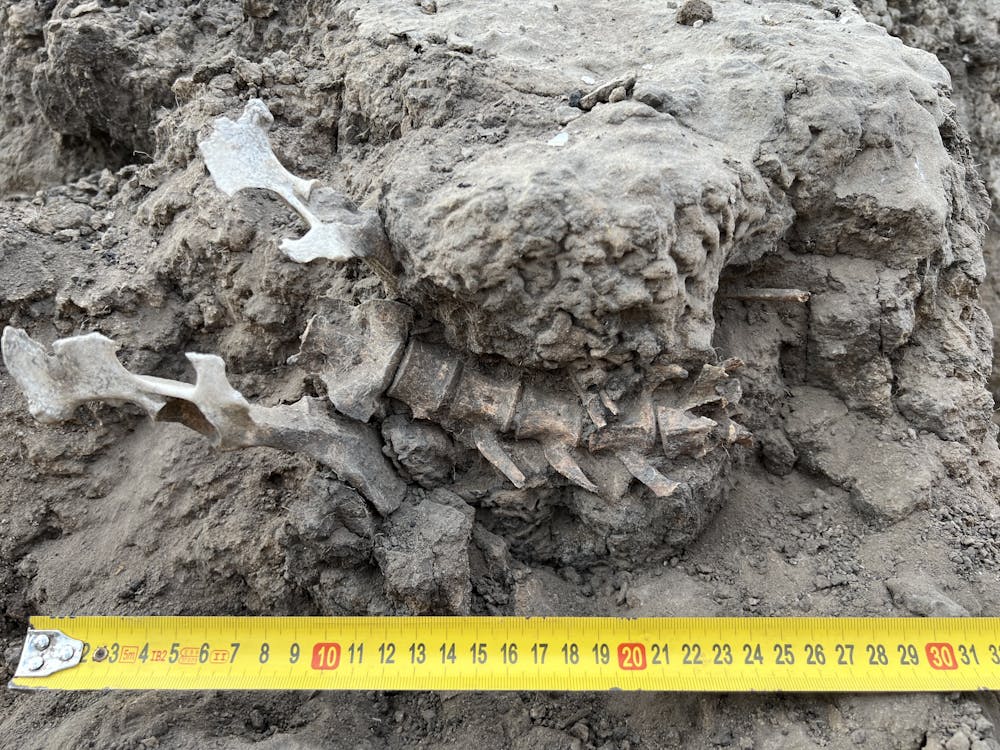 The pelvis and some of the backbone in situ, showing articulation of the bones.
Amy Way, Author provided (no reuse)
The pelvis and some of the backbone in situ, showing articulation of the bones.
Amy Way, Author provided (no reuse)
Loukas Koungoulos will now look at the skeleton in detail to determine its size and when it was buried. Through DNA analysis we may learn how it is related to other dingos. It will then be reburied on Country.
Dingos have been in Australia for thousands of years
Direct radiocarbon dating of other dingo burials suggests they first arrived around 3,500 years ago[2]. However, these burials are from the South Australian coastline – as they came in from the north, they probably arrived earlier than this. DNA dating also suggests they may have arrived earlier.
The dingo is most closely related the New Guinea singing dog[3] (Canis dingo hallstromi). Since Papua New Guinea and Australia were separated by rising sea levels 6,000–8,000 years ago, these animals must have been brought by people in boats. This tells us they were probably companion animals when they were brought to Australia.
This excavation was part of a multi-year collaboration between Barkindji cultural knowledge holders and research scientists, which is looking at Barkindji occupation in the Menindee Lakes region from first arrival more than 40,000 years ago until today.
Acknowledgement: The authors would like to thank the Menindee Aboriginal Elders Council and NSW National Parks and Wildlife (West Branch) for their support, Australian Museum donors and the Australian Museum Foundation for generous funding, and project team members (in addition to the authors) Cheryl Blore, Joseph Lehner, Paul Hesse, Tim Cohen, Alison Crowther and Anna Florin.
References
- ^ Shutterstock (www.shutterstock.com)
- ^ around 3,500 years ago (www.nature.com)
- ^ New Guinea singing dog (www.australiangeographic.com.au)