Both the US and Australia are adamant the Pacific "matters". But only one is really moving the dial
- Written by: Henryk Szadziewski, Affiliate, Center for Pacific Islands Studies, University of Hawaii
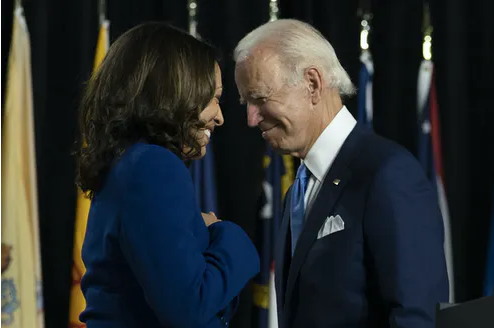
Just before the second[1] summit between the US and the Pacific Islands Forum at the White House in September, the US hosts took Pacific leaders[2] to an American football game. One, however, was conspicuously absent[3]: Solomon Islands Prime Minister Manasseh Sogavare.
This led many to question[4] whether Sogavare’s absence was evidence that in another kind of competition – the rivalry between the US and China for influence in Oceania – Beijing had taken the lead.
Sogavare has made no secret of his increasing cosiness with China. His government decided in 2019 to “switch[5]” diplomatic relations from Taiwan to China, for instance, and signed a controversial security agreement[6] with Beijing three years later.
The US, however, has not stood idly by. After last year’s inaugural US-Pacific summit[7], Washington announced a new Pacific Partnership Strategy[8], with shared goals and priorities on climate change mitigation, nuclear nonproliferation, maritime security and post-pandemic economic recovery.
Surface-level engagement?
For the US, interest in the Pacific Islands seemingly centres on China and tuna. But these interests alone don’t place the region above others in order of strategic importance.
On China, the Biden administration’s February 2022 Indo-Pacific Strategy[15] serves as a useful guide. It says China’s “coercion and aggression spans the globe, but it is most acute in the Indo-Pacific”.
However, despite the speculation around Chinese bases[16], airstrips[17] and wharves[18] in the Pacific, the extent of Chinese military presence in the region has been muted.
Indeed, the US is the predominant military power in the Pacific. It has:
-
bases[19] in Australia, Guam, Hawai'i, Japan, South Korea and the Philippines
-
exclusive military access[21] to the Federated States of Micronesia, the Marshall Islands and Palau.
US supremacy in the north Pacific also means these states are more likely to adopt Washington’s positions in global affairs, making Sogavare’s stance on China more of an anomaly.
And on the US support for the fisheries agency, it’s worth looking at the numbers and motivation. Not only is the $600 million commitment spread over ten years, it is only three-quarters of the total funding promised in 2022.
This pledge also serves as yet another form of regional deterrence against Beijing, since China’s highly subsidised[22] fleets are the ones primarily accused of illegal fishing.
By comparison, the US doesn’t seem as interested in establishing scholarships, construction, investment and trade in the Pacific – all areas where China thrives.
Australia charts a different path
In Australia, however, there seems to be movement of the dial. In October, for instance, the Pacific Engagement Visa[23] finally passed in parliament. This will allow up to 3,000 Pacific islanders to permanently settle in Australia every year.
The significance of the visa lies in its potential to transform Australia into a nation that looks more like the Pacific.
For Pacific Islanders, reams of research[24] show access to permanent migration is more effective than development assistance. The gains to Pacific families are almost immediate, too.
From a national interest perspective, there’s the side benefit that welcoming Pacific migrants is something China will not do. As Fiji’s deputy prime minister argued[25], “this is part of a broader strategy to integrate the region in the long term”.
The Australian government faces a similar bind to the US, however. Military concerns can be acted upon much more quickly than economic or developmental needs. And Australia’s military spend in the Pacific – whether or not it’s in response to a clear threat from China – reinforces the longstanding perception Canberra is more interested in securing the region’s territory than the wellbeing of its people.
Unlike China, Australia’s government can’t direct companies to invest in the region, even though this is what Pacific leaders are keen on. (Telstra’s purchase[26] of Digicel Pacific is the lonely exception.)
While much ink has been spilled on China’s debt trap diplomacy[27], its true hold over Pacific leaders is the promise of future projects, the pipeline of investments.
China’s special envoy to the Pacific, Qian Bo, is known to regale his Pacific counterparts with derisory observations about Australia’s economy and its inability to meet the Pacific’s needs, either as a destination for Pacific exports or a source of investment.
Read more: How are global powers engaging with the Pacific? And who is most effective? These 5 maps provide a glimpse[28]
Greatly lifting Australia’s Pacific aid spend is also politically tricky, even though public sentiment has been shifting[29] in recent years.
Significantly, Australia’s minister for international development recently[30] took aim at “transactional” development projects designed to help heads of mission solve “short-term” problems. This trend is particularly evident in the Pacific, where Australia’s aid is least effective[31].
While China’s Pacific aid has plateaued[32] since 2016, there’s little danger of domestic push-back on scholarships for the children of political elites, massive stadiums and sleek government buildings. And China’s infrastructure spend has prompted Australia to move from grant-based aid to providing development infrastructure financing[33] itself.
Becoming a true Pacific nation
The material impact of all of this foreign interest is what matters in the region.
The US has long faced[34] accusations of quickly losing interest in the Pacific, even if President Joe Biden says[35] it will be different this time.
However, if “strategic denial” of China is the only area where the US is willing to commit to on-the-ground change, this doesn’t place the Pacific islands high on the list of American priorities around the world. And it barely scratches the concerns about climate change and economic development voiced across region.
When Chinese President Xi Jinping asked[36] Biden why America was working so strongly with Australia, he apparently replied, “because we’re a Pacific nation”. Yet, if former President Donald Trump is re-elected, the Pacific could face an administration that mocks climate change and has little interest in the region beyond China and tuna.
In contrast, with the Pacific Engagement Visa, Australia has taken an important step towards becoming an actual Pacific nation. And even though the opposition is led by a man who once joked[37] about rising sea levels, there is bipartisan conviction the Pacific matters.
The question of why it matters is something for all Australians to reflect on. Because the why part matters a lot to the Pacific.
References
- ^ second (www.whitehouse.gov)
- ^ took Pacific leaders (www.theguardian.com)
- ^ absent (www.theguardian.com)
- ^ question (www.politico.eu)
- ^ switch (www.xinhuanet.com)
- ^ security agreement (www.nytimes.com)
- ^ summit (www.state.gov)
- ^ Pacific Partnership Strategy (www.whitehouse.gov)
- ^ here (theconversation.com)
- ^ pledge (www.civilbeat.org)
- ^ Pacific Fisheries Agency (www.forumsec.org)
- ^ form (www.dfat.gov.au)
- ^ seen (thediplomat.com)
- ^ US takes a renewed interest in the Pacific – and China's role in it (theconversation.com)
- ^ Indo-Pacific Strategy (www.whitehouse.gov)
- ^ bases (www.usip.org)
- ^ airstrips (www.reuters.com)
- ^ wharves (www.stuff.co.nz)
- ^ bases (crsreports.congress.gov)
- ^ inked (www.state.gov)
- ^ access (crsreports.congress.gov)
- ^ highly subsidised (www.wilsoncenter.org)
- ^ Pacific Engagement Visa (www.foreignminister.gov.au)
- ^ research (www.lowyinstitute.org)
- ^ argued (www.abc.net.au)
- ^ purchase (www.reuters.com)
- ^ China’s debt trap diplomacy (www.afr.com)
- ^ How are global powers engaging with the Pacific? And who is most effective? These 5 maps provide a glimpse (theconversation.com)
- ^ shifting (devpolicy.org)
- ^ recently (ministers.dfat.gov.au)
- ^ least effective (devpolicy.org)
- ^ plateaued (www.lowyinstitute.org)
- ^ development infrastructure financing (www.aiffp.gov.au)
- ^ faced (insidestory.org.au)
- ^ says (www.youtube.com)
- ^ asked (www.afr.com)
- ^ joked (www.abc.net.au)