Stay or go? Most older Australians want to retire where they are, but renters don’t always get a choice
- Written by: Christopher Phelps, Research Fellow, School of Accounting, Economics and Finance, Curtin University

As Australia’s population gets older, more people are confronted with a choice: retire where they are or seek new horizons elsewhere.
Choosing to grow old in your existing home or neighbourhood is known as “ageing in place”. It enables older people to stay connected to their community and maintain familiarity with their surroundings.
For many, the decision to “age in place” will be tied to their connection to the family home. But for many, secure and affordable housing is increasingly beyond reach[1]. This choice may then be impeded by a lack of suitable accommodation in their current or desired neighbourhoods.
Our recently published study[2] asks what motivates older homeowners and renters to age in place or relocate, and what factors disrupt these preferences. It suggests older renters are often not given a fair choice.
Read more: Ageing in a housing crisis: growing numbers of older Australians are facing a bleak future[3]
Most older Australians want to age in place
Having the option to age in place enables older people to retain autonomy over their lifestyles and identity, promoting emotional wellbeing.
Using 20 years of data from the government-funded Household, Income and Labour Dynamics in Australia (HILDA) survey, we tracked the preferences of Australians aged 55 and over.
Encouragingly, most older Australians are already where they want to be.
Two-thirds (67%) of respondents strongly preferred to stay in their current neighbourhood, and an additional one-fifth (19%) had a moderate preference to stay.
Only 6% showed a moderate or strong desire to leave. Ageing in place is then the natural choice for a vast majority of older Australians.
Our study highlights several motivations for people to stay put as they retire.
For homeowners, family ties matter. Owners with children residing nearby were around one and a half times more likely to have a higher preference to stay.
Older owners might then have a reason to call on their substantial housing wealth[4] and keep their children nearby via the “bank of mum and dad”[5].
For renters, how long they stay is important. Those renting their home for 10 years or more were 1.7 times more likely to have a higher preference to stay than short-term renters.
Read more: For Australians to have the choice of growing old at home, here is what needs to change[6]
Renters face the most disruption
The survey enabled us to follow where older people lived a year after they provided their preferences. This helped us gauge how often they turned their desires into reality.
The chart below indicates that private renters face greater obstacles to ageing in place.
Around one in 10 private renters that desired to age in place were disrupted – they wanted to stay in their neighbourhood but didn’t. This suggests they moved out of their neighbourhood involuntarily.
Only 2% of homeowners and social renters experienced the same disruption. However, for those in these tenures that did not desire to age in place, involuntary immobility was a greater concern. Only 15% of those that wanted to leave succeeded, leaving the vast majority “stuck in place”.
The private rental market is the least secure of tenures, and so private tenants are often exposed to involuntary moves. Australia’s private rental system is lightly regulated compared to many other countries, creating tenure insecurity concerns.
On the other hand, social renters were particularly susceptible to involuntary immobility. Social housing is scarce in Australia and subject to lengthy waiting lists[7]. A neighbourhood move often requires transferring to the less affordable and less secure private rental housing.
Even after considering financial status, social renters were four times as likely to be stuck as compared to private renters. Social tenants are strongly deterred from moving in the current system.
How can we support older Australians’ preferences?
Our study exposes some barriers in the housing system that hinder people from being able to age in place, or move when they want to. Clearly, older renters enjoy fewer protections against disruptions to their preferences to age in place than older owners.
For private renters, tenure insecurity in the private rental sector[8] is a key reform priority. This can be achieved through stronger regulation that improves tenants’ rights. For example, more states could adopt recent regulatory rental reforms[9] that support the rights of pet owners and protect against no-grounds evictions.
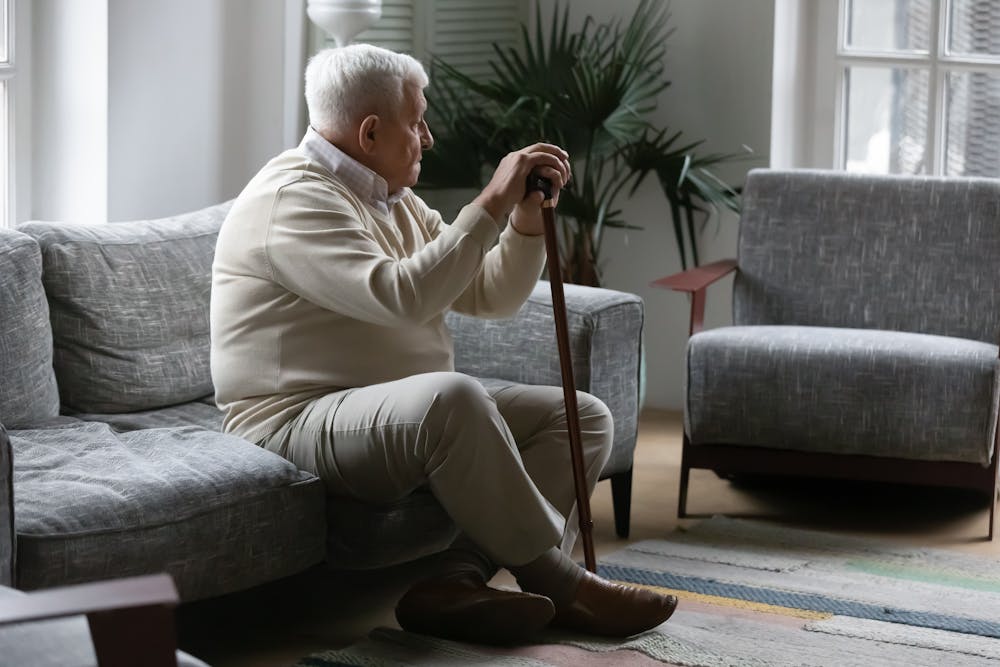
Large numbers of older private renters also face severe rental stress[11], which may force them to move from their preferred neighbourhood. Commonwealth rent assistance reform[12] would alleviate some of this stress through an increase in rates and better targeting.
An increase in the supply of social housing would play an important role in improving both tenure security and housing affordability. Older social renters enjoy fewer obstacles to ageing in place than older private renters.
Read more: Most older Australians aren't in aged care. Policy blind spots mean they live in communities that aren't age-friendly[13]
However, if social renters want to move into the private rental market to relocate, they face difficulty securing accommodation. This will likely discourage moves as it would require sacrificing the tenure security offered by social housing. However, policy initiatives that improve the quality of the public housing stock[14] can reduce feelings of being stuck.
As homeownership rates decline[15] both among young people and those nearing retirement, we can expect the population of older renters to grow.
Overall, our findings support a strong case for policy reform in the rental sectors to address the needs and preferences of older renters.
References
- ^ beyond reach (theconversation.com)
- ^ study (doi.org)
- ^ Ageing in a housing crisis: growing numbers of older Australians are facing a bleak future (theconversation.com)
- ^ housing wealth (theconversation.com)
- ^ “bank of mum and dad” (360info.org)
- ^ For Australians to have the choice of growing old at home, here is what needs to change (theconversation.com)
- ^ lengthy waiting lists (theconversation.com)
- ^ private rental sector (theconversation.com)
- ^ recent regulatory rental reforms (theconversation.com)
- ^ Shutterstock (www.shutterstock.com)
- ^ rental stress (www.oldertenants.org.au)
- ^ Commonwealth rent assistance reform (theconversation.com)
- ^ Most older Australians aren't in aged care. Policy blind spots mean they live in communities that aren't age-friendly (theconversation.com)
- ^ quality of the public housing stock (www.ahuri.edu.au)
- ^ homeownership rates decline (www.aihw.gov.au)