How effective is fear as a teaching tool? How and what do we learn when we are scared?
- Written by: Deborah Pino Pasternak, Associate Professor in Early Childhood Education and Community, University of Canberra
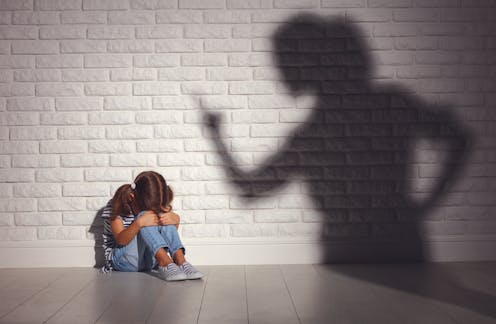
Many of us remember vividly being yelled at or feeling threatened by a family member, a teacher, or a boss.
Terrifying experiences often get imprinted in our memory; remembering frightening events is essential to avoid them in future. It is a normal reaction that promotes our survival[1].
This strong connection between fear and memory may lead us to think fear can be an effective learning tool. Research shows, however, fear can have long-term negative consequences[2] on social skills for children and adults alike – and can actually make it harder to learn in meaningful ways.
Here’s what the research says about how and what we learn when we are scared.
Read more: Stand back and avoid saying 'be careful!': how to help your child take risks at the park[3]
How fear affects children’s learning
Fear is designed to protect us from current and future danger[4].
If children are faced with experiences that trigger fear, they learn to avoid new experiences – as opposed to exploring, engaging, and approaching the unknown with curiosity.
Consistent exposure to fear changes how the brain reacts to the outside world. Fear triggers a stress response in the brain[5] and puts it in a state of alert; we become hyper ready to react swiftly and decisively to incoming threats.
This may be appropriate if, for example, you are confronted by an aggressive stranger. But such high levels of reactivity are not productive in learning environments like school, where we are asked to be open to new experiences and create innovative solutions.
In fact, the areas of the brain activated when we’re scared are different to those we use when thinking carefully how to address a tricky problem[6]. Research[7] has shown the more primitive parts of the brain take over the activity of the prefrontal cortex, the brain’s “control centre”, when we’re in a state of fear.
This means planning, making sound decisions and using our existing knowledge becomes very difficult if we feel threatened or afraid.
Children learn fear from the adults in their lives
Adults play a critical role in the healthy development of fear responses by modelling reactions to unknown situations. They also provide (or fail to provide) safe environments that promote children’s exploration.
Fear can be easily learned from significant adults. Studies have shown both toddlers[8] and school-aged children[9] learn to avoid new experiences if their parents communicate or show signs of fear in reference to them.
Think, for instance, about how a child can learn to fear animals by seeing how their parents react to them. Or, for example, the way constant warnings to “be careful![10]” may end up making a child too anxious to climb trees or take risks as they use play equipment.
Adult behaviours also affect the degree to which children feel safe to be themselves and explore the world with confidence.
Studies investigating the behaviours of parents have consistently shown harsh parenting (involving physical and verbal aggression) is related to poorer outcomes in children[11] including academic underachievement, higher levels of aggression and anxiety and poor peer relationships.
The opposite is the case[12] for parents who, while providing structure and reasons for boundaries, are warm and encourage autonomy.
Teachers also play a pivotal role in the development of fear responses. Students are more likely to be motivated and function well in classrooms if teachers are “autonomy-supportive[13]”.
This means teachers:
-
have a curious and open attitude towards students’ interests
-
seek their perspective and offer choices
-
invite their thoughts, and
-
accept a range of emotions (from frustration, anger and reticence to playfulness, joy and curiosity).
How fear affects learning in adult life
Many people who experience anxiety in adulthood have been exposed in their childhood to environments where they have felt consistently threatened[14].
These adults may end up avoiding taking on new tasks, considering multiple viewpoints, and responding to questions. These are all skills employers usually value.
Work environments that induce fear can also be counterproductive and stressful.
Research suggests when employees perceive their work environments as unsafe, they are more likely to experience burnout, anxiety and stress[15]. Stressful situations can also interfere with our ability to apply what we know flexibly to new situations[16].
On the flip side, researchers argue that a trusting relationship between employees and their managers can affect workers’ willingness to show vulnerability and take on tasks[17] that involve uncertainty[18].
Researchers have also found positive relationships at work can encourage to creativity in the workplace[19], which makes work more interesting and enjoyable.

So, what do we learn when we are scared?
Yes, we learn from fear. The question is: what do we learn?
In response to threats and hostility, we learn to avoid challenge and comply with external rules (instead of wondering how systems can be improved). We protect our feelings and restrict our thoughts to what is safe.
Is this the kind of learning that allows us to grow and develop?
More than ever, children and adults are required to collaborate in creative ways to address difficult problems.
This means dealing with uncertainty and accepting that sometimes we make mistakes or fail.
That requires safe and nurturing environments – not home, school or work settings that are ruled by fear.
References
- ^ survival (pubmed.ncbi.nlm.nih.gov)
- ^ long-term negative consequences (www.nature.com)
- ^ Stand back and avoid saying 'be careful!': how to help your child take risks at the park (theconversation.com)
- ^ current and future danger (www.nature.com)
- ^ stress response in the brain (www.jstor.org)
- ^ how to address a tricky problem (www.annualreviews.org)
- ^ Research (www.ncbi.nlm.nih.gov)
- ^ toddlers (www.sciencedirect.com)
- ^ school-aged children (psycnet.apa.org)
- ^ be careful! (theconversation.com)
- ^ poorer outcomes in children (bmcpsychology.biomedcentral.com)
- ^ opposite is the case (ejop.psychopen.eu)
- ^ autonomy-supportive (psycnet.apa.org)
- ^ consistently threatened (www.aztrauma.org)
- ^ burnout, anxiety and stress (www.mdpi.com)
- ^ apply what we know flexibly to new situations (www.nature.com)
- ^ take on tasks (onlinelibrary.wiley.com)
- ^ involve uncertainty (psycnet.apa.org)
- ^ creativity in the workplace (journals.sagepub.com)
- ^ Shutterstock (www.shutterstock.com)