A ‘war on red meat’? No, changes to Australian dietary guidelines are just a sensible response to Earth’s environmental woes
- Written by: Dora Marinova, Professor of Sustainability, Curtin University

Official dietary advice in Australia is set to warn[1] of the climate impact of certain foods. The move has raised the ire of farmers, meat producers and others who branded it “green ideology” and a “war on meat”.
Critics say the The National Health and Medical Research Council (NHMRC), which is behind the change, is overreaching and should not expand its remit beyond providing nutritional advice. We strongly disagree.
Having explored[2] the scientific evidence about the harm food can cause to both the planet and human health, we firmly believe environmental information about food choices should be prominent in dietary guidelines.
Human health depends on having a safe, liveable planet and the state of our planet is inextricably linked to food systems. It’s entirely sensible that consumers are informed about whether their food choices are sustainable.
‘A thorough review of the evidence’
Australia’s dietary guidelines[3] were released in 2013. The document provides general information about the environmental sustainability of food, but it’s buried in an appendix and the recommendations are fairly inconclusive.
The guidelines are currently under review and will be updated in 2026. The NHMRC says feedback from the public suggested sustainability information should be more accessible and explicit in the new guidelines. In fact, it said one in three people surveyed nominated the change as a priority.
The NHMRC says developing or updating its guidelines involves:
a thorough review of the evidence, methodological advice on the quality of these reviews, drafting of the guidelines, public consultation and independent expert review of the final guidelines.
It said the dietary recommendations would first consider Australia-specific health impacts, followed by sustainability and other factors – an approach in line with guidelines overseas.
Critics come out swinging
Australians are among the world’s biggest[4] meat eaters. However, recent trends indicate Australians’ beef consumption is in decline[5].
Meat creates almost 60%[6] of greenhouse gas emissions from food production, and red meat has the highest[7] environmental footprint out of all food choices.
Perhaps unsurprisingly, the change to dietary guidelines has prompted opposition from some quarters. In a report in The Australian, for example, Red Meat Advisory Council chair John McKillop said[8] the moves:
go well beyond the policy intent of the Australian Dietary Guidelines to provide recommendations on healthy foods and dietary patterns […] [the] review process must not be allowed to be used as a vehicle to drive ideological agendas at the expense of the latest nutritional science.
He said the industry’s concerns were not related to its progress on sustainability, about which it had “a strong story” to tell.
The newspaper also quoted a Central Queensland cattle farmer, who said perceived misinformation about the health impacts and sustainability of red meat production were rife in the media, public policy and nutritional advice.
Conservative media outlets also weighed in on the changes. Sydney radio station 2GB declared[9] the move a “war on meat” and host Ben Fordham claimed[10] farmers were being “screwed over again”.
Read more: Meat and masculinity: why some men just can't stomach plant-based food[11]
The global picture
The upcoming changes are not unprecedented globally. Environmental sustainability is highlighted in the official dietary guidelines of at least ten other countries[12]. They include Sweden which introduced climate-friendly food advice[13] in 2015.
The title of the Swedish guidelines[14] translates to “Find your way to eat greener, not too much and be active!” Among the recommendations are to:
Eat less red and processed meat, no more than 500 grams a week. Only a small amount of this should be processed meat.
But other nations have struggled to include sustainability advice in official dietary guidelines. In the United States, for example, lobby groups prevented the change[15], despite the recommendations of government-appointed nutritionists.
Dietary officials have not overreached
The Australian dietary guidelines already suggest limiting red meat consumption on health grounds.
Research has shown regular consumption of red meat[16], especially if it’s processed, contributes substantially to the risk of premature death. A high intake of red meat has been associated with[17] cardiovascular disease, coronary heart disease, cancers and type 2 diabetes.
Adding information about the environmental effects of red meat health simply reinforces the benefits of eating less of it.
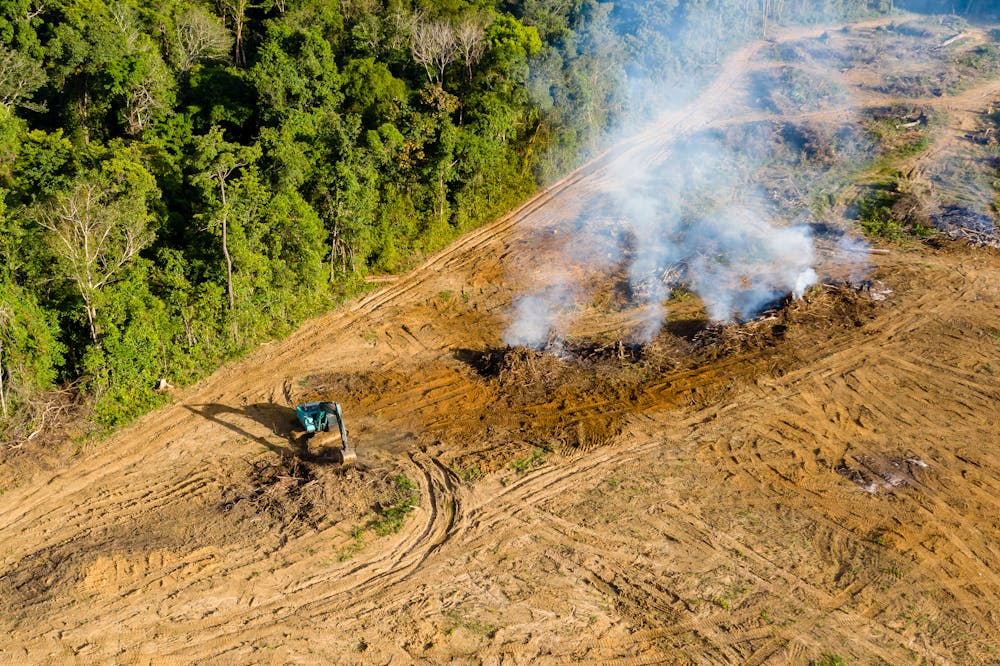
The link between food, the natural environment and health is well-established[18]. Even before food is produced, vegetation is cleared to create space for crops and livestock. This leads to both the release of carbon dioxide and biodiversity loss, among other harms.
When it comes to meat, the digestive systems of sheep and cattle produce a lot of methane[19], a potent greenhouse gas. Greenhouse gas emissions are also created when food is processed, transported, stored and disposed of. Food packaging contributes to pressure on landfill and creates pollution.
All these processes threaten human health. Researchers have called for[20] a global transformation of food systems, to ensure they operate within Earth’s limits.
The role of NHMRC is to protect public health in Australia. It makes sense, then, that it provides consumers with information about which foods cause the least environmental damage – and by extension, are also good for their personal health.
A rightful part of the public health agenda
Dietary guidelines are a government tool to influence food consumption towards good choices. They are based on the best available evidence, and evolve along with our understanding of food and its impacts.
Of course, even if Australia’s guidelines are changed to incorporate environmental advice, this does not guarantee everyone will make healthy and sustainable food choices. Such a shift requires major behaviour changes, of which dietary guidelines are only one component.
Arming consumers with the right information about food sustainability however should be part of the federal government’s public health agenda.
References
- ^ is set to warn (www.theaustralian.com.au)
- ^ explored (link.springer.com)
- ^ dietary guidelines (www.eatforhealth.gov.au)
- ^ world’s biggest (ourworldindata.org)
- ^ in decline (www.ibisworld.com)
- ^ almost 60% (www.nature.com)
- ^ red meat has the highest (www.science.org)
- ^ said (www.theaustralian.com.au)
- ^ declared (www.2gb.com)
- ^ claimed (www.skynews.com.au)
- ^ Meat and masculinity: why some men just can't stomach plant-based food (theconversation.com)
- ^ ten other countries (www.thelancet.com)
- ^ climate-friendly food advice (www.fao.org)
- ^ Swedish guidelines (www.livsmedelsverket.se)
- ^ prevented the change (www.theguardian.com)
- ^ regular consumption of red meat (www.health.harvard.edu)
- ^ associated with (www.thelancet.com)
- ^ well-established (www.ncbi.nlm.nih.gov)
- ^ produce a lot of methane (www.dpi.nsw.gov.au)
- ^ called for (www.thelancet.com)