Don’t feel bad about bingeing TV. Humans have binged stories for thousands of years
- Written by: Darius von Guttner Sporzynski, Historian, Australian Catholic University
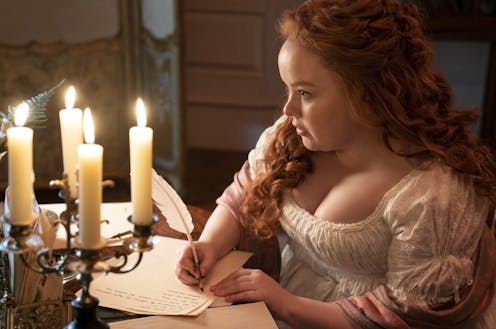
Last night, millions of people will have tuned into Netflix and other streaming services to binge[1] their favourite shows, including the (much anticipated) second part[2] of Bridgerton season three.
Streaming services such as Netflix, Disney+, Stan and Prime Video have habituated us to the “all at once” series drop. And even as some services try to find ways[3] to break the binge model, many[4] commentators[5] have bid farewell to the “the good old days” of appointment viewing.
Meanwhile, experts have highlighted[6] the health concerns associated with “problematic bingeing”, including increased anxiety and depression.
But there’s an important detail missing in these conversations. And that is the fact that bingeing – the act of unrestrained and excessive indulgence – is nothing new. In fact, it exemplifies an age-old human desire to be completely immersed in story.
Far from being a new behaviour spawned by the digital age, bingeing is rooted in human history.
An ancient practice
Much like you might binge Baby Reindeer[7], Eric or The Walking Dead today, humans have always sought absorbing narrative experiences.
Before writing emerged, ancient oral storytelling captivated people across cultures[8], providing entertainment, knowledge transmission and cultural education.
Research published last year[9] suggests Palawa Aboriginal stories from Tasmania can be traced back to events that happened 12,000 years ago, which means they may be among the oldest recorded oral stories[10] in the world. Stories that survive hundreds of generations require constant telling and retelling.
This engagement with stories continued with the advent of written text. For millennia, large text collections has allowed immersive consumption, with examples ranging from the Panchatantra[11] – a compilation of Indian fables dated to around 200BC – to volumes of William Shakespeare’s[12] plays from the 1600s.
Historically, libraries, galleries[13] and museums[14] played a significant role in providing access to large collections of works[15], including books, as well as artworks[16] and artefacts[17].
Eventually, the invention of the printing press[18] revolutionised access to texts. Evidence suggests[19] that by the 18th century, avid readers in England (that is, the upper class who could afford books) would devour novels in public[20] or by candlelight – unable to stop until the story ended.
Literature researcher Ana Vogrinčič suggests[21] a sort of “moral panic” emerged as the women of the time got a taste for reading:
reading in bed by the candlelight was believed to risk conflagration, while women laughing out loud over a certain scene or wobbling in emotions over another, in indecent body postures, regularly incited an offensive language, resulting in a heavily stigmatised and stereotyped image of a female novel-reader – a precursor of a modern coach potato. The reading sofa and the television couch certainly represent what 18th-century novel-reading and modern-day television-viewing seem to have in common.
Serialised literature became popular[22] in the 19th century, with more and more writers releasing their work in instalments.
Eventually, the rise of cinema and television provided a new form of immersive storytelling. Access to home videos meant back-to-back viewing, while film screenings and double features[23] mirrored older communal entertainment forms such as public readings and theatre[24] attendances.
Hooked on a feeling
While bingeing has been around for as long as anyone can remember, the internet and streaming have both significantly increased our capacity for it. Perhaps this is why bingeing is framed as a modern phenomenon.
Creators must now design shows with the binge-watching model in mind, using cliffhangers, escapism[25] and continuous arcs to encourage prolonged viewing. All of these factors (and more) combine to make a “bingeable” show.

As to why we love bingeing, this comes down to a complex interplay of emotions and brain chemistry[26].
Engaging with captivating stories triggers the release of dopamine, the neurotransmitter associated with pleasure[27], to create an addictive experience. At the same time, the human brain craves “closure”[28], which is something a compelling onscreen narrative will provide.
Shifting values
Bingeing today is often accompanied by feelings of guilt[29] and unproductiveness[30]. This seems to reflect, more than anything else, a shift in societal values regarding leisure time.
At some points in the past, prolonged engagement with stories would have been seen by certain groups as a valuable cultural activity – one that contributes to personal enrichment and social interaction.
For instance, the European Enlightenment movement[31] of the 17th and 18th centuries encouraged people to develop a critical view of the world through as much self-education as possible. This approach to learning was thought to foster intellectual freedom and happiness, and often involved extensive engagement with written works[32].
Across time and cultures, humans have sought to escape reality and engage emotionally with stories. From ancient oral traditions, to modern streaming, our desire for continuous narrative consumption has remained constant.
Perhaps by recognising this historical precedent, we can come to appreciate our love of bingeing – and not feel so bad about it after all.
References
- ^ binge (www.whipmedia.com)
- ^ second part (www.netflix.com)
- ^ try to find ways (www.theguardian.com)
- ^ many (www.forbes.com)
- ^ commentators (www.smh.com.au)
- ^ experts have highlighted (theconversation.com)
- ^ Baby Reindeer (theconversation.com)
- ^ people across cultures (education.nationalgeographic.org)
- ^ last year (www.sciencedirect.com)
- ^ oral stories (www.science.org)
- ^ Panchatantra (www.britannica.com)
- ^ volumes of William Shakespeare’s (www.sl.nsw.gov.au)
- ^ galleries (www.britannica.com)
- ^ museums (museums.eu)
- ^ large collections of works (artcollection.io)
- ^ artworks (www.uffizi.it)
- ^ artefacts (www.metmuseum.org)
- ^ printing press (www.britannica.com)
- ^ Evidence suggests (hrcak.srce.hr)
- ^ in public (www.ox.ac.uk)
- ^ suggests (hrcak.srce.hr)
- ^ Serialised literature became popular (blogs.loc.gov)
- ^ double features (www.nytimes.com)
- ^ theatre (www.metmuseum.org)
- ^ escapism (www.sciencedirect.com)
- ^ emotions and brain chemistry (en.ktu.edu)
- ^ neurotransmitter associated with pleasure (www.ncbi.nlm.nih.gov)
- ^ craves “closure” (digitalcommons.lasalle.edu)
- ^ guilt (journals.sagepub.com)
- ^ and unproductiveness (bmcpublichealth.biomedcentral.com)
- ^ Enlightenment movement (www.britannica.com)
- ^ engagement with written works (licentiapoetica.com)