


Oil prices could be where the Middle East crisis collides with Australia’s cost-of-living crisis
- Written by: Michelle Grattan, Professorial Fellow, University of Canberra
Angry, accusatory partisan exchanges over the Middle East war have dominated federal politics this week. But for most ordinary voters the issue remains “over there”.
Apart from the minorities for whom it has an immediate impact – Jewish people frightened by antisemitism, the Muslim community, those with families in Lebanon and elsewhere – it’s a tragedy without tangible relevance to their day-to-day lives.
On Thursday however, Treasurer Jim Chalmers warned the foreign crisis could feed directly into the domestic cost-of-living crisis, via the price of oil.
Midway through this week, oil was trading 11% lower than it was a year ago, but 7% higher than a week-and-a-half ago, Chalmers told a news conference.
Treasury estimates that if prices were 10% higher for an entire year, this would reduce Australia’s GDP by 0.1% and increase the consumer price index by 0.4 percentage points.
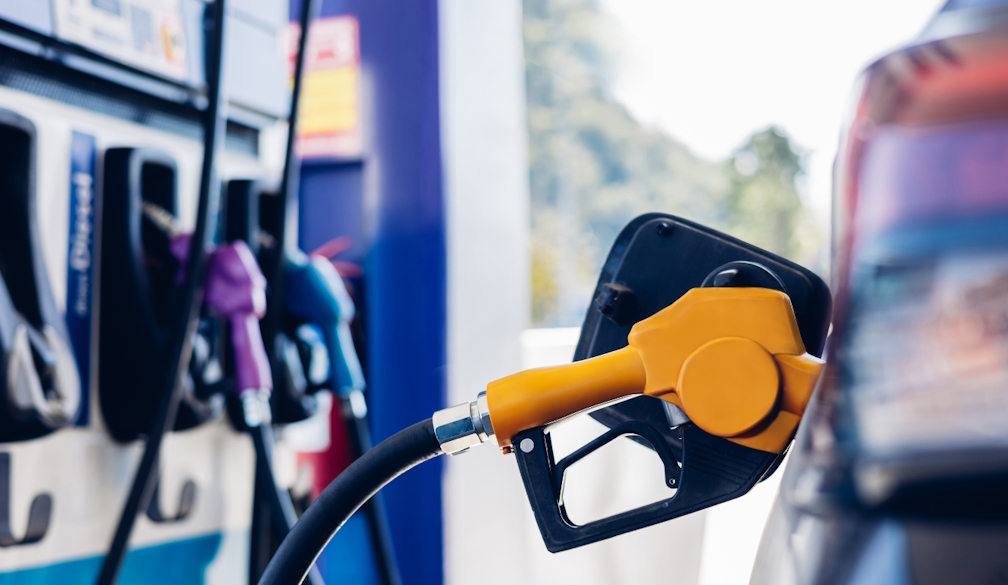
Nothing is certain about the coming months but the potential implications are obvious. Consumers would feel the effects at the petrol pump of the higher oil prices.
The Reserve Bank will also be watching the possible trajectory of oil prices, together with all the other indicators relevant to its decisions on interest rates. This is against the background of the government’s desperation for a rate cut (or two) before the election.
Although an increase in fuel prices (hitting businesses as well as families) would not be the government’s fault, it would be blamed.
According to Labor, at present there’s a disconnect between, on the one hand, the partisan political heat the Middle East war is generating and, on the other, the public’s lack of engagement with the issue.
Voters not concentraing on the Middle East
Labor sources say focus group research this week, done with swinging voters, found most people aren’t closely following Middle East events.
Beyond that, they are generally satisfied with the government’s stand and don’t think the crisis is distracting it from the cost of living (which is separate from how they think the government is handling the cost of living).
This accords with this week’s Essential poll[1], in which 56% said they were satisfied with the government’s response on the Israel-Gaza war. Another 30% thought the government had been too supportive of Israel; 14% thought it had been too harsh on Israel.
Except among some of those directly invested, the Middle East crisis is not likely to be a vote changer.
In the domestic political battle, Dutton is trying to use the conflict to paint Albanese as weak. That’s a long bow on the issue itself, although more generally the prime minister and his government have come to be seen as having lost their way.
While Dutton is trying to define Albanese negatively, Albanese is attempting to make Dutton a bigger target.
NBN sale a distraction
Thus on Wednesday the prime minister, shortly before he jumped on his plane to attend the ASEAN-Australia summit in Laos, personally introduced legislation that would ensure the NBN remained in public hands.
If the Coalition didn’t vote for the bill, that would show it would sell the NBN, Labor claimed. It was a crude attempt at scare politics, easily seen through. The Coalition is not suggesting it would sell the NBN and if it did, would most people care? Anyway, originally Labor planned for the NBN to be privatised. Dutton ridiculed the tactic.
As we look to election year, the 2025 parliamentary sitting calendar came out this week. It has a fortnight sitting in February and pencils in a budget for March 25, which would set up a May poll. Of course this doesn’t rule out an earlier (March) election although Albanese has said more than once he plans a pre-election budget.
Regardless, we are already in the election campaign. At caucus on Tuesday Albanese was, for the second time recently, talking about the second term agenda.
Announcements like confetti
Announcements are raining down like confetti especially related to cost-of-living issues. Supermarkets are being heavily targeted. Launching his merger reform legislation on Thursday, Chalmers said every supermarket merger would be screened, regardless of whether it fell under the new arrangements.
Present polls are showing the most likely election result, to be delivered by sour voters, is a hung parliament with a minority Labor government.
Albanese told caucus he was focused on winning majority government. Dutton knows that if the Coalition can’t win, the more crossbenchers it can force Labor to need to rely on, the more unstable a second-term Labor government would be.
Both sides have a great deal of bedding-down to do before the actual campaign.
Key items on Labor’s legislative agenda aren’t just not introduced, they are unseen – for instance, on gambling advertising, social media restrictions for young people, electoral funding.
Major bills are stuck in the parliament – notably on housing, where the Greens may eventually do a deal but are stringing out the pain.
On the other side, the Coalition has released minimal policy. On its controversial nuclear power plan, it has put out minimal details, in particular refusing to produce costings. It can’t hold back everything until the last moment.
Will the campaign even matter?
When the formal campaign comes, how much will it matter?
There is the old saying “you can’t fatten the pig on market day”. In other words, the election result may be decided well before the actual campaign.
What do the last three elections (2016, 2019, 2022) tell us about the importance of the formal campaign? In each case, the result was narrow, a matter of a handful of seats.
In 2022, there was probably nothing Morrison could have done in the last weeks to salvage the situation – to use another farm metaphor, his goose was cooked. In the event, he ran a bad campaign.
In 2016 prime minister Malcolm Turnbull just scraped home; Turnbull’s flawed campaigning maximised the number of seats he lost.
In 2019, when it seemed Bill Shorten was almost certain to take Labor to victory, its defeat may have been sealed in the campaign itself, although its heavy policy load always put it in a precarious situation.
In 2022 Albanese was judged a poor campaigner. Aware of this, Labor strategists will be doing everything to make sure he is fully prepared for “gotcha” questions (on which he faltered last time) and the other hazards that can arise spontaneously.
Dutton’s forte is negativity, his natural style is the attack. But in those final weeks, more will be needed.
One challenge in leaving policy releases late is that holes can slip through, inviting slip ups.
Dutton has far from established himself as a rounded alternative prime minister. Indeed his current approach on the Middle East, completely lacking nuance, raises questions about how he would handle the complexities of foreign policy generally. It has not been reassuring.
References
- ^ Essential poll (www.theguardian.com)










