Trump’s economic vision is no longer a ‘maybe’. Here’s what it might mean for Australia and the world
- Written by: Susan Stone, Credit Union SA Chair of Economics, University of South Australia
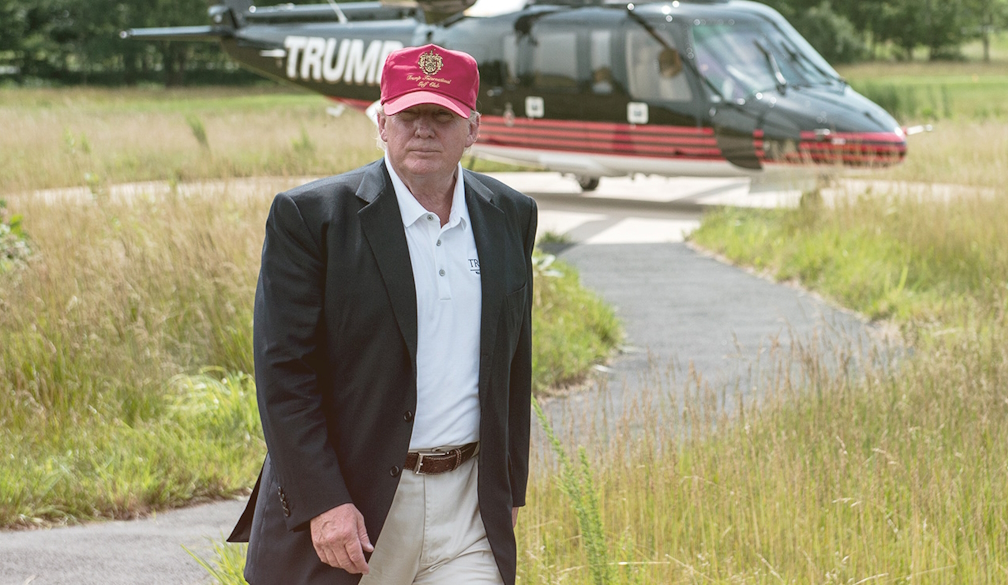
For months, experts and commentators have been weighing up[1] what the possible return of Donald Trump might mean for financial markets and the global economy.
Now, at least, they have a bit more certainty. Trump has decisively won the 2024 US presidential election. He’ll be officially inaugurated as the country’s 47th president in January.
The incoming administration has already flagged its economic agenda: lowering taxes, raising tariffs, withdrawing from key agreements and moving away from the rules-based global trade order. These measures could have profound impacts.
A large increase in US public debt and investment could keep global interest rates stuck higher for longer. Steep tariffs could disrupt global value chains and hamper China’s economic growth.
A further withdrawal of US leadership from global matters could lead to a decline in international trade and a significant weakening of the World Trade Organization (WTO).
Other countries – including Australia – won’t be able to look away and simply hope for the best. For better or worse, the world must now adapt to the return of Trump.
Read more: Trump has vowed to be a 'dictator' on day one. With this day now coming, what exactly will he do?[2]
Hey, big spender
The Trump campaign has promised to cut US taxes across the board, including by lowering the federal corporate tax rate to just 15% (currently, it’s 21%).
Such tax cuts – alongside a range of new spending proposals – don’t come cheap. It has recently been estimated[3] that Trump’s tax and spending plan could increase total US debt by US$7.75 trillion (A$11.8 trillion).
While that number might be hard to wrap your head around, it basically means the US government will be borrowing a lot more money in the future. That will drive up borrowing costs[4] for other borrowers, such as the Australian government.
While Australia has recently enjoyed budget surpluses[5], this is unlikely[6] to continue. This means the government will need to start borrowing around the time Trump’s policies start to put upward pressure on interest rates, likely later in 2025, making it more expensive for Australia to borrow and raising the cost of repayments.
An important customer
A bigger concern for Australia, though, is Trump’s pledge[8] to impose tariffs of 10–20% on all imports to the US. Imports from China have been singled out for much more severe treatment, set to face tariffs of 60% or more[9].
While the US accounts for only 5%[10] of Australian exports, it still ranks as Australia’s fifth-largest export market.
Breaking it down by what we export to the US paints a more alarming picture. The Australian government has long sought to diversify[11] its economy and exports, moving away from relying heavily on commodities such as iron ore and wheat.
The US imports relatively small amounts of our commodities, but it’s a different story for much of our advanced manufacturing sector. If we look specifically at many high technology products[12], the US is a major customer.
Within Australia’s exports[14], more than 40% of high-tech engines, 50% of aircraft and space parts and almost 60% of machine tools are sent to the US.
On top of this, the US is Australia’s second-largest[15] services export market, accounting for more than 10% of the total services trade. And it is not just outright services exports that matter.
Goods that are traded internationally (toys, laptops, refrigerators, and so on) are produced with services inputs[16], such as software, engineering or transport services.
If Australia wants to become a bigger player in the advanced goods and services market, it needs to be an effective global competitor. Any increase in barriers to the US market will hamper this goal.
Making the world protectionist again
If Trump raises tariffs on all imports to the US, other countries will almost certainly follow suit. They may also impose new tariffs on trade with countries other than the US.
The global impacts of the tariffs, such as rising shipping costs, increased volatility in the US dollar, and a general increase in uncertainty and risk, will almost certainly flow on to Australia.
Trade is a major part of the Australian economy, accounting for as much as 45%[17] of GDP. That means when the costs of doing business internationally grow, it can seriously impact Australian businesses and consumers.
When Trump raised tariffs on China in 2018, ocean container shipping market rates spiked by more than 70%[18].
Global shipping is already under pressure due to ongoing conflicts in Europe and the Middle East. For a country as far away from major markets as Australia, higher shipping costs put our goods at a significant price disadvantage.
Australia will also need to watch the impact of Trump’s policies on China, still our largest two-way trading partner[20].
Large tariffs on China could slow its growth, in turn slowing its imports of Australian exports such as iron ore.
Less trade leadership from the US
A Republican majority in Congress could also raise the spectre of a US withdrawal from the WTO, which oversees the rules-based global trading system.
Coupled with the impacts we’ve already discussed, that could create deep divides in the global trading system, undoing years of hard-earned global agreements for freer trade.
For a small, open economy like Australia, this could mean an increase in prices of everything – from cars through to business services.
It could also make it harder for countries to settle their differences if the US continues to block new appointments to the WTO’s Appellate Body - the body that hears appeals in disputes brought by WTO Members.
On the positive side, retaliatory tariffs on US products may mean market opportunities for Australian goods that compete directly with US goods, such as wheat and education services. Whether this would be enough to offset the potential disorder of a Trump trade agenda remains to be seen.
Read more: A Donald Trump presidency is bad for climate action, but Australia should get on with the job[21]
References
- ^ weighing up (theconversation.com)
- ^ Trump has vowed to be a 'dictator' on day one. With this day now coming, what exactly will he do? (theconversation.com)
- ^ estimated (www.crfb.org)
- ^ drive up borrowing costs (www.bostonfed.org)
- ^ budget surpluses (www.theguardian.com)
- ^ unlikely (www.abc.net.au)
- ^ Patrick Semansky/AP (photos.aap.com.au)
- ^ pledge (www.csis.org)
- ^ 60% or more (www.reuters.com)
- ^ 5% (www.dfat.gov.au)
- ^ diversify (www.austrade.gov.au)
- ^ high technology products (ec.europa.eu)
- ^ Nikkolia/Shutterstock (www.shutterstock.com)
- ^ Australia’s exports (www.dfat.gov.au)
- ^ second-largest (www.abs.gov.au)
- ^ services inputs (www.oecd-ilibrary.org)
- ^ 45% (ourworldindata.org)
- ^ more than 70% (www.reuters.com)
- ^ Sheila Fitzgerald/Shutterstock (www.shutterstock.com)
- ^ largest two-way trading partner (www.dfat.gov.au)
- ^ A Donald Trump presidency is bad for climate action, but Australia should get on with the job (theconversation.com)