Where should we look for new metals that are critical for green energy technology? Volcanoes may point the way
- Written by: Brenainn Simpson, PhD Candidate, The University of Queensland
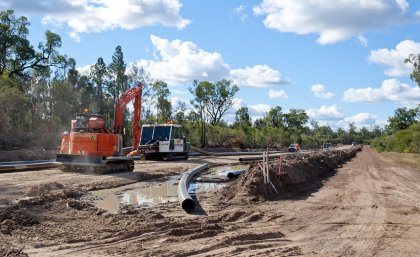
About 400 kilometres northwest of Sydney, just south of Dubbo, lies a large and interesting body of rock formed around 215 million years ago by erupting volcanoes.
Known as the Toongi deposit, this site is rich in so-called rare earths[1]: a collection of 16 metallic elements essential for modern technologies from electric cars to solar panels and mobile phones.
Efforts are under way to mine this deposit[2], but the demand for rare earths in the coming decades is likely to be enormous[3].
To find more, we need to understand how and why these deposits form. Our latest research on Australian volcanoes, published in Nature Communications Earth and Environment[4], shows how tiny crystals formed inside volcanoes offer clues about the formation of rare earth deposits – and how we can find more of them.
Rare earths and the melting mantle
The formation of rare earth element deposits begins with partial melting of Earth’s mantle which lies deep below the crust.
Earth’s mantle is dominated by minerals that are rich in iron and magnesium. These minerals also contain small amounts of other elements, including the rare earth elements.
When the mantle melts to form magma, the rare earth elements move easily into the magma. If the amount of melting is small, the magma has a higher proportion of rare earth elements than if the amount of melting is large – for example, at a mid-ocean ridge where vast amounts of magma rush to the surface and form new oceanic crust.
As this magma migrates towards Earth’s surface, it cools down and new minerals begin to form. These minerals are mostly composed of oxygen, silicon, calcium, aluminium, magnesium and iron.
This means the leftover magma contains a higher concentration of rare earth elements. This residual liquid will continue to ascend through the crust until it solidifies or erupts at the surface.
From Greenland to central New South Wales
If the magma cools and crystallises in the crust, it can form rocks containing high levels of critical metals. One place where this has happened is the Gardar Igneous Complex in Southern Greenland, which contains several rare earth element deposits.
In central New South Wales in Australia, magmas enriched in rare earth elements erupted at the surface. They are collectively given the geological name Benolong Volcanic Suite.

Within this suite is the Toongi deposit – a part of the ancient volcanic plumbing system. This is an “intrusion” of congealed magma containing very high levels of critical metals.
Magmas enriched in rare earth elements are uncommon, and those that are enriched enough to be productively mined are rarer still, with only a few known examples worldwide. Even with all we know about how magmas form, there is much more work to be done to better understand and predict where magmas enriched in critical metals can be found.
Crystals record volcanic history
You may have wondered how scientists know so much about what happens kilometres (sometimes tens of kilometres) below our feet. We learn a lot about the interior of the Earth from studying rocks which make their way to the surface.
The processes that occur in a magma as it rises from Earth’s interior leave clues in the chemical composition of minerals which crystallise along the way. One mineral in particular – clinopyroxene – is particularly effective at preserving these clues, like a tiny crystal ball[5].
Fortunately, there are crystals of clinopyroxene within many of the rocks in the Benolong Volcanic Suite. This allowed us to examine the history of the non-mineralised rocks and compare it with the mineralised Toongi intrusion.
What’s different about the rocks at Toongi
We found that the Toongi rocks have two important differences.
First, the clinopyroxenes in the non-mineralised volcanic suite contain a lot of rare earth elements. This tells us that for most rocks in the volcanic suite, critical metals were “locked up” within clinopyroxene, rather than remaining in the residual melt.
In contrast, clinopyroxene crystals from Toongi show low levels of rare earth elements. Here, these elements are contained in a different mineral, eudialyte[6], which can be mined for rare earth elements.

Second, and most interesting, the clinopyroxenes from Toongi have an internal crystal structure that resembles an hourglass shape[9]. This is caused by different elements residing in some parts of the crystal. It’s an exciting observation because it suggests rapid crystallisation occurred due the release of gas while the crystals were forming.
In contrast, we found no evidence of rapid crystallisation in the rocks without high levels of rare earths.
Our work means we can now track the composition and zoning of clinopyroxene in other extinct volcanoes in Australia and beyond to find out which ones may accumulate relevant rare earth element deposits.
This study adds another piece of the puzzle for understanding how critical metals[10] accumulate, and how we can find them to power green, renewable energy sources for a sustainable future.
References
- ^ rich in so-called rare earths (asm-au.com)
- ^ mine this deposit (www.australianmining.com.au)
- ^ enormous (www.resources.nsw.gov.au)
- ^ Nature Communications Earth and Environment (www.nature.com)
- ^ tiny crystal ball (theconversation.com)
- ^ eudialyte (en.wikipedia.org)
- ^ Simpson, Ubide & Spandler / Nature Communications Earth & Environment (doi.org)
- ^ CC BY (creativecommons.org)
- ^ hourglass shape (www.alexstrekeisen.it)
- ^ critical metals (www.industry.gov.au)