Key markers on the bumpy road to this election
- Written by: Michelle Grattan, Professorial Fellow, University of Canberra
When we look back, we can see the road to election day has had a multitude of signposts, flashing red lights, twists, turns and potholes. Some came before the formal campaign; others in the final countdown days; some have been major, others symbolic.
The importance of certain markers has been obvious in the moment; the significance of others became clear in retrospect. Here is a recap of a few of those that have shaped this campaign and its battle for votes.
1. Anthony Albanese’s January 6 $7.2 billion announcement to upgrade the Bruce Highway
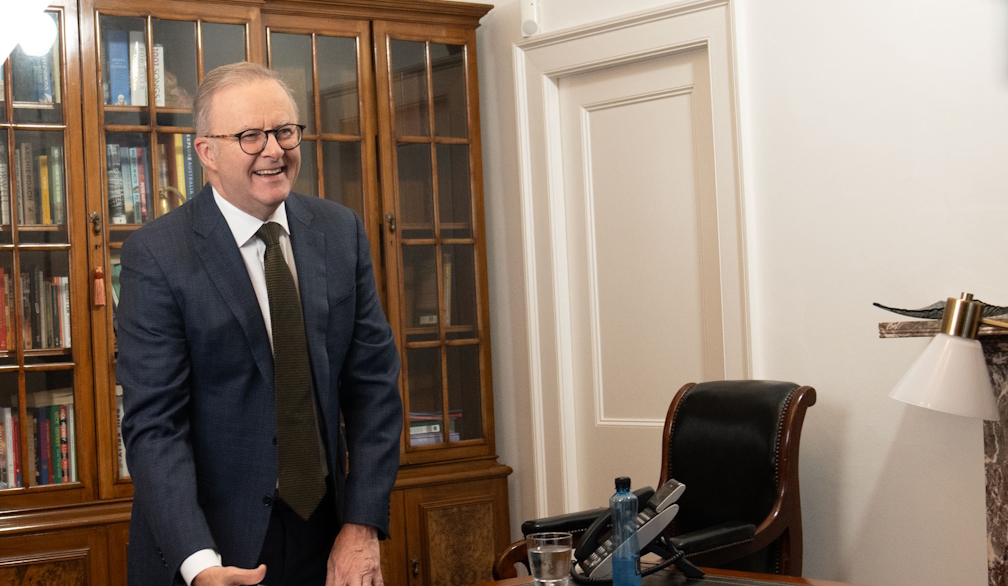
Why start here? Because this was the prime minister jumping out of the blocks at the start of January, with multiple announcements over the summer. Albanese laid down policy groundwork in these weeks, giving voters time to absorb the initiatives.
In contrast, Peter Dutton, although he had a “soft” launch on January 12, was running slowly, believing voters weren’t yet paying attention.
4. Cyclone Alfred’s March 7 election delay
Albanese appeared set to call an April 12 poll, when the approaching winds blew the plan off course. The prime minister was able to put himself at the middle of the response to the cyclone, projecting himself as a national leader as distinct from a partisan one; he appeared with Queensland LNP Premier David Crisafulli, and at the Canberra National Situation Room.
The election delay meant Labor had to bring down the March 25 budget. Many in the government had wanted to avoid a budget, because of its deficits into the distance. But the budget became a useful frame for the start of the formal campaign, with Albanese going to Government House at the end of budget week.
5. Dutton’s budget reply
The opposition leader’s reply contained his proposal to cut petrol excise but did not include tax cuts. The opposition had already voted against the government’s budget tax cut package, and committed to repealing it.
The excise move was popular – Dutton would visit countless service stations over coming weeks – but the government was able to say a Coalition government would raise taxes.
At his campaign launch subsequently, Dutton promised a $1,200 tax offset, despite earlier flagging he would not be able to announce any income tax relief during the campaign. The tax offset was an attempt to rectify what had been the mistake of thinking that the Coalition – traditionally committed to lower taxes – could go to the election on the wrong side of the tax argument.
6. Dutton’s April 7 backtrack on working from home
The opposition policy to get public servants back into the office all week was a disaster-in-the-making from the start. Workers in the private sector would, rightly, see it as sending a signal to non-government employers.
Women hated the policy, and it would further alienate the female vote. Dutton had to ditch the idea and apologise. Finance spokeswoman Jane Hume didn’t help the retreat by saying it was a good policy that hadn’t found its appropriate time.
7. News on April 15 that the Russians wanted to base planes in Papua
The story appeared on the respected military site Janes, and Dutton rushed to pick it up, but went off half-cocked, declaring wrongly that the Indonesian president Prabowo Subianto had announced the Russian request. It was symptomatic of Dutton being under-prepared. He had to make another admission of error.
8. Neo-Nazis heckle during the Welcome to Country at the Melbourne Shrine of Remembrance Anzac Day Dawn Service
This led to Dutton launching into “culture wars” in the final days of the campaign. In criticising the disruption, he at first said, “We have a proud Indigenous heritage in this country and we should be proud to celebrate it as part of today”.
Subsequently he said most veterans didn’t want the Welcome to Country as part of the Anzac Day ceremonies, although it was a matter for the organisers. In general, he believed Welcome to Country ceremonies were used too frequently.
Dutton segued the controversy back to criticism of the Voice, and seized on confusing remarks by Foreign Minister Penny Wong to claim Labor was still committed to bringing in a Voice, something Albanese flatly denied.
9. The price of eggs
In the last of the four debates neither leader could specify the cost of a dozen eggs. Dutton was way out ($4.20); Albanese rather closer (“$7, if you can find them.”. It was a small moment but sent the message that even in a cost-of-living election, the leaders do live in bubbles.
10. Dutton comments on Thursday
Almost at the road’s end, the opposition leader appealed to voters to overlook a flawed campaign. “This election really is a referendum not about the election campaign but about the last three years.”
Asked if there was anything he could have done differently, he said “we should have called out Labor’s lies earlier on”.
It was as though he was speaking to a postmortem, while praying for a miracle.
Read more https://theconversation.com/grattan-on-friday-key-markers-on-the-bumpy-road-to-this-election-255613