Jim Chalmers on keeping Australia out of recession amid the ‘dark shadow’ of global instability
- Written by: Michelle Grattan, Professorial Fellow, University of Canberra
This week, the Reserve Bank delivered welcome news[1] for mortgage holders, with another 25 basis points rate cut.
With this cut, some are hoping that the cost-of-living pain will start to finally ease. Economists, however, are still wary of celebrating too early, with Trump’s tariffs still creating uncertainty on where the global economy will end up.
Back at home, a re-elected Anthony Albanese and his treasurer, Jim Chalmers, are pushing on with Labor’s second term agenda, with Chalmers flagging the need to fix Australia’s lagging productivity. When the new parliament meets, Labor’s controversial tax changes on superannuation, which failed to pass last term, will be an early test for the government.
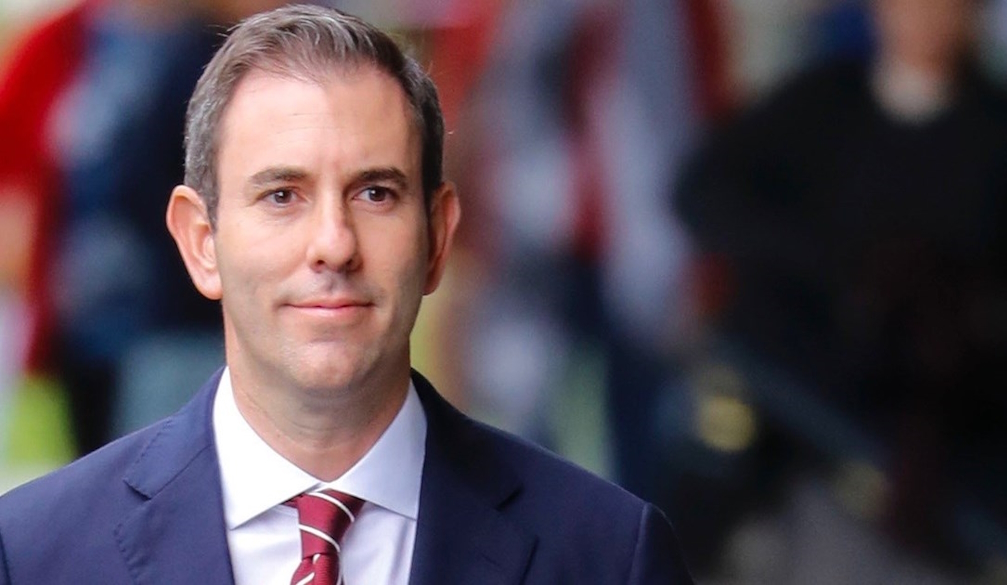
Speaking with The Conversation’s Politics podcast, Treasurer Jim Chalmers outlines some of his priorities when Parliament resumes in July.
One of the things we’re really excited about legislating is the cut to student debt. That will take some of the burden off graduates, but it will also provide some cost-of-living help to students or graduates repaying a student debt. So that’s going to be a big priority.
In my own portfolio, obviously we’ve got the changes to the super arrangements, we’ve got the standard deduction we announced during the campaign, we’ve got some payments reforms that we need to legislate. So it will be a really busy agenda.
On increasing the superannuation tax on those with $3 million from 15% to 30%, with unrealised capital gains taxed, Chalmers defends the move, despite widespread criticism, including from former prime minister Paul Keating[2].
This is a modest change that we announced almost two and a half years ago now. We announced it at the beginning of 2023. We’re now in the middle of 2025. And what this change is about [is] making concessional treatment for people with very large superannuation balances, still concessional, but a little bit less so. And that will help us fund our priorities, whether it’s Medicare, the tax cuts, and other priorities in budget repair.
[…] I know that people have views about it. I know there’s a campaign in a couple of our newspapers about it. But this is all about making sure that it’s still concessional treatment. It only impacts about half a percent of people in the super system, with very large superannuation balances. It makes the system a bit fairer and it’s important in terms of the sustainability of the budget.
Despite Reserve Bank Governor Michele Bullock saying on Tuesday that due to global uncertainty there’s a small possibility[3] of Australia falling into recession, Chalmers outlines the case for optimism.
I think first of all the Reserve Bank is doing diligent work looking at a range of scenarios from best case to worst case and central case. Just like the Treasury does […] And I think it’s helpful to remember, if you look at the Reserve Bank’s forecasts and the Treasury’s forecasts, neither the bank nor the Treasury is expecting our economy to shrink. In fact, in both instances the forecasts say that the economy will grow more strongly next year compared to the financial year that we’re about to finish.
[…] The international environment is casting a dark shadow over the global economy and our own economy. And that why it’s so important that the Australian economy has got the characteristics that you would want going into this volatility and unpredictability. You know, the lower inflation, the higher wages, the low unemployment, the budget’s in better nick than most countries around the world. We’re starting to see interest rates come down. The market’s expecting further interest rate cuts. And so we’re well placed and well prepared.
On a lighter note, Chalmers tells us what’s on his reading list over the winter break:
I just finished that Ezra Klein book called Abundance[4], which goes right to the core of some of these things you’re talking about, you know, how do we think in a progressive way about making our economy more efficient and more productive.
[…] I confess I’ve started the book about Joe Biden, the Jake Tapper book [Original Sin][5] […] And like everyone, I send my best wishes to the Bidens after that news that we got earlier in the week about his health[6].
[…] But I’m really excited about a new term, a new opportunity, working closely with [Finance Minister] Katy [Gallagher] to make sure we finish the fight on inflation, we make our economy more productive, we think more expansively about the big opportunities from AI and energy and some of these things that we’ve been talking about today. And I have been finding inspiration in trying to do a bit more reading this term so far than what I managed last term.
References
- ^ delivered welcome news (theconversation.com)
- ^ former prime minister Paul Keating (www.afr.com)
- ^ small possibility (au.finance.yahoo.com)
- ^ Abundance (www.goodreads.com)
- ^ [Original Sin] (www.theguardian.com)
- ^ his health (theconversation.com)