The Trump administration wants to use the military against drug traffickers. History suggests this may backfire
- Written by: Philip Johnson, Lecturer, College of Business, Government and Law, Flinders University
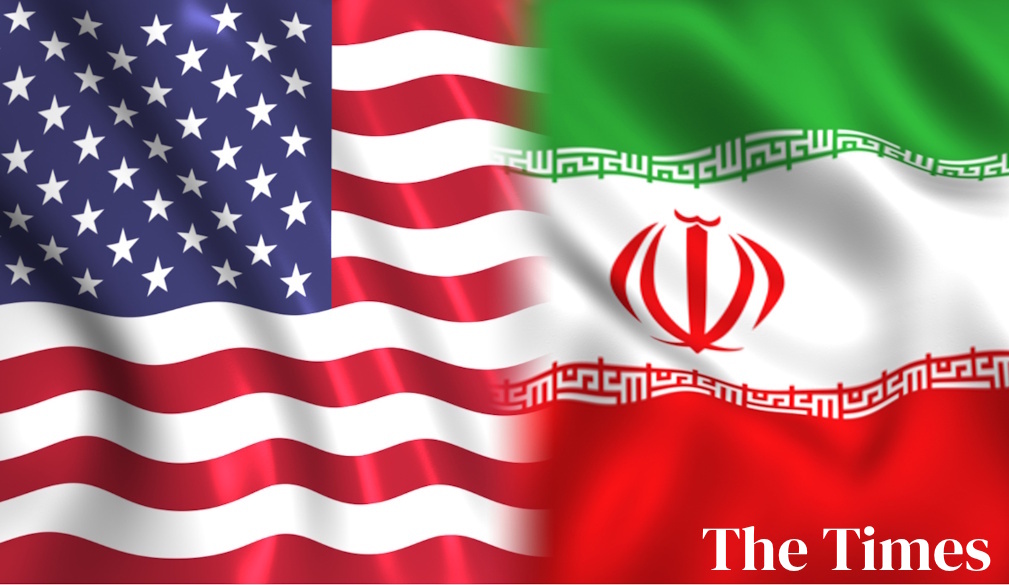
In early August, US President Donald Trump signed a not-so-secretive order[1] to make plans for the use of US military force against specific Latin American criminal organisations.
The plans were acted upon this week. The US deployed[2] three guided-missile destroyers to the waters off Venezuela, with the authority to interdict drug shipments[3].
This was not exactly a surprise move. During his inauguration in January, Trump signed an executive order designating some criminal groups as foreign terrorist organisations[4]. At the time, he told a journalist[5] this could lead to US special forces conducting operations in Mexico.
Weeks later, six Mexican cartels were added[6] to the foreign terrorist list, as were two other organisations: MS-13[7], an El Salvadoran gang and particular focus during Trump’s first presidency, and Tren De Aragua[8], a Venezuelan gang and frequent target during Trump’s presidential campaign in 2024.
Read more: What is Tren de Aragua? How the Venezuelan gang started − and why US policies may only make it stronger[9]
In May, two Haitian groups[10] were added to the list. Then, in July, another Venezuelan organisation known as the Cartel of the Suns[11] was added to a similar list because of its support for other criminal groups.
Fentanyl brings a new focus on organised crime
Illicit substances have flown across the US-Mexican border for more than a century[12]. But the emergence of the synthetic opioid fentanyl has shaken up US responses to the illicit drug trade.
Highly addictive and potent, fentanyl has caused a sharp increase in overdose deaths[13] in the US since 2013.
Successive US governments have had little success at curbing fentanyl overdoses.
Instead, an emerging political consensus portrays fentanyl as an external problem and therefore a border problem.
When the Biden administration captured Ismael Zambada[14] – one of Mexico’s most elusive drug barons who trafficked tonnes of cocaine into the US for 40 years – he was charged with conspiracy to distribute fentanyl[15]. Even progressive independent Bernie Sanders has pivoted[16] to claiming border security was the solution to the fentanyl crisis.
But focusing on border security will do little to improve or save lives within the US.
Tougher border measures have never effectively curtailed[17] the supply of other illicit substances such as cocaine, heroin, or methamphetamine.
These measures do little to reduce harm or dependency within the US, where a largely unaccountable pharmaceutical industry[18] first pushed synthetic opioids.
The question remains just what can be achieved by US military operations.
How to spot a cartel
While the chemical emissions[19] from fentanyl labs are easily spotted by drones, cartels and their operatives are decidedly more difficult to identify.
Criminal organisations in Mexico tend to be loose networks of smaller factions. They don’t operate in strict hierarchies like corporations or armies.
The decentralised nature of these networks makes them extremely resilient. If one part of the chain is disrupted, the network adapts, sourcing materials from different places or pushing goods along different trafficking routes.
But US and Mexican security agencies often act as though cartels follow rigid hierarchies. The so-called “kingpin strategy[20]” focuses on killing or arresting the leadership of criminal organisations, expecting it to render them unable to operate.
However, this strategy often exacerbates violence[21], as rival factions compete to take over the turf of fallen kingpins.
Combating criminal groups with the military has already been a spectacular failure in Mexico.
Former President Felipe Calderón declared war on the cartels in 2006[22], but his government lost credibility for leading Mexico into a war it could not win or escape.
Tens of thousands of people are now killed every year, a dramatic increase from the historically low homicide rates in the years leading up to 2006. More than 100,000 have disappeared[23] since the beginning of the war.
Outside interventions also run the risk of increasing support for criminal groups.
In my research, I’ve found cartels sometimes market themselves as guardians of local people[24], successfully positioning themselves as more in touch with local people than the distant Mexican state.
Cartels can also certainly make the most of deep antipathy towards US intervention in Mexico.
All cartels are not equal
Deploying warships off the coast of Venezuela will have minimal impact on the fentanyl trade.
Fentanyl enters the US from Mexico and even from Canada – but Venezuela doesn’t feature in US threat assessments for fentanyl[25].
Military action against the Cartel of the Suns will also be largely ineffectual, as this group exists in name only[26].
Research has found this isn’t an actual cartel – rather, the name describes a loose network of competing drug-trafficking networks within the Venezuelan state. Figures in the government certainly have ties to the illicit drug trade[27], but they are not organised in a cartel.
In Mexico, however, the cartels do exist – albeit not as imagined by the US government.
Given the US has invaded and seized territory from Mexico in the past, US military intervention has minimal prospect of support[28] from Mexican governments.
Current President Claudia Sheinbaum has shown a willingness to accommodate the Trump government on matters of fentanyl trafficking. She has deployed thousands of members of the National Guard[29] to police the border and major trafficking centres, such as the state of Sinaloa.
The Mexican government has also made two mass extraditions of captured crime bosses[30] to the US. As with the capture of Zambada by the Biden government, this is likely to be used as evidence the US is winning the battle against fentanyl.
Then again, these crime bosses could be put to other uses.
The US government recently returned an imprisoned leader of MS-13 to El Salvador[31], even though he was indicted for terrorism in the US.
This move was part of the deal-making between the US government and President Nayib Bukele of El Salvador.
The US government may be eager to take the fight to organised crime, but sometimes political expediency is a bigger priority.
References
- ^ signed a not-so-secretive order (www.nytimes.com)
- ^ deployed (apnews.com)
- ^ interdict drug shipments (www.wsj.com)
- ^ foreign terrorist organisations (www.state.gov)
- ^ he told a journalist (www.youtube.com)
- ^ added (www.theguardian.com)
- ^ MS-13 (www.ojp.gov)
- ^ Tren De Aragua (theconversation.com)
- ^ What is Tren de Aragua? How the Venezuelan gang started − and why US policies may only make it stronger (theconversation.com)
- ^ two Haitian groups (www.state.gov)
- ^ Cartel of the Suns (insightcrime.org)
- ^ for more than a century (doi.org)
- ^ sharp increase in overdose deaths (www.aic.gov.au)
- ^ Ismael Zambada (www.bbc.com)
- ^ conspiracy to distribute fentanyl (www.justice.gov)
- ^ Bernie Sanders has pivoted (www.theguardian.com)
- ^ never effectively curtailed (global.oup.com)
- ^ largely unaccountable pharmaceutical industry (www.panmacmillan.com.au)
- ^ chemical emissions (www.nytimes.com)
- ^ kingpin strategy (www.mexicoviolence.org)
- ^ this strategy often exacerbates violence (journals.sagepub.com)
- ^ declared war on the cartels in 2006 (www.cfr.org)
- ^ 100,000 have disappeared (facesofconflict.crisisgroup.org)
- ^ as guardians of local people (doi.org)
- ^ US threat assessments for fentanyl (www.dea.gov)
- ^ this group exists in name only (nacla.org)
- ^ ties to the illicit drug trade (www.wsj.com)
- ^ military intervention has minimal prospect of support (www.nytimes.com)
- ^ thousands of members of the National Guard (www.nytimes.com)
- ^ captured crime bosses (www.nytimes.com)
- ^ imprisoned leader of MS-13 to El Salvador (www.newyorker.com)