After three days of talks, a fairer tax system is on the agenda. There’s no shortage of ideas
- Written by: Stephen Bartos, Professor of Economics, University of Canberra
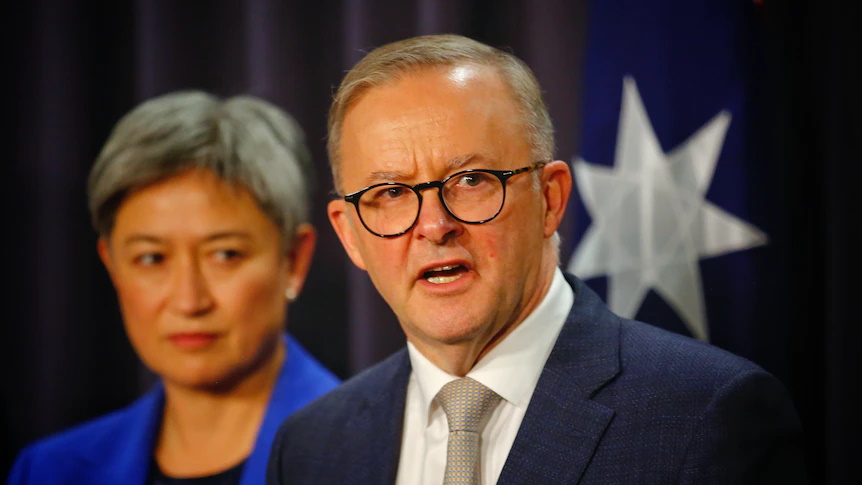
Day three of the government’s economic reform roundtable was about budget sustainability. It’s a slow burn issue. If the Australian government spends more than it raises in revenue, it has to finance the difference (the budget deficit) by borrowing. The most recent budget has forecast deficits[1] for at least the next decade.
It is not an immediate problem. Domestic and overseas investors want to lend to Australia. However, each successive deficit leads to more borrowing – which keeps the interest bill growing. Eventually this debt has to be repaid.
At some point governments have to fix the problem through more tax, cutting spending, or both.
The ideal tax solution is a fairer, simpler system that raises more revenue. There is no shortage of ideas on how.
Reform is needed, but how do we get there?
Treasurer Jim Chalmers emerged from the three-day summit saying there was broad support[2] from the gathered business and union leaders and economists for a simpler and more equitable tax system. He said on Friday[3] morning:
Really, one of the defining outcomes of this economic reform roundtable was building consensus and momentum around ensuring that intergenerational fairness is one of the defining principles of our country, but also of our government.
The treasurer listed “building a better tax system” as one of ten long-term reform priorities.
He set three objectives[4] to guide any changes:
-
a fair go for working people
-
an affordable, responsible way to incentivise business investment
-
and how to make the system simpler and more sustainable.
These are laudable goals. The objections will come when government tries to turn them into specific amendments. Australians are notoriously wary of tax changes. There was a taste of this in the backlash to the government’s plan to reduce the tax concessions on superannuation balances over A$3 million[5].
That is no doubt why Prime Minister Anthony Albanese in advance of the roundtable ruled out[6] further tax changes before the next election.
Tax settings should not be ‘set in stone’
Grattan Institute Chief Executive Aruna Sathanapally presented the roundtable with ideas[7] for a better tax system.
Among her ideas were making personal income tax more equitable, improving business taxation and introducing a carbon tax.
Sathanapally argued rebalancing personal income tax could come in pieces: reducing superannuation concessions, introducing at least a low tax rate on earnings in retirement, reducing the capital gains discount and reforms to family trusts.
Or it could be systematic: a system that brings consistency to how we treat different types of savings.
Another attendee, economist Bob Breunig, likely gave the roundtable a summary of his and his colleagues’ recent research[8] showing how the tax system unfairly benefits older Australians at the expense of younger Australians paying income tax.
This is leading to greater intergenerational inequity. One of the causes is low taxes on income from savings or wealth, housing and superannuation.
Government spending is part of the story
The other side of budget sustainability, spending[9], garnered less attention despite huge spending pressures.
The one category of spending that government cannot change by policy is the interest payments on the public debt. All the others are choices. We could decide to spend less in any or all of these areas. Indeed, Health Minister Mark Butler’s announcement of changes to the NDIS[10] goes some way towards that. Other areas could be candidates for savings.
Nevertheless, the indicators from the roundtable are that tax reform is a higher priority for the government than spending cuts.
Although we may be moving to a consensus[11] that we should do something to fix the tax system, there is little agreement on what that something should be. A long period of discussion and consultation may be just what the government needs.
The last big tax reform was 25 years ago
We have been here before. Australia’s last really big tax reform, the GST, was a long time coming. Then-Treasurer Paul Keating proposed it at Labor’s 1985 tax summit, but was overruled.
In 1995, Prime Minister John Howard promised the Coalition would “never, ever[12]” introduce a Goods and Services Tax (GST). However, he changed his position, took it to the 1998 election, and won – and the GST took effect from July 1, 2000. Controversial then, it is now an accepted part of our tax system.
Something similar may happen with current tax proposals. The government could hold off implementation until after the next election campaign. If it gains a mandate, following sustained consultation to build support, reforms have a chance of success.
As an added benefit, a long period of reflection could help the community to connect dots.
Housing affordability, another major challenge addressed by the roundtable, is inextricably linked with tax incentives that put upward pressure on prices. That’s also noted in Breunig’s paper[13]. Through tax reform, we could, if the government gains community support, help solve budget sustainability and housing at the same time. We can only hope.
Read more: Full coverage of the reform roundtable[14]
References
- ^ forecast deficits (budget.gov.au)
- ^ broad support (theconversation.com)
- ^ said on Friday (www.abc.net.au)
- ^ three objectives (ministers.treasury.gov.au)
- ^ balances over A$3 million (theconversation.com)
- ^ ruled out (www.afr.com)
- ^ ideas (grattan.edu.au)
- ^ recent research (www.austaxpolicy.com)
- ^ spending (theconversation.com)
- ^ announcement of changes to the NDIS (www.health.gov.au)
- ^ moving to a consensus (theconversation.com)
- ^ never, ever (pmtranscripts.pmc.gov.au)
- ^ paper (www.austaxpolicy.com)
- ^ Full coverage of the reform roundtable (theconversation.com)