Albanese and Starmer to meet for a frank exchange of views (and possibly some political advice)
- Written by: Ben Wellings, Associate Professor in Politics and International Relations, Monash University
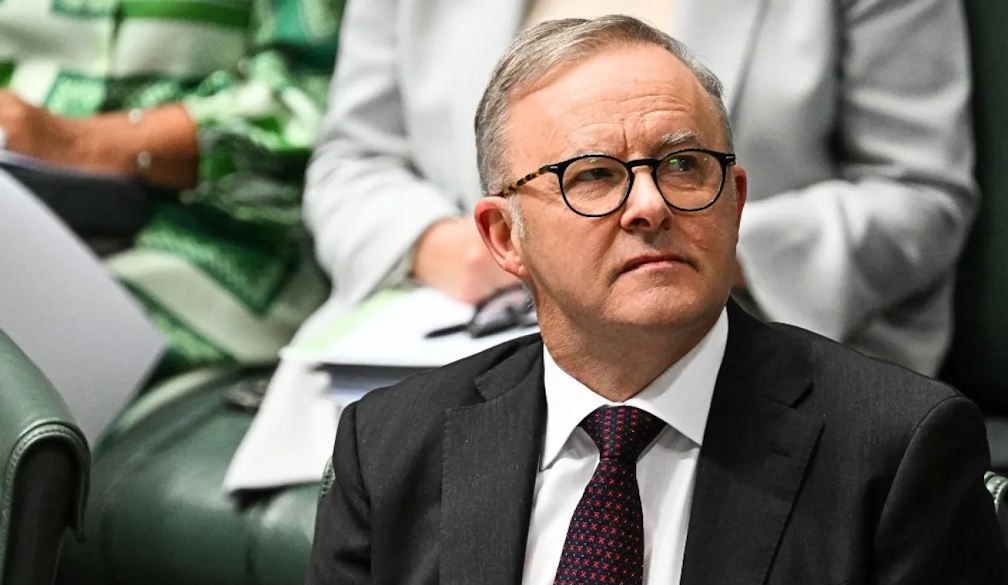
Fresh from his time at the UN General Assembly in New York, Prime Minister Anthony Albanese’s world tour now takes him to London. There he will be primed to give some political advice to his beleaguered counterpart, Keir Starmer.
Australia is enjoying a moment in the sun in the United Kingdom. Some have noted an “Australianisation[1]” of British politics. “Stop the boats[2]” is the most high-profile instance of policy transfer – on that occasion from Australia’s Tony Abbott to former UK prime minister Rishi Sunak. So those surrounding Starmer will no doubt be interested in Albanese’s destruction of the Coalition in May’s federal election. Starmer might also share some pointers on upwardly managing US President Donald Trump.
The meeting of the two prime ministers takes place against a backdrop of a double challenge facing centre-left parties and liberal democracies more broadly. That challenge is to bring the United States back into the anti-Russian camp, while responding effectively to the surge in support for illiberal democracy and an energised far right within their own electorates.
These two challenges are interrelated because, until he invaded Ukraine, the radical right generally admired Putin[3] and Russia’s model of authoritarian social order[4].
The first of these challenges is essentially strategic. At a time when what we used to think of as “the West” is fragmenting, AUKUS is a way of keeping the Americans in the Western camp. The Australians and Britons share this ambition. Manufacturing a sense of commonality is easier to do in a confrontation with China, specifically over Taiwan and in trade, where such a strategy has broad bipartisan support in the US.
However, whether this is in Australia’s interests is a moot point. After an unusually quiescent period, voices questioning the wisdom of AUKUS are being heard.
Whatever its merits, AUKUS is the point at which British and Australian interests now most closely align. The UK-Australian Free Trade Agreement[5] is no doubt delivering some benefit to some people, but is purpose was primarily political: to enable Boris Johnson’s government to claim there was trading life after Brexit. Trade in goods between the UK and Australia was hardly likely to set the world on fire, but it was another point of post-Brexit UK-Australia connection.
Australia does have some engagement with the Euro-Atlantic theatre in which the challenge to the rules-based international order is most pointed. Australian troops in the UK help train Ukrainian soldiers[6], as Russian incursions into NATO air and sea space increase.
Trump’s state visit to the UK[7] seems to have met its diplomatic brief and kept the famously capricious president in the anti-Russian orbit – at least for now.
However, he was literally rolling out the red carpet[8] to Putin in August, so seeking consistency in this area is a hard task.
Recently imposed US tariffs on India[9] – itself experiencing democratic backsliding but nonetheless previously in the anti-China camp – have pushed New Delhi towards China; a feat of diplomacy to be marvelled at given the two nations were fighting each other in 2020[10]. This volatility in the Indo-Pacific makes life harder for Australian strategists. In such times it’s nice to have friends like the UK, even if they are far away.
This friendship extends to domestic politics. Albanese’s visit coincides with the British Labour party’s annual conference. Fresh from his election victory in May. the Australian prime minister may have some advice for his British counterpart on how to effectively see off a challenge from radical-right politics on a low base of voter support.
Like the Australian Labor Party, the British Labour party swept to power in a landslide, but on a low percentage of support[11]. This meant support for the incoming Labour government was broad, but shallow. The vote was essentially a rejection of the Conservatives rather than a positive endorsement of Starmer’s Labour. Such weak enthusiasm as there was has since evaporated, leaving the British prime minister with alarmingly low approval levels[12] and – you guessed it – rumblings of a prime ministerial spill if things don’t improve.
Admittedly, things are never easy for Labour leaders. It is said the left always faces four main challenges[13]: wealthy interests, political elites, the media, and itself.
The UK’s recognition of Palestinian statehood[14] – aligning it with Australia, Canada and France, but against the US – will go some way towards placating the left of the Labour party. However, it still faces a challenge from the Jeremy Corbyn co-led new party, which immediately gained huge interest from disillusioned Labour supporters – and almost as quickly seemed to split along personality lines[15].
But another, and possibly more serious[16], threat comes from the surge in support for the radical-right party Reform UK. Reform has positioned itself successfully to the right of the Conservatives (hard to believe, but true) while seemingly capturing support from those for whom the Labour government seemed like a cruel continuation of austerity policies that hit the disabled[17] and single-parent families.
When the Labour government seemingly went on its summer holiday it ceded the political stage to Brexit champion Nigel Farage and fellow disruptors on the far-right. A summer of discontent focused on asylum seekers culminated in the far-right led Unite the Kingdom rally[18] in London. The Labour government, scared of losing votes to Reform, was noticeably silent about this challenge from the far-right.
So as Albanese and Starmer meet, the UK possibly stands on the brink of a political change to match those of France, Italy and Canada. All of these countries saw their mainstream centre parties replaced by others. Reform could certainly supplant the Conservatives as the main right-wing party, but it poses a challenge to Labour too.
Any advice from the masterfully uninspiring Australian prime minister would probably be welcome.
References
- ^ Australianisation (politicalquarterly.org.uk)
- ^ Stop the boats (www.youtube.com)
- ^ admired Putin (www.independent.co.uk)
- ^ authoritarian social order (www.lemonde.fr)
- ^ Free Trade Agreement (www.dfat.gov.au)
- ^ help train Ukrainian soldiers (www.defence.gov.au)
- ^ state visit to the UK (www.independent.co.uk)
- ^ rolling out the red carpet (www.internationalaffairs.org.au)
- ^ US tariffs on India (timesofindia.indiatimes.com)
- ^ fighting each other in 2020 (www.aljazeera.com)
- ^ low percentage of support (www.bbc.com)
- ^ alarmingly low approval levels (yougov.co.uk)
- ^ faces four main challenges (www.theguardian.com)
- ^ UK’s recognition of Palestinian statehood (www.gov.uk)
- ^ split along personality lines (www.theguardian.com)
- ^ possibly more serious (theconversation.com)
- ^ disabled (tribunemag.co.uk)
- ^ Unite the Kingdom rally (www.bbc.com)
 "Pin It")